

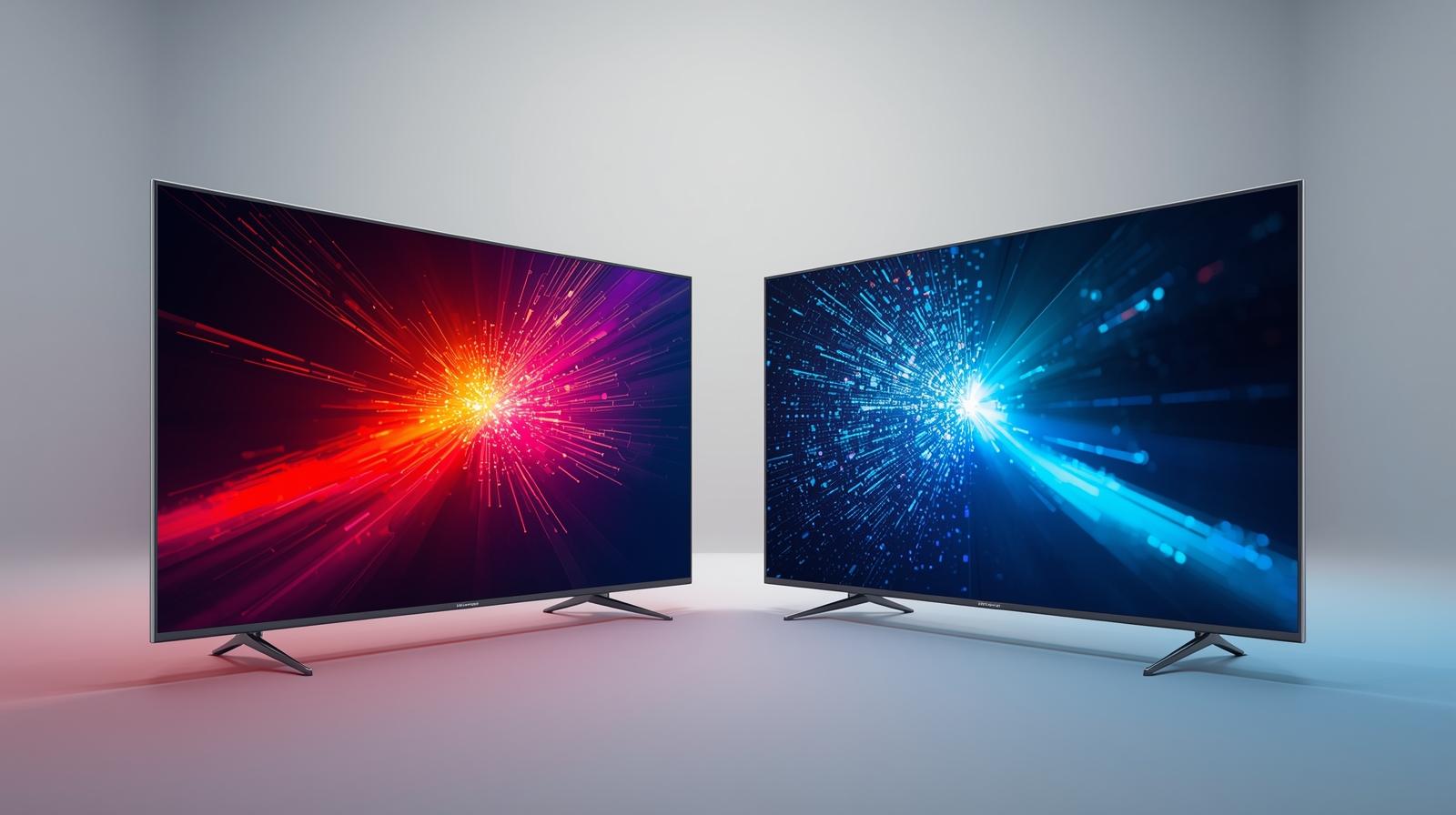
In today’s technology-driven world, selecting the right television can be a daunting task. With the market flooded with numerous brands and models, understanding the differences between QLED and OLED TVs is crucial for making an informed decision. Both technologies offer unique features and benefits, but which one is truly superior? In this article, we will delve into the intricacies of QLED and OLED technologies, comparing their strengths and weaknesses to help you decide which is best for your needs.
QLED, or Quantum Dot Light Emitting Diode, is a type of LED-backlit LCD TV that incorporates quantum dot technology. These quantum dots are microscopic molecules that emit their own light when hit by an LED backlight. The primary advantage of QLED technology is its ability to produce vibrant colors and high brightness levels.
- Brightness and Color Volume: QLED TVs are known for their exceptional brightness and color volume, making them ideal for well-lit rooms. The quantum dots allow for a wider color gamut, resulting in more vivid and lifelike images.
- Longevity: The inorganic nature of quantum dots ensures that QLED TVs have a longer lifespan compared to OLED TVs. They are less susceptible to burn-in, which can occur when static images are displayed for prolonged periods.
- Affordability: Generally, QLED TVs are more affordable than their OLED counterparts, making them a popular choice for budget-conscious consumers.
OLED, or Organic Light Emitting Diode, represents a different approach to TV technology. Unlike QLED, OLED displays do not require a backlight. Each pixel is an organic compound that emits light when an electric current is passed through it. This self-emissive nature allows OLED TVs to achieve deep blacks and infinite contrast ratios.
- Superior Contrast and Black Levels: OLED TVs excel in delivering perfect black levels and superior contrast. Since each pixel can be turned off completely, OLED displays can achieve true black, enhancing the overall image quality.
- Viewing Angles: OLED technology offers excellent viewing angles. The picture quality remains consistent regardless of the viewing position, making it ideal for wider seating arrangements.
- Slim Design: Due to the absence of a backlight, OLED TVs are incredibly thin and lightweight, allowing for sleek and modern designs.
To determine which technology is better, we need to evaluate their performance across several key aspects.
When it comes to picture quality, both QLED and OLED have their strengths. QLED’s high brightness levels and vibrant colors make it excellent for bright rooms. However, OLED’s ability to produce perfect blacks and superior contrast gives it an edge in terms of overall image quality.
OLED TVs are generally more energy-efficient than QLED TVs. Since OLED pixels emit their own light, they consume less power when displaying dark scenes. On the other hand, QLED TVs require a constant backlight, which can increase power consumption.
For gamers, response time and input lag are critical factors. OLED TVs typically offer faster response times and lower input lag compared to QLED TVs, making them more suitable for gaming enthusiasts who demand quick and responsive gameplay.
While QLED TVs are less prone to burn-in, OLED TVs have shown improvements in longevity with advancements in technology. Manufacturers have implemented pixel-shifting techniques and screen savers to mitigate burn-in risk, making OLED a more viable long-term option.
In terms of price, QLED TVs are generally more budget-friendly than OLED TVs. However, as OLED technology becomes more widespread, the price gap is gradually narrowing, making OLED TVs more accessible to a broader audience.
Choosing between QLED and OLED ultimately depends on your individual preferences and viewing environment. If you prioritize vivid colors, high brightness, and affordability, a QLED TV might be the right choice for you. On the other hand, if you value deep blacks, superior contrast, and a sleek design, an OLED TV could be the better option.
Before making a purchase, consider the room’s lighting conditions, your viewing habits, and budget constraints. Both QLED and OLED technologies offer exceptional viewing experiences, and understanding their differences will empower you to make an informed decision.
In conclusion, whether you choose QLED or OLED, both technologies represent the pinnacle of modern TV innovation, offering stunning visuals and transforming the way we experience entertainment in our homes. Make your choice based on what matters most to you, and enjoy the incredible world of high-definition viewing.


