


Microscopic silicon chips and integrated circuits currently power everything from your everyday personal smartphone to highly advanced military defense systems. The global semiconductor industry serves as the absolute critical foundation of our rapidly expanding modern digital economy. Without a steady and reliable supply of these microscopic components, the global supply chain for technological progress would immediately grind to a halt.
How does a single manufacturing sector command so much geopolitical and economic influence today? This massive semiconductor market generated hundreds of billions of dollars last year, and financial growth projections remain incredibly strong. We will examine the core mechanisms driving semiconductor production and analyze future market trends impacting global trade.
Understanding this semiconductor sector requires examining a highly fragmented global supply chain filled with highly specialized manufacturers. We will evaluate how government policies and emerging technologies continue to reshape semiconductor manufacturing across the globe. This knowledge provides a critical advantage for anyone analyzing modern technology markets or broad global economic trends.
The semiconductor industry operates through a highly specialized and geographically dispersed global supply chain network. Very few semiconductor companies possess the resources to handle the entire process of designing, manufacturing, and testing chips. Instead, the broader market breaks down into three distinct business models that depend heavily on each other.
Understanding these different business models helps you evaluate market leaders and identify potential production bottlenecks. Each segment requires entirely different capital investments, technical expertise, and strategic corporate partnerships to succeed long-term. The daily interplay between these specialized companies dictates the overall pace of technological advancement across the globe.
Fabless Chip Design vs. Semiconductor Foundries in the Global Market
Fabless companies focus entirely on designing complex chip architectures while completely outsourcing the actual fabrication process. Companies like NVIDIA and AMD fall into this category, pouring their capital directly into research and development. They rely heavily on dedicated semiconductor foundries to manufacture their physical products with exact microscopic precision.
Dedicated foundries require massive capital investments to build and successfully maintain cutting-edge fabrication plants. Building a modern semiconductor factory often requires an initial financial investment significantly exceeding $20 billion. Taiwan Semiconductor Manufacturing Company (TSMC) dominates this specific space by manufacturing chips for the world’s largest tech firms.
Integrated Device Manufacturers (IDMs) in Semiconductor Chip Production
Integrated Device Manufacturers attempt to control both the design and manufacturing processes under one single corporate roof. Intel and Samsung represent the most prominent historical examples of this highly comprehensive business model. While this approach offers greater control over the production timeline, it requires staggering financial and operational resources.
IDMs must constantly upgrade their massive manufacturing facilities to keep pace with rapid technological advancements. If an IDM falls behind in manufacturing capabilities, their proprietary chip designs immediately lose market competitiveness. This high-stakes environment forces these companies to maintain aggressive capital expenditure budgets year after year.
Key Takeaways
- The market splits primarily into fabless designers, dedicated foundries, and integrated device manufacturers.
- Dedicated foundries require massive capital expenditures to construct modern fabrication facilities.
- Fabless companies avoid heavy manufacturing overhead to focus strictly on advancing chip architecture.
Mitigating Risks: Semiconductor Supply Chain Vulnerabilities and the US Response
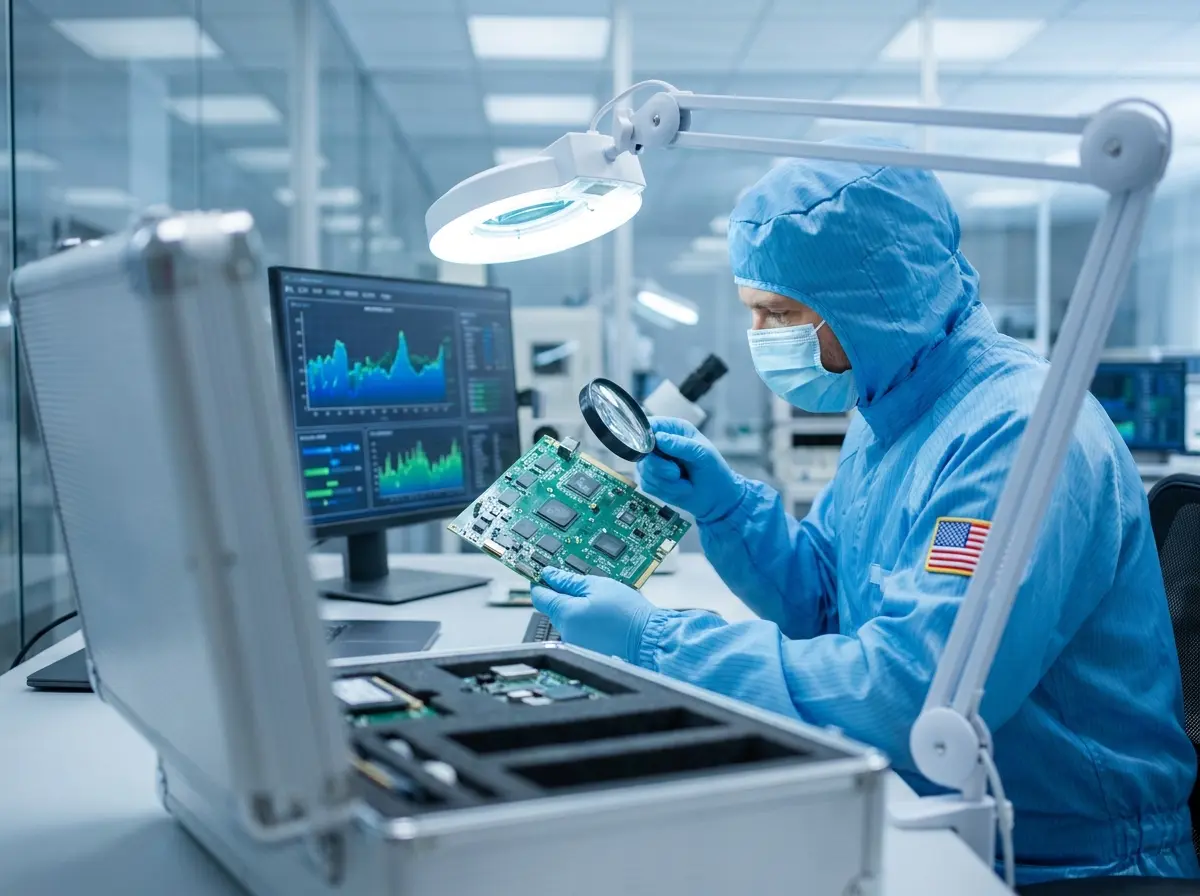
Recent economic disruptions heavily exposed severe vulnerabilities within the global semiconductor supply chain network. A heavy reliance on East Asian manufacturing creates significant geopolitical risks for the United States economy. What happens if a major natural disaster strikes one of these highly concentrated manufacturing hubs?
The United States government recently recognized this severe threat and implemented aggressive policies to stimulate domestic semiconductor production. Lawmakers understand that relying on foreign entities for critical technological components severely compromises national security. This stark realization sparked a massive wave of legislative action and federal funding initiatives.
️Warning
Supply chain concentration creates massive single points of failure for global technology markets. Companies must diversify their sourcing strategies to protect against potential geopolitical disruptions.
The CHIPS and Science Act for Domestic Semiconductor Manufacturing
In 2022, the United States passed the CHIPS and Science Act to revitalize domestic semiconductor manufacturing capabilities. This landmark legislation provides roughly $52 billion in direct manufacturing grants and advanced research investments. Major tech companies have already announced plans to build new fabrication facilities in states like Arizona and Ohio.
You can read more about this massive funding initiative directly on the Department of Commerce website. The program aims to reverse a decades-long trend of outsourcing critical manufacturing jobs to overseas locations. Government officials hope this financial injection will firmly secure the domestic supply of essential electronic components.
Reshoring Efforts for the Semiconductor Industry
Building a robust domestic semiconductor ecosystem requires much more than just pouring concrete for new factories. The United States must also develop a highly trained workforce to operate these advanced fabrication facilities. Universities and community colleges are currently launching specialized programs to train hardware technicians and electrical engineers.
This comprehensive reshoring strategy will likely take at least a decade to yield substantial global market shifts. The Semiconductor Industry Association actively monitors these domestic investments and their broad impact on global trade dynamics. Progress requires sustained cooperation between federal agencies, private corporations, and higher education institutions.
Future Outlook: Semiconductor Market Growth Drivers in the Next Decade
The semiconductor industry anticipates massive revenue expansion driven by several emerging and powerful technological trends. Artificial intelligence currently dominates the conversation, requiring incredibly powerful AI chips and graphics processing units to function properly. Data centers worldwide are rapidly upgrading their fundamental infrastructure to support demanding machine learning workloads.
According to detailed McKinsey research, the industry could easily reach $1 trillion in annual revenue by 2030. This projected semiconductor market growth relies heavily on the continued expansion of cloud computing and digital transformation initiatives. Investors closely monitor these broad secular trends to identify highly lucrative long-term capital allocation opportunities.
Automotive and EV Expansion in the Semiconductor Chip Market
Electric vehicles consume roughly twice as many semiconductors as traditional internal combustion engine vehicles on the road. Modern cars function like advanced computers on wheels, requiring chips for battery management, infotainment, and autonomous driving. As federal mandates push consumers to purchase electric vehicles, automotive chip demand will continue to skyrocket.
This specific sector provides a remarkably stable growth floor for older, legacy semiconductor manufacturers. Automotive companies typically require highly reliable semiconductor nodes rather than experimental bleeding-edge technology for their vehicles. This dynamic allows foundries to generate consistent profits from their fully depreciated manufacturing equipment.
The Internet of Things (IoT) and Global Microchip Demand
Billions of connected devices now rely heavily on basic microcontrollers and wireless communication chips to function. Smart home appliances, industrial sensors, and wearable health monitors all require reliable semiconductor components daily. While these chips avoid advanced manufacturing nodes, the sheer production volume drives massive corporate revenue.
You can find detailed market forecasts for IoT expansion through major research firms like Gartner. The rapid proliferation of 5G cellular networks further accelerates the deployment of these connected devices globally. Every new connection requires a dedicated piece of silicon to process and transmit digital information efficiently.
Pro Tip
When analyzing semiconductor demand, pay close attention to the automotive and industrial sectors. These areas often provide more stable, predictable revenue streams than highly volatile consumer electronics.
Investment Strategies: How to Analyze and Invest in Semiconductor Stocks
Investors must deeply understand the cyclical nature of the semiconductor industry before committing significant financial capital. Market demand often fluctuates wildly based on broader macroeconomic conditions and rapidly shifting consumer spending habits. How do investors separate temporary market hype from genuine long-term value in semiconductor stocks?
The most successful analysts look far beyond flashy product announcements to examine underlying financial metrics. Tracking corporate inventory levels and production capacity provides critical clues about future profitability and market health. Let us examine a standardized framework for evaluating semiconductor companies within this highly volatile manufacturing sector.
How to Evaluate Semiconductor Companies
Evaluate the Semiconductor Cycle Position
Examine corporate inventory levels closely to determine if the broader market faces a supply glut or a shortage.
Tip: Rising inventory days combined with falling sales usually indicates an impending market downturn.
Assess Capital Expenditures for Chip Manufacturing
Review exactly how much money the company is actively investing in next-generation research or new manufacturing facilities.
Analyze End-Market Exposure for Semiconductor Companies
Determine whether the company relies heavily on a single sector like smartphones or maintains diversified revenue streams.
Monitoring Geopolitical Export Controls on Advanced Semiconductor Chips
International trade restrictions significantly impact the long-term revenue potential of major semiconductor manufacturers operating today. The United States government frequently restricts the export of advanced computing chips to rival foreign nations. You must closely monitor these regulatory changes because they can instantly erase billions in projected corporate revenue.
Companies must constantly adjust their global sales strategies to comply with these strict government mandates. Failure to manage these export controls can result in massive financial penalties and severe reputational damage. Smart investors always factor geopolitical risk directly into their long-term valuation models for semiconductor companies.
Technological Innovation: The Future of Silicon and Semiconductor Technology
Hardware engineers continually face the strict physical limits of traditional silicon manufacturing techniques. Moore’s Law, which predicts the doubling of transistors on a chip every two years, is noticeably slowing down. Companies must adopt novel engineering strategies to maintain historical performance improvements and critical power efficiency gains.
The next decade of semiconductor technology advancement will rely heavily on entirely new materials and advanced packaging methods. Researchers are aggressively experimenting with compounds like silicon carbide and gallium nitride for specialized power applications. Advanced packaging and extreme ultraviolet lithography currently represent the immediate future of high-performance chip development.
Advanced Packaging and Chiplet Innovation in Semiconductor Design
Instead of printing one massive chip, manufacturers now connect several smaller functional blocks called chiplets. This highly modular approach significantly improves manufacturing yields and reduces overall corporate production costs. Hardware companies can easily mix and match different components to create specialized processors for specific computing tasks.
Advanced packaging techniques allow these individual chiplets to communicate with incredible speed and energy efficiency. This specific method bypasses the physical limitations of printing incredibly large, monolithic silicon structures. Leading companies now view advanced packaging as a primary competitive advantage rather than a simple afterthought.
Extreme Ultraviolet Lithography in Advanced Chip Fabrication
Printing microscopic circuits requires incredibly precise light sources and highly advanced optical systems to function. Extreme ultraviolet lithography allows manufacturers to draw features measuring just a few nanometers wide. ASML currently holds a strict global monopoly on producing these complex, $200 million manufacturing machines.
Access to EUV technology dictates which companies can actually compete at the absolute bleeding edge of performance. Without these specific machines, foundries simply cannot produce the advanced chips required for artificial intelligence. The supply chain for these lithography machines remains one of the most critical chokepoints in global technology.
Key Takeaways
- Artificial intelligence and electric vehicles will drive massive semiconductor revenue growth through 2030.
- Moore’s Law faces physical limitations, forcing manufacturers to adopt advanced modular chiplet packaging.
- The US CHIPS Act aims to mitigate supply chain risks by aggressively funding domestic fabrication facilities.
Conclusion
The global semiconductor industry remains the absolute critical engine of modern technological and economic advancement. From artificial intelligence to automotive manufacturing, every major growth sector relies heavily on these microscopic components. While geopolitical tensions and supply chain vulnerabilities pose real threats, massive investments are actively reshaping the semiconductor market.
You must track these structural market shifts to understand exactly where the global economy is heading. Trillions of dollars in future economic value depend entirely on the reliable production of silicon chips. Government policies and corporate strategies will continually collide as nations fight for long-term technological supremacy.
Those who deeply comprehend the mechanics of chip production will hold a distinct analytical advantage. Opportunities will emerge rapidly as the industry transitions to advanced packaging and entirely new material sciences. Stay informed on these critical developments to successfully analyze the future of global technology investments.


