

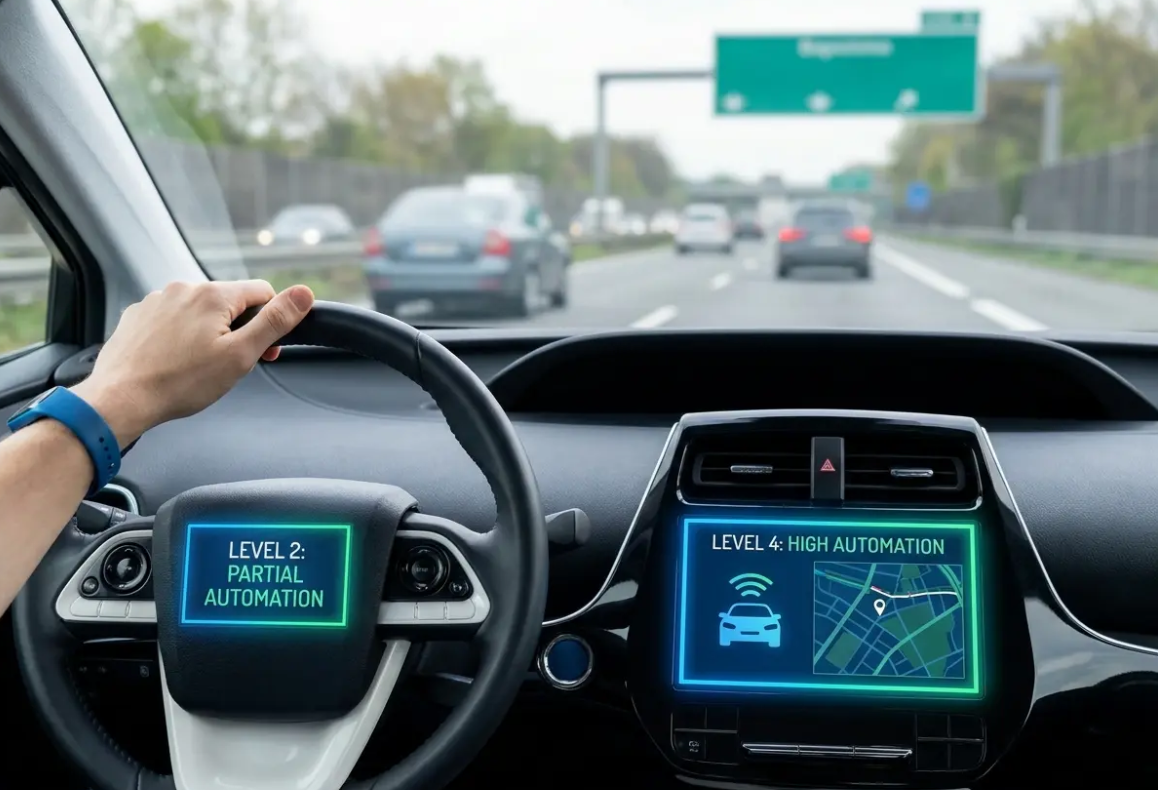
Imagine sitting in your daily commuter vehicle and reading a book while the machine handles the traffic. The transition from human operation to a computer-controlled self driving system feels like science fiction coming to life. A modern autonomous vehicle uses sensors and software to move safely without human intervention on public roads.
Many consumers confuse standard cruise control with advanced automated driving systems available on the market today. While basic features maintain your speed, a true self-driving car processes millions of data points every second. This incredible driving technology promises to reduce traffic accidents and improve our daily commutes in crowded cities.
Are you ready to hand over the keys to a machine? We will look closely at how these systems operate on public roads during everyday driving situations. You will learn about the differences between partial automation and fully autonomous models currently in development.
Every autonomous car relies on a complex web of sensors and cameras to understand its immediate environment. Radar systems bounce radio waves off surrounding objects to determine their physical distance and traveling speed. LiDAR sensors use precise light pulses to create detailed three-dimensional maps of the entire surrounding area.
These sensors send massive amounts of data to a central computer for rapid processing and analysis. The software must identify pedestrians, read street signs, and track lane markings in real time constantly. This constant analysis forms the foundation of modern self-driving technology used by major automotive manufacturers globally.
An autonomous vehicle cannot rely on pre-programmed routes like a passenger train running on fixed tracks. The system must react to unpredictable human behaviors and sudden weather changes instantly to prevent accidents. Advanced safety technologies help the computer make split-second decisions to avoid collisions with other motorists.
How Technology Works Together
Cameras provide high-resolution images of the world, functioning very much like human eyes on the highway. They read speed limit signs and spot traffic lights from a considerable distance away from intersections. However, standard cameras struggle significantly in poor lighting conditions or when facing direct blinding sunlight.
This is exactly where radar and LiDAR step in to fill the vision gaps effectively. Radar works perfectly in the dark and cuts through thick fog effortlessly during severe winter storms. When you combine these sensors, the resulting technology works much better than any single component alone.
The central computer fuses all this incoming data together to form a complete and accurate picture. It compares the camera feed with the radar bounces to verify what is actually located ahead. This intentional redundancy prevents a single sensor failure from causing a catastrophic accident on the highway.
How Assistance Technology Functions
Before a car can drive itself completely, engineers develop smaller driver-assistance systems for consumer testing. These features handle specific driving tasks like steering or braking under certain predictable highway conditions. You might already use adaptive cruise control to maintain a safe distance from the car ahead.
When you activate an adaptive cruise system, radar monitors the surrounding traffic speed automatically for you. If the car in front slows down, your vehicle reduces its speed to match their pace. This basic assistance technology works well for highway driving but struggles with complex city intersections currently.
More advanced systems combine adaptive cruise with lane-keeping assistance for better overall highway vehicle control. The car reads the painted lines on the road and gently moves the steering wheel to stay centered. However, human driver supervision remains absolutely necessary during these operations to maintain overall road safety.
Key Takeaways
- Autonomous vehicles use a combination of cameras, radar, and LiDAR to view the road.
- Sensor redundancy prevents accidents if one specific camera or radar unit fails during operation.
- Human supervision remains critical even when using advanced adaptive cruise control features on highways.
Understanding the Levels of Autonomous Driving and Self Driving Standards
To understand the current state of the industry, one must grasp the six distinct levels of automation defined by SAE International. Level 0 represents no automation, where the human driver performs all tasks, while Level 5 represents a fully autonomous driving experience in all conditions. Most modern vehicles on the road today sit at Level 2, offering combined functions like acceleration and steering support.
As we progress toward Level 4, the vehicle can handle most driving tasks in specific geofenced areas without human intervention. This hierarchy provides a roadmap for manufacturers as they refine the software and hardware required for total independence. Understanding these distinctions helps consumers manage their expectations regarding what their new vehicle can safely accomplish on the road.
Each step up the ladder requires exponentially more computing power and sensor reliability to ensure passenger safety. While Level 3 allows for limited hands-off operation, the transition to Level 5 remains the ultimate goal for the global automotive industry. Achieving this milestone will require unprecedented cooperation between software engineers, hardware manufacturers, and government regulators.
Autonomous Vehicles Comparison: Super Cruise and Drive Pilot
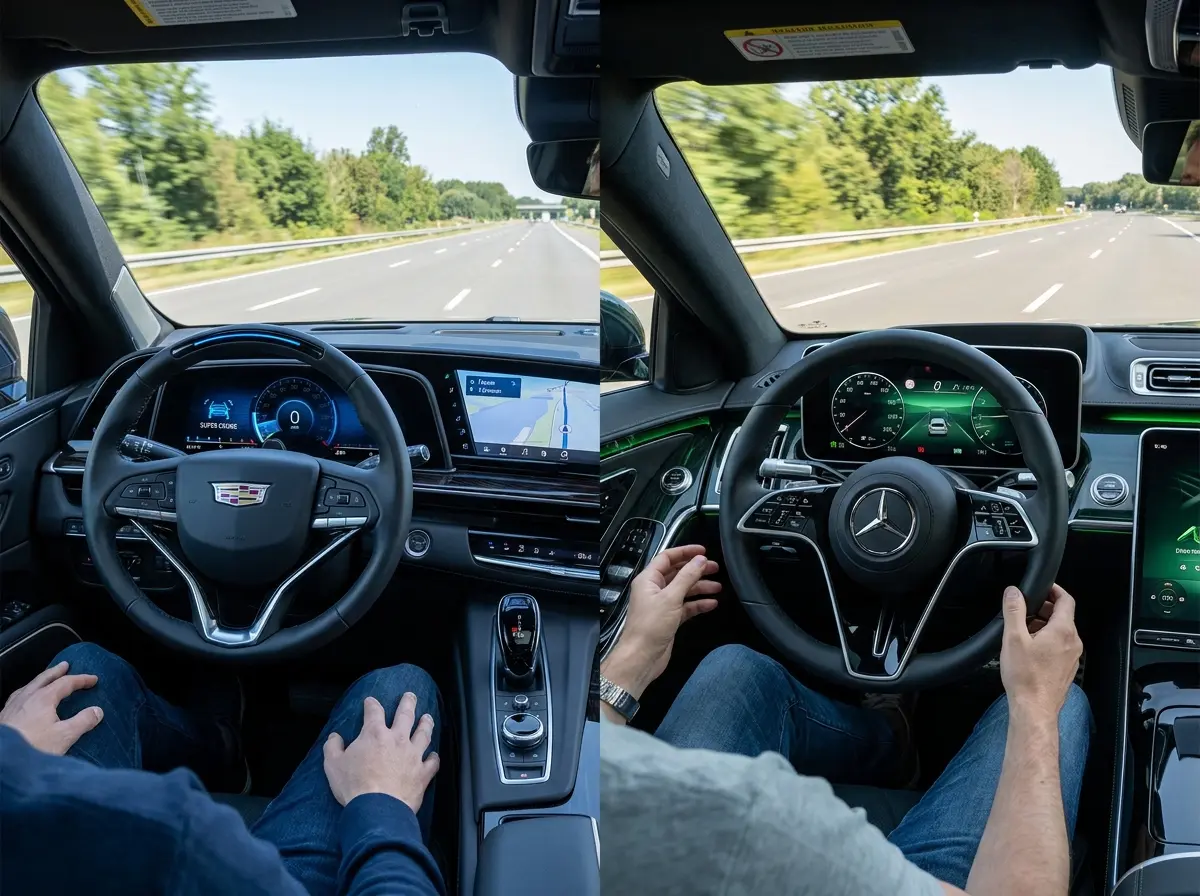
Automakers currently offer different levels of hands-free driving capability on approved public highways across America. General Motors leads the American market with its highly rated super cruise system available today. Meanwhile, Mercedes-Benz recently introduced its drive pilot system to select states with favorable regulatory environments.
The super cruise driver assistance technology uses highly detailed LiDAR map data to position itself. This allows the car to know exactly where it is on approved, divided interstate highways. You can remove your hands from the wheel, but an interior camera constantly watches your eyes.
If a super cruise driver looks away from the road for too long, the system issues a warning. The cruise driver assistance will eventually disengage if the person ignores these escalating audible alerts. This strict monitoring keeps the super cruise driver assistance safe for everyone on the public road.
The Drive Pilot Approach
While the GM system requires you to watch the road, drive pilot operates differently in traffic. Mercedes achieved a blank” rel=”noopener”>Level 3 certification for drive pilot in specific traffic jam conditions on highways. Under 40 miles per hour, drive pilot actually allows you to look away from the road safely.
This means a drive pilot user can watch a movie or play a game on the center console. If traffic speeds up, the system prompts you to take manual control of the vehicle again. This represents a massive shift in how we think about legal liability in an autonomous car.
Both systems represent incredible leaps forward, but they serve very different immediate purposes for modern consumers. A typical cruise driver relies on constant attention, while these new systems offer brief moments of relief. The rapid evolution of the cruise driver assistance technology package shows how quickly this field changes.
Pro Tip
Always check local state laws before using automated systems. Some states strictly restrict hands-free driving regardless of your vehicle’s technical capabilities.
Step-by-Step: Engaging Self-Driving Car Systems and Advanced Driver Assistance
Using an autonomous vehicle safely requires a clear understanding of its technical limits and operational rules. Many drivers overestimate what basic driver assistance can actually do during complex daily commuting scenarios. You must learn the proper sequence for activating and monitoring these driving systems to prevent accidents.
Whether you drive a Tesla vehicle or a modern Cadillac, the basic activation principles remain very similar. You must wait for the car to confirm it recognizes the road conditions before removing your hands. Failing to follow proper safety procedures can lead to dangerous situations at high highway speeds.
The National Highway Traffic Safety Administration (NHTSA) provides clear guidelines for using automated driving features correctly. They emphasize that no vehicle available for purchase today can drive itself completely without human oversight. Let us examine how to safely use these enabled features on your daily morning commute.
How to Safely Engage Highway Assistance
Position the Vehicle Correctly
Keep the car centered perfectly between visible lane markings before attempting to activate any automated system.
Tip: Make sure you are traveling at a steady speed before initiating the sequence.
Engage the Cruise Technology
Press the designated activation button on your steering wheel to turn on the adaptive cruise control and steering systems.
Monitor the Environment
Keep your eyes on the road and your hands near the wheel to take over if the system encounters an unexpected obstacle or construction zone.
Cybersecurity Risks for the Modern Autonomous Car
As vehicles become more connected, the threat of digital interference becomes a primary concern for engineers and safety regulators. A modern autonomous car functions as a rolling data center, processing sensitive information from GPS, internal sensors, and external infrastructure. Protecting these communication channels from malicious actors is essential to prevent unauthorized access to steering or braking systems.
Manufacturers are implementing robust encryption and real-time monitoring to ensure that every autonomous car remains secure against evolving cyber threats. Without these protections, the public trust necessary for widespread adoption would likely evaporate before the technology matures. Security experts are now working alongside automotive designers to build “defense-in-depth” strategies into the vehicle’s core architecture.
Furthermore, the rise of over-the-air updates allows companies to patch vulnerabilities quickly without requiring a visit to a dealership. This capability is vital for maintaining the long-term integrity of the software that governs vehicle behavior. As we move toward a fully connected ecosystem, cybersecurity will remain as important as traditional crash safety ratings.
The Impact on Climate Change and Electric Vehicles
The intersection of automation and sustainability is becoming increasingly clear as manufacturers transition toward a greener future. Integrating self-driving technology into a modern electric vehicle platform offers unique advantages for energy efficiency and battery management. Electric motors respond much faster to computer commands than internal combustion engines, allowing for smoother acceleration and deceleration patterns.
Furthermore, autonomous systems can optimize driving routes and speeds to minimize energy consumption during long highway trips. By reducing unnecessary braking and maintaining consistent speeds, these vehicles can extend their range significantly on a single charge. This synergy between electrification and automation is a key pillar for reducing the carbon footprint of the global transportation sector.
As smart grids become more prevalent, autonomous cars could even serve as mobile energy storage units for cities. These vehicles could automatically navigate to charging stations during off-peak hours when renewable energy is most abundant. This level of coordination would have been impossible with traditional human-operated vehicles just a decade ago.
Roadblocks to Autonomous Vehicles and Full Automation
Despite the rapid progress in sensor technology, several technical hurdles remain before we achieve full Level 5 autonomy. One of the most difficult tasks for a computer is executing a complex lane changing maneuver in heavy, aggressive city traffic. Human drivers often use subtle eye contact and hand gestures to negotiate space, which sensors cannot yet replicate perfectly.
Weather conditions also present a significant challenge for the current generation of cameras and LiDAR units. Heavy snow can obscure lane markings, while thick fog can scatter light pulses and confuse the central processing unit. Engineers are working on emergency braking algorithms that can distinguish between a harmless plastic bag and a solid object in low-visibility environments.
Edge cases, such as encountering a horse-drawn carriage or a person riding a unicycle, still baffle many automated systems. These rare occurrences require a level of generalized reasoning that current artificial intelligence models are still struggling to master. Until these systems can handle every possible scenario, human oversight will remain a mandatory safety requirement for public road use.
Legal and Regulatory Challenges for Self-Driving Cars
The legal landscape for self-driving vehicles is currently a patchwork of different state and federal regulations. Determining liability in the event of an accident remains one of the most contentious issues for insurance companies and lawmakers. If a computer is making the driving decisions, should the manufacturer or the owner be held responsible for a collision?
Many experts believe that the widespread adoption of autonomous cars will eventually lead to a shift toward manufacturer-based insurance models. This would mean that companies like Tesla or Waymo would take on the risk associated with their software’s performance. However, reaching a national consensus on these rules will take years of legislative debate and court rulings.
Privacy is another major concern, as these vehicles collect massive amounts of data about their surroundings and passengers. Regulators must ensure that this information is protected from hackers and not used for unauthorized surveillance or marketing. Balancing the benefits of data sharing for safety with the right to personal privacy is a delicate task for modern governments.
The Cost of Advanced Driver Assistance
Implementing high-level automation is not cheap, and these costs are often passed directly to the consumer. A full suite of LiDAR, radar, and high-resolution cameras can add thousands of dollars to the base price of a new vehicle. Some manufacturers have moved toward a subscription-based model, where users pay a monthly fee to keep their automated features active.
While hardware costs are slowly decreasing due to economies of scale, the software development costs remain astronomical. Thousands of engineers must constantly update maps and refine algorithms to keep the systems safe and competitive. For many middle-class families, the price of a fully capable autonomous cars model remains out of reach for the time being.
However, the long-term savings could eventually offset these high initial purchase prices for many savvy consumers. Transportation as a Service could reduce the need for individual car ownership, allowing people to pay for rides on a per-use basis. This model could revolutionize urban mobility and lower the overall cost of living for city dwellers.
The Future of the Driving Experience
As we move toward a world where the car handles the driving, the interior of the vehicle will undergo a radical transformation. We may see seats that swivel to face each other, turning the car into a mobile office or a living room. The traditional steering wheel and pedals might become optional accessories or disappear entirely in certain specialized models.
This shift will allow people to reclaim hours of their lives that were previously wasted in stressful traffic jams. You could sleep, work, or socialize while your vehicle navigates the complex highway system with robotic precision. The very definition of “driving” will change from a manual task to a supervised management role for the human occupant.
Ultimately, the goal of this technology is to create a safer and more efficient world for everyone on the road. While the transition will be gradual, the potential to eliminate human error from the driving equation is a powerful motivator. We are standing on the brink of a transportation revolution that will change how we live and move forever.
Conclusion
The journey toward fully autonomous transportation is filled with both incredible promise and significant technical challenges. From the complex mechanics of sensor fusion to the evolving legal frameworks, every aspect of our driving lives is being reimagined. While we are not yet at the point of total automation, the progress made by systems like Super Cruise and Drive Pilot is undeniable.
As consumers, staying informed about the capabilities and limitations of these systems is essential for road safety. We must embrace the benefits of automation while remaining vigilant and responsible behind the wheel during this transitional period. The future of the road is being written in code, and it promises a safer, cleaner, and more efficient journey for us all.


