

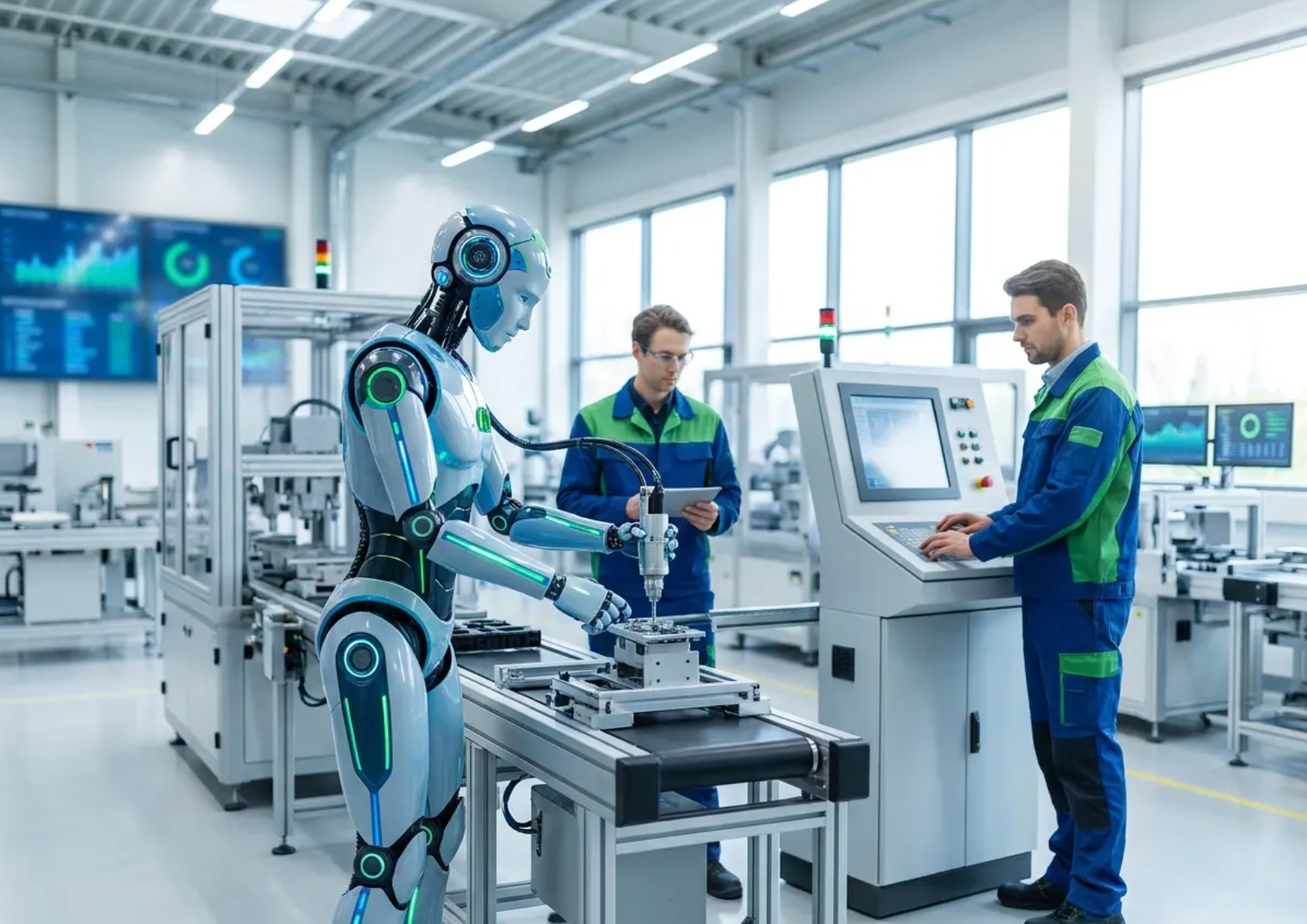
p>Have you ever wondered how an artificial intelligence robot learns to walk, talk, and interact with the physical environment? Decades ago, machines were rigid instruments built for highly repetitive tasks on isolated assembly lines, but the integration of modern artificial intelligence has fundamentally changed this paradigm. Today, advanced algorithms and sophisticated neural networks enable machines to process complex sensory inputs and make autonomous decisions, moving automation directly into our daily lives. These modern ai robots are no longer confined to cages; they are becoming collaborative partners capable of understanding human intent and environmental context. This evolution represents a significant leap in how we perceive the intersection of software and physical hardware in the twenty-first century.
The evolution of robotics is currently accelerating as researchers combine computer vision with generative models to create more adaptable systems. While early automation relied on “if-then” logic, contemporary systems utilize deep learning to navigate the nuances of the physical world. This shift represents a transition from simple mechanical execution to true cognitive processing, allowing machines to learn from experience rather than just following a script. As we continue to refine these technologies, the line between digital intelligence and physical action continues to blur, creating unprecedented opportunities for innovation across every major industry. We are witnessing the birth of a new era where machines possess the spatial awareness required to function in human-centric spaces.
Furthermore, the development of these systems requires a multidisciplinary approach involving mechanical engineering, data science, and cognitive psychology. By studying how humans interact with their surroundings, engineers can design more intuitive interfaces for robotic control and feedback. This holistic perspective ensures that the next generation of autonomous machines is not only functional but also safe and reliable for long-term deployment. As global labor markets shift, the demand for versatile, intelligent automation continues to reach new heights across both developed and emerging economies.
Traditional robots follow strict programming loops without any awareness of their immediate physical surroundings, severely limiting their operational capacity in dynamic settings. In contrast, modern systems utilize sophisticated optical sensors and advanced computer vision to collect real-time data from the environment continually. This continuous stream of information enables robots to adjust their actions instantly without requiring human input, which is essential for safety. These robots powered by high-performance edge computing can process gigabytes of visual data per second to identify obstacles and pathing opportunities. The integration of LiDAR technology further enhances their ability to map three-dimensional spaces with millimeter precision.
The physical hardware has also seen significant upgrades, with high-torque robotic arms now offering precision that rivals or exceeds human capabilities in assembly. Modern ai enables these mechanical limbs to perform delicate maneuvers, such as threading a needle or handling fragile glassware, with remarkable consistency. By combining tactile feedback with visual confirmation, the system can “feel” the resistance of an object and adjust its grip strength accordingly. This closed-loop feedback system is what allows an artificial intelligence robot to operate effectively in environments that are not perfectly organized. Advanced actuators and harmonic drives provide the necessary torque-to-weight ratio required for these complex, multi-axis movements.
Beyond simple movement, the internal processing architecture must handle simultaneous localization and mapping, commonly referred to as SLAM. This allows the machine to build a map of an unknown environment while simultaneously keeping track of its own location within it. Without this capability, an autonomous system would be unable to navigate through a changing warehouse or a busy hospital corridor. Modern robotic operating systems provide the framework for these various software modules to communicate with minimal latency. This synergy between high-level cognitive software and low-level motor control is the foundation of modern robotics.
How Machine Learning Drives Autonomy
Engineers heavily rely on machine learning to train an ai model for physical movement and complex object manipulation. Instead of writing explicit rules for every scenario, developers feed vast behavioral datasets into artificial neural networks to simulate various environmental conditions. The system learns to analyze data and recognize patterns, eventually teaching itself how to handle physical objects safely while avoiding collisions. This iterative learning process is often conducted in high-fidelity virtual simulations before the software is ever uploaded to a physical machine. These simulations allow for millions of repetitions in a fraction of the time required for physical testing.
Communication architecture forms another critical pillar of modern robotics technology being developed by leading tech firms today. By utilizing natural language processing, engineers allow these machines to understand spoken commands and respond with appropriate physical actions. A sophisticated conversational ai system processes human speech, extracts the core meaning, and translates it into movement, while advanced language processing models filter out background noise. This allows workers to give verbal instructions to a robot just as they would to a human colleague, streamlining the workflow. The ability to interpret nuance and context in human speech is a major milestone for collaborative robotics.
Furthermore, reinforcement learning techniques enable robots to optimize their performance through a system of rewards and penalties. When a robot successfully completes a task, the underlying neural network strengthens the connections that led to that positive outcome. Over time, the machine develops highly efficient strategies for movement and problem-solving that might not be immediately obvious to human programmers. This “emergent behavior” is a hallmark of truly intelligent systems that can adapt to new challenges without manual intervention. As these models grow in complexity, the gap between simulated performance and real-world execution continues to narrow significantly.
Key Takeaways
- Modern sensors allow autonomous systems to adjust to environmental changes instantly.
- Neural networks drastically reduce the time required to program new behaviors into advanced ai systems.
- This natural language capability makes interaction highly intuitive for operators without technical backgrounds.
Humanoid Robot Innovation: The Rise of the Humanoid Robots in Modern Industry
The technology industry is currently pouring billions of dollars into developing the modern humanoid robot to solve labor shortages. A humanoid robot features a bipedal structure designed to mirror the human body and its full range of motion, including articulated joints and torso rotation. This specific form factor allows the machine to operate seamlessly in spaces built primarily for people, as stairs and narrow hallways pose significant challenges for wheeled machines. By mimicking our physical constraints, these humanoid robots can use the same tools and workstations that were designed for human employees. This compatibility eliminates the need for expensive facility retrofitting when introducing automation.
Beyond simple mobility, the human-like form factor provides a psychological advantage in collaborative environments where trust is paramount. When people work alongside humanoid robots, they can more easily predict the machine’s movements based on its posture and orientation. This intuitive understanding reduces the learning curve for human staff and fosters a safer, more integrated workplace. As these machines become more common, the focus is shifting from basic locomotion to fine motor skills and emotional intelligence in social interactions. Companies like Tesla with its Optimus project are leading the charge in making these units commercially viable.
The development of bipedal balance is perhaps the most significant engineering hurdle in the history of the humanoid robot. Unlike four-legged machines, bipedal systems must constantly manage their center of gravity while moving across uneven terrain. This requires high-frequency adjustments to the ankles, knees, and hips, often occurring hundreds of times per second. Modern gyroscopes and accelerometers provide the necessary data to maintain stability even when the robot is carrying an off-center load. As these balance algorithms improve, we are seeing robots that can jump, climb, and even perform backflips with surprising grace.
Engineering for Daily Life
Companies are pushing aggressively to match human capabilities in dexterity, balance, and spatial awareness for diverse applications. When a humanoid robot steps onto factory floors, it must maneuver around human workers safely without disrupting operations or causing accidents. Engineers use reinforcement learning to help the machine perfect its walking gait through millions of simulated trials, learning from every stumble before taking a single physical step. This ensures that the robot can maintain its balance even if it is bumped or if the floor surface changes unexpectedly. The use of synthetic data has become a cornerstone of this training methodology.
The engineering challenges also extend to power management and thermal regulation, as these machines require significant energy to maintain balance. Modern humanoid robots must be lightweight enough to be efficient but sturdy enough to carry heavy payloads in industrial settings. Advances in battery chemistry and carbon-fiber materials are helping to extend the operational runtime of these units, making them more practical for full-shift deployments. As the hardware matures, we are seeing a convergence of high-performance materials and cutting-edge software that makes bipedal movement look increasingly natural. Efficient cooling systems are also necessary to prevent the high-performance processors from overheating during intensive tasks.
Furthermore, the integration of tactile sensing in robotic “skin” is allowing these machines to interact with the world more safely. By embedding pressure sensors across the robot’s surface, it can detect accidental contact with humans and stop movement instantly. This level of sensitivity is crucial for robots that will eventually work in homes or crowded public spaces. The goal is to move beyond the “industrial robot” aesthetic toward a design that feels approachable and safe for the general public. As aesthetics and functionality merge, the acceptance of these machines in daily life will likely increase.
Pro Tip
Before introducing bipedal machines to your facility, verify that your flooring surfaces meet the required friction coefficients to prevent accidental slips and ensure the robot’s sensors are calibrated for your specific lighting conditions. Additionally, consider implementing a dedicated 5G or Wi-Fi 6 network to handle the high-bandwidth data requirements of a humanoid robot fleet.
How to Deploy a Humanoid Robot in Manufacturing
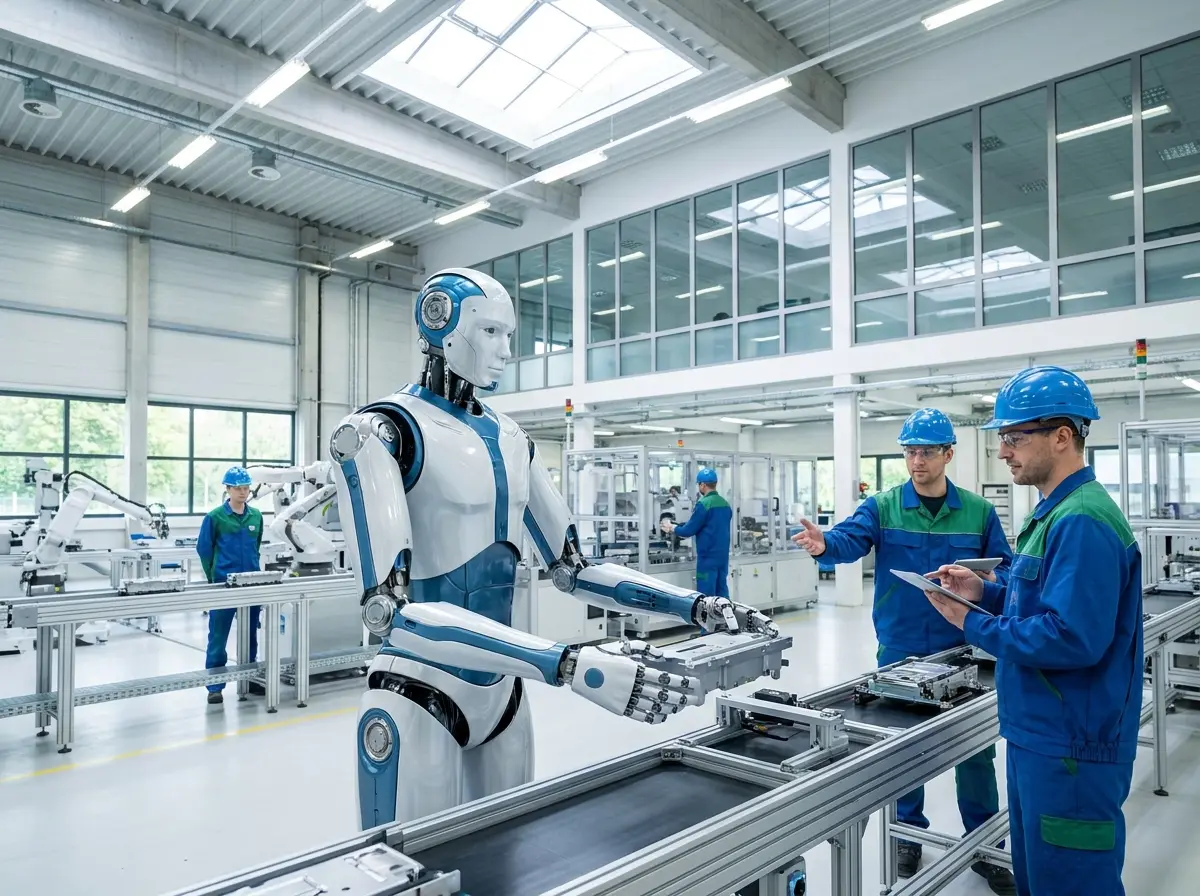
Integrating ai into industrial workflows requires careful planning and strategic execution from facility management teams to ensure a high return on investment. Operations managers must thoroughly evaluate their current infrastructure before introducing these ai-enabled robots to the floor, checking for network dead zones and physical obstructions. The transition process demands a highly structured approach to guarantee workplace safety while maintaining daily operational efficiency and employee morale. By automating repetitive or dangerous tasks, companies can let their humans focus on high-level problem solving and creative strategy. This shift often leads to higher job satisfaction as workers move away from “dull, dirty, and dangerous” roles.
Implementation Phases
1. Assess the Work Environment
Before deploying a humanoid robot, map out the entire facility to identify potential hazards and bottlenecks. You must evaluate floor conditions, lighting variations, and high-traffic areas where human employees frequently operate to prevent collisions. This assessment should also include a review of existing safety certifications and local labor regulations regarding autonomous machinery.
2. Train the System for Specific Duties
Configure the machine to perform tasks that align with your specific production requirements. Programming often involves demonstrating the physical motions so the system can record and replicate the exact movements accurately using its onboard sensors. This “teaching by demonstration” method significantly reduces the technical expertise required for on-site staff to manage the robot.
3. Establish Safety Protocols
Define clear boundaries and emergency stop procedures for all autonomous units. Ensure that human workers are trained on how to interact with the robots and understand the visual or auditory signals the machines use to communicate their status. Regular safety drills should be conducted to ensure that all personnel are familiar with the robot’s behavior in emergency scenarios.
4. Monitor and Optimize Performance
Continuously collect data on the robot’s efficiency and error rates. Use this information to refine the machine learning models, allowing the system to improve its speed and accuracy over time as it becomes more familiar with the facility. Predictive maintenance schedules should also be established to minimize downtime caused by mechanical wear and tear.
Expanding Real-World Applications for Humanoid Robots
The versatility of humanoid robots makes them ideal for a wide range of industries beyond the traditional manufacturing sector. In healthcare, these machines are being tested as assistants that can help move patients or deliver supplies, reducing the physical strain on nursing staff. Because they can navigate standard hospital layouts, they provide a flexible solution that doesn’t require expensive facility renovations. Furthermore, their ability to interact through natural language makes them helpful for providing basic information to visitors or patients. This social interaction component is particularly valuable in elder care settings where companionship is a priority.
In the consumer sector, we are seeing the emergence of service robots designed to assist with various household tasks such as cleaning, organizing, or even basic meal preparation. These machines use advanced spatial mapping to learn the layout of a home, ensuring they can operate without bumping into furniture or pets. As the cost of hardware decreases, these personal assistants will become more accessible to the general public, fundamentally changing how we manage our domestic lives. The goal is to create a seamless integration where the robot becomes a helpful, unobtrusive part of the family environment. Future iterations may even assist with complex tasks like laundry or home maintenance.
Logistics and warehousing remain the most active areas for deployment, where humanoid robots handle the sorting and moving of packages. Unlike traditional conveyor systems, these robots can be redeployed to different parts of a warehouse as demand shifts, providing a level of agility that was previously impossible. They can work around the clock, only stopping for brief charging intervals, which significantly increases the throughput of distribution centers. This flexibility is particularly valuable during peak shopping seasons when volume can fluctuate wildly. Companies like Figure AI are specifically targeting this sector with their general-purpose humanoid designs.
Another emerging field is disaster response and search-and-rescue operations. Humanoid robots can enter environments that are too dangerous for humans, such as collapsed buildings or areas with chemical leaks. Their bipedal nature allows them to climb over rubble and turn valves that were designed for human hands. By equipping these robots with thermal cameras and gas sensors, rescue teams can locate survivors and assess hazards from a safe distance. This application highlights the potential for robotics to save lives in the most extreme circumstances.
Maintaining Data Privacy in Autonomous Systems
As an artificial intelligence robot collects massive amounts of visual and auditory data, maintaining data privacy becomes a critical concern for both companies and individuals. These machines are equipped with high-resolution cameras and microphones that could potentially capture sensitive information during their daily operations. Organizations must implement robust encryption and data-handling policies to ensure that this information is processed securely and not misused. Industry experts in robotics emphasize the importance of “privacy by design,” where data is anonymized at the source whenever possible. This means that faces and identifying documents are blurred before the data ever leaves the robot’s local storage.
Furthermore, the connectivity required for these systems to receive updates and share learning data introduces potential cybersecurity vulnerabilities. A compromised robot could pose a physical threat or serve as an entry point for hackers to access a corporate network. Therefore, multi-layered security protocols, including regular software audits and secure boot processes, are essential for any fleet deployment. Transparency with employees and customers about what data is being collected and how it is being used is also vital for building long-term trust in autonomous technology. Companies should also consider using edge computing to process data locally, reducing the need for cloud-based storage.
The ethical implications of data collection also extend to the workplace, where employees may feel monitored by their robotic colleagues. Management must establish clear guidelines on how robotic data is used for performance evaluation to avoid creating a culture of surveillance. Open communication and employee involvement in the deployment process can help alleviate these concerns. As regulations like GDPR continue to evolve, companies must remain agile in their compliance strategies to avoid significant legal and reputational risks. Protecting the privacy of the individual is just as important as the efficiency of the machine.
Why Humanoid Robots Must Adapt to Unstructured Environments
One of the greatest challenges in robotics is the ability to navigate unpredictable environments that have not been specifically mapped or prepared for automation. Unlike a controlled factory floor, the real world is full of moving obstacles, changing lighting, and uneven surfaces that can confuse basic sensors. To be truly useful, a humanoid robot must possess the cognitive flexibility to handle these surprises in real-time without freezing or failing. This requires a combination of high-speed processing and sophisticated path-planning algorithms that can recalculate routes in milliseconds. The ability to distinguish between a permanent wall and a temporary obstacle like a person is fundamental to this process.
Research into “sim-to-real” transfer is focused on closing the gap between virtual training and physical reality. By introducing random noise and unexpected variables into simulations, engineers can prepare the robot for the chaos of the real world. This training helps the machine learn to recover from slips, navigate through crowds, and identify objects even when they are partially obscured. The ability to adapt to these unstructured settings is what will ultimately allow robots to move from specialized industrial roles into general-purpose service positions. This transition is often referred to as the “Holy Grail” of robotics research.
Tactile sensing and “soft robotics” are also playing a role in environmental adaptation. By using flexible materials and sensitive pressure sensors, robots can interact with delicate objects and humans more safely. A robot that can feel the difference between a metal tool and a human hand is far more useful in a collaborative setting. This physical adaptability complements the digital adaptability provided by machine learning. As these two fields converge, we will see machines that are both physically and mentally resilient in the face of real-world complexity. The future of robotics lies in this balance of strength and sensitivity.
The Future of AI Robotics in Society
We are still in the early stages of the robotics revolution, with the most significant breakthroughs likely still ahead of us. As artificial intelligence continues to evolve, we can expect robots to gain a deeper understanding of human emotions and social cues, allowing for more natural collaboration. This will lead to innovative solutions for aging populations, where robots can provide both physical assistance and social companionship. The future of work will likely involve a hybrid model where humans and machines work side-by-side, each focusing on their respective strengths. This synergy will drive productivity to levels previously thought impossible.
Ethical considerations will also play a major role in how these technologies are integrated into our daily lives. Society must grapple with questions regarding job displacement, accountability for autonomous actions, and the long-term impact of human-robot relationships. By fostering an open dialogue between technologists, policymakers, and the public, we can ensure that the development of artificial intelligence robots benefits everyone. We must also consider the environmental impact of manufacturing and disposing of large numbers of robotic units. Sustainable design and circular economy principles will be essential for the long-term viability of the robotics industry.
Ultimately, the goal is to create machines that enhance human potential and solve some of the world’s most pressing challenges through intelligent automation. Whether it is exploring the surface of Mars, performing life-saving surgeries, or simply helping with household chores, the potential applications are limited only by our imagination. As we move forward, the focus will remain on creating systems that are not just smart, but also empathetic and aligned with human values. The journey toward a robotic future is not just about technology; it is about the kind of world we want to build for future generations. By embracing this change with caution and curiosity, we can unlock a new era of human-machine partnership.


