

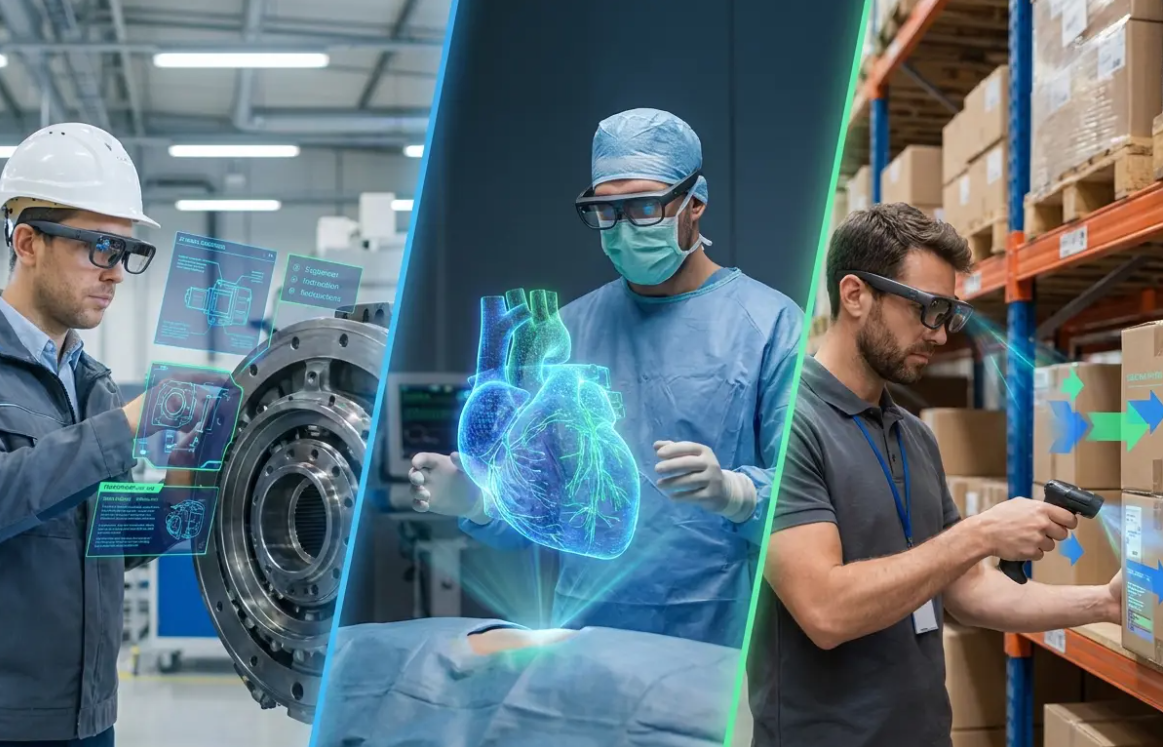
Augmented reality (AR) technology seamlessly blends digital information and interactive elements with the physical environment around you. Unlike virtual reality, which creates an artificial space, augmented reality overlays graphics and text onto the physical space you see every day. This powerful technology transforms how consumers shop for goods, how doctors perform complex surgeries, and how warehouse workers manage massive inventory systems.
How can your organization practically implement these advanced digital tools and AR applications? Businesses across multiple sectors are finding practical, highly profitable ways to integrate digital overlays into their daily operations. You can leverage these spatial computing tools to solve expensive operational problems and create more engaging customer experiences.
Augmented reality relies heavily on advanced computer vision and depth tracking to map physical spaces accurately. Your smartphone camera or smart glasses capture the surrounding environment in real time to build a digital mesh. Software then processes these visual inputs instantly to determine exactly where digital objects should sit.
This advanced spatial computing allows a digital chair to look like it rests firmly on your physical living room rug. Major technology companies invest heavily in software development kits to make this creation process much easier for developers. Tools like Apple’s ARKit and Google’s ARCore provide engineers with the foundational code needed to build these experiences quickly.
These robust platforms handle the heavy lifting of motion tracking, environmental understanding, and dynamic light estimation. Application developers can focus entirely on creating engaging content rather than building basic physics engines from scratch. This accessible infrastructure directly fuels the rapid expansion of mobile spatial computing applications available to everyday consumers.
The Core Mechanics Behind AR Technology and the Screen
Three primary components must work together flawlessly to make an augmented reality system function properly. First, hardware sensors gather precise spatial data about the user’s surroundings and their exact physical position in the room. Next, powerful processing units analyze this incoming data stream to render the appropriate digital response without noticeable lag.
Finally, advanced display hardware projects the resulting high-resolution images directly into the user’s field of vision. This seamless interaction happens in mere milliseconds to prevent motion sickness and maintain the optical illusion. A failure in any of these three components breaks the immersion and ruins the user experience entirely.
Key Takeaways
- Augmented reality overlays digital information onto your physical environment using advanced spatial computing tools.
- Software platforms like ARKit handle the heavy processing required for motion tracking and light estimation.
- Hardware sensors, processing units, and display lenses must work together flawlessly to maintain visual immersion.
Major Industry Applications for AR Technology and Enterprise AR Solutions
The commercial applications for augmented reality extend far beyond simple mobile games and entertaining social media filters. Diverse industries across the board use this technology to solve expensive operational problems and improve general workflow efficiency. Companies actively improve worker safety, reduce employee training costs, and boost sales conversion rates through strategic implementation.
You can see these practical financial benefits clearly by examining a few specific sectors within the American economy. Early adopters in retail and healthcare have already proven that spatial computing delivers a measurable return on investment. The initial costs of hardware and software development quickly pay for themselves through increased productivity and higher sales volumes.
Retail and E-commerce Transformation via AR Applications
Major retailers use sophisticated digital overlays to help potential customers visualize products before making a final purchase decision. Large furniture companies let mobile shoppers place virtual sofas in their actual living rooms to check dimensions and colors. According to data published by Shopify, products featuring 3D and augmented reality content show a 94% higher conversion rate.
This immediate visual confirmation gives hesitant buyers the confidence they need to complete high-ticket online transactions. Global cosmetics brands also offer virtual try-on features that map makeup products directly onto a user’s face accurately. This innovative approach reduces the need for physical store inventory and significantly lowers return rates for online cosmetic purchases.
Customers enjoy a highly personalized shopping experience right from the comfort of their own living rooms. Retailers directly benefit from increased online engagement metrics and dramatically improved customer satisfaction scores across the board. Incorporating spatial computing into your digital storefront represents a powerful strategy for driving revenue growth this year.
Healthcare and Surgical Assistance using AR Software
Medical professionals currently utilize augmented reality systems to improve patient outcomes and streamline highly complex surgical procedures. Operating surgeons wear specialized headsets that project 3D anatomical models directly over the patient during complicated operations. This technology allows doctors to see internal structures, blood vessels, and hidden tumors without making unnecessarily large incisions.
Johns Hopkins Medicine performed its first augmented reality surgery in 2021, marking a major milestone for the medical field. Medical students also benefit tremendously from interactive 3D models during their rigorous anatomical training and classroom studies. They can manipulate digital organs and study complex biological systems closely without requiring access to physical cadavers.
This modern educational method accelerates the learning process and provides unlimited practice opportunities for inexperienced medical residents. Teaching hospitals save significant money on training resources while simultaneously producing much more capable medical professionals. The integration of spatial computing in healthcare will likely become a standard practice within the next decade.
Pro Tip
Always optimize your 3D product models for mobile devices to reduce application load times. Heavy digital assets will drain battery life quickly and frustrate your potential customers during the shopping experience.
Implementing Augmented Reality Solutions and AR Software in Your Business
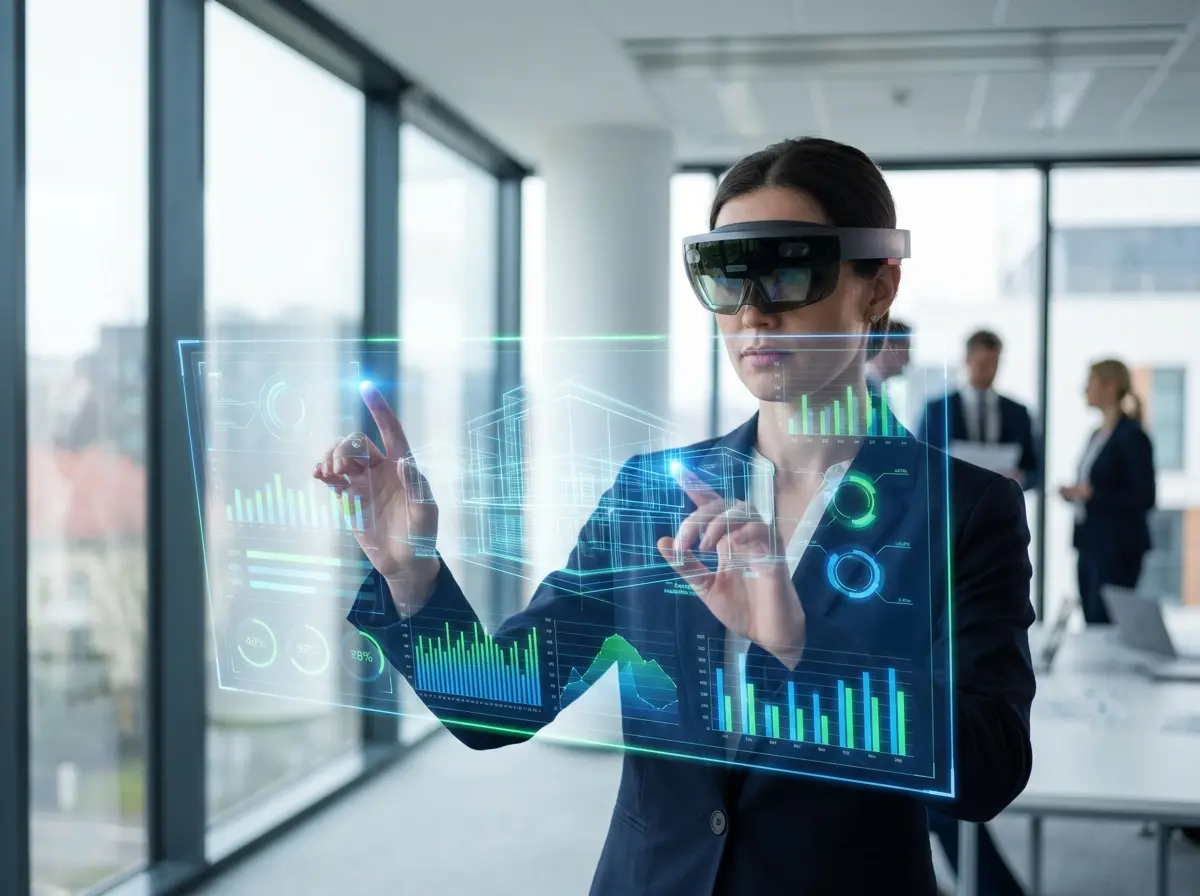
Deploying a spatial computing solution requires careful strategic planning and a clear understanding of your fundamental business goals. What specific operational problem can a digital overlay actually solve for your team? You should avoid adopting the technology simply because it seems modern or looks impressive to your corporate board members.
A successful enterprise deployment always focuses entirely on practical utility and a highly measurable return on investment. Many organizations fail miserably because they attempt to build custom applications from scratch without sufficient technical resources. You often achieve much better results by utilizing existing commercial platforms and proven white-label software solutions.
This practical approach minimizes your initial development costs and drastically reduces your overall time to market. Once you successfully prove the basic concept works, you can confidently invest in more specialized software development. Starting small allows you to gather valuable user feedback before committing a massive portion of your technology budget.
How to Deploy Spatial Computing
Define Your Specific Use Case
Identify a measurable business problem that spatial computing can actually resolve for your team.
Tip: Focus on processes that currently suffer from high error rates or extensive employee training times.
Select Appropriate Hardware Platforms
Choose physical devices that match your working environment and your specific software requirements perfectly.
Tip: Always test consumer-grade tablets before committing to expensive, specialized industrial headsets.
Develop and Test the Solution
Build your digital overlay using established software development kits and gather immediate user feedback.
AR Hardware Innovations and Smart Glasses Driving the Market
The physical hardware that powers augmented reality experiences has improved dramatically over the last five consecutive years. Early developer headsets were incredibly heavy, prohibitively expensive, and required constant tethering to powerful desktop computers. Today, standalone consumer devices offer impressive processing power in much lighter, infinitely more comfortable physical form factors.
Smart glasses represent the next major frontier for mainstream consumer augmented reality hardware development in the United States. These discreet devices look exactly like regular prescription eyeglasses but contain tiny projectors and transparent display lenses. They deliver text notifications, street navigation instructions, and contextual information directly into your natural field of view.
While overall battery life remains a stubborn challenge, the underlying display technology improves significantly with each passing quarter. Heavy industrial applications often rely on ruggedized commercial headsets built specifically for dangerous, high-risk work environments. Factory workers wear specialized hardhats equipped with robust visors that display schematic diagrams and critical safety alerts.
These specialized industrial devices withstand extreme temperatures, heavy dust, and physical impact while maintaining reliable wireless network connections. The manufacturing sector currently drives a massive portion of the hardware market revenue for major technology firms. As production scales up, the cost of manufacturing these complex optical components will naturally begin to drop.
Key Takeaways
- Standalone consumer devices now offer impressive processing power in much lighter physical form factors.
- Smart glasses deliver text notifications and contextual information directly into your natural field of view.
- Industrial applications rely on ruggedized commercial headsets built specifically for dangerous work environments.
The Future of Augmented Reality, Mixed Reality, and Spatial Computing
The powerful intersection of artificial intelligence and mixed reality will completely define the next decade of spatial computing. Machine learning algorithms improve object recognition, allowing smart devices to understand physical environments with incredible mathematical precision. This technical synergy enables digital overlays to interact with physical objects in much more realistic, believable ways.
Your future smart glasses will likely recognize specific products on a grocery shelf and instantly display nutritional information. High-speed 5G cellular networks also play a critically important role in the widespread adoption of this spatial technology. Augmented reality requires massive amounts of data transfer to function smoothly without causing noticeable visual lag.
These high-speed networks allow lightweight devices to offload heavy processing tasks directly to cloud servers in real time. This capability makes consumer headsets significantly lighter and cheaper by reducing the immediate need for expensive onboard processors. Widespread infrastructure improvements will eventually make spatial computing accessible to almost every consumer in the country.
Privacy concerns will inevitably shape exactly how federal regulators govern the widespread use of spatial computing devices. Always-on cameras that constantly map public spaces raise significant ethical questions about personal consent and corporate data collection. Technology companies must address these legitimate consumer worries directly to achieve mainstream acceptance and avoid heavy government regulation.
Conclusion
Augmented reality has successfully transitioned from a purely futuristic concept into a highly practical daily business tool. Innovative companies across the United States actively use these digital overlays to train employees, treat patients, and sell products. The technology provides massive, highly measurable financial benefits that easily justify the initial enterprise implementation costs.
As consumer hardware becomes more accessible and enterprise software becomes more powerful, these commercial applications will multiply rapidly. How might spatial computing improve your own operational efficiency and daily workflows today? Start your journey by examining your current friction points and researching how similar companies use digital overlays.
Small, highly targeted pilot programs often yield the absolute best operational insights with the lowest possible financial risk. The forward-thinking businesses that master this technology today will hold a massive competitive advantage over slower rivals tomorrow. If you want to explore more strategies for modernizing your technology stack, review our digital transformation guide.


