

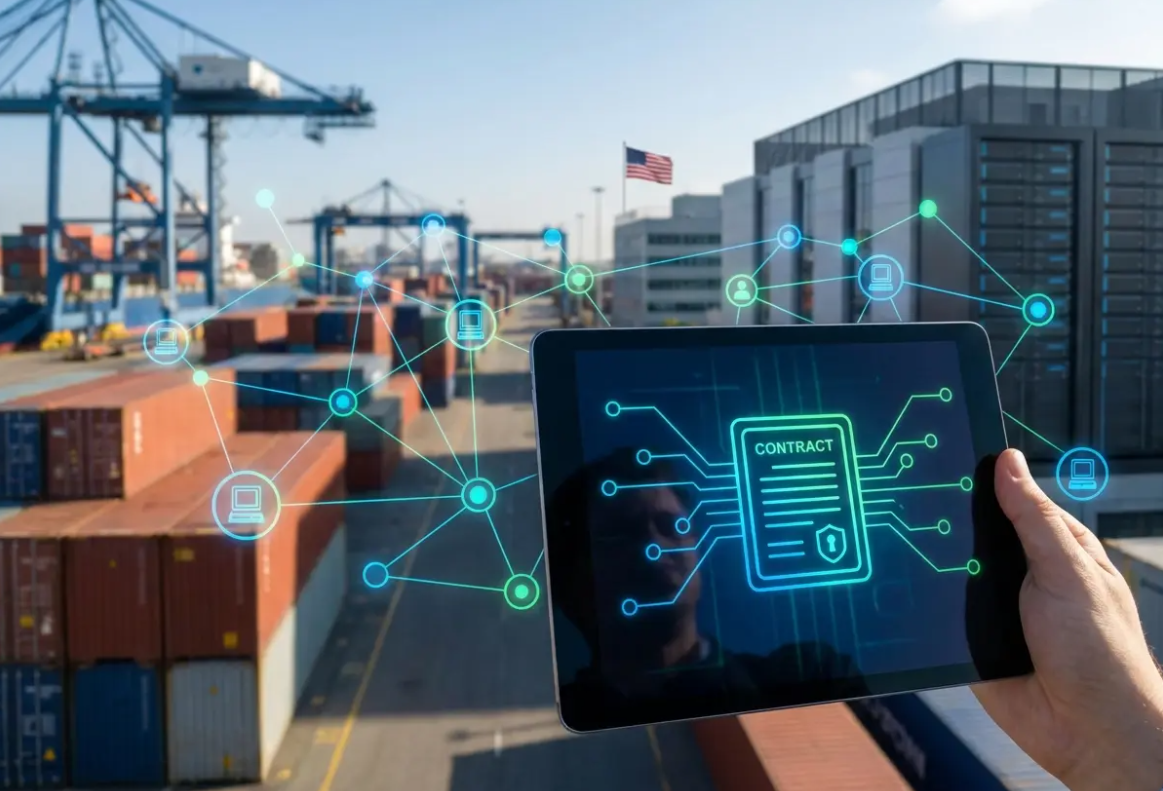
p>Blockchain tech emerged as the foundational layer for digital currency, but it quickly evolved into a massive structural shift for enterprise data management. Today, American businesses utilize this distributed ledger technology to secure supply chains, verify identities, and process complex financial transactions. While the concept may seem to require advanced computer science degrees, its core principles are accessible to modern business leaders. Why do so many Fortune 500 companies invest heavily in this specific digital infrastructure? Let us break down how these distributed networks operate and why they matter for modern corporate operations.
At its core, blockchain tech functions as a distributed digital ledger that continually records transactions across thousands of independent computers. This decentralized structure prevents unauthorized parties from altering historical financial records without the explicit consensus of the entire participating network. Every time a new transaction occurs, the system verifies the incoming data and groups it into a highly secure digital block.
Once a specific block reaches its maximum storage capacity, the system permanently attaches it to the previously filled data block. This chronological linking process creates the literal chain that gives the underlying technology its highly recognizable public name. A decentralized network of independent nodes validates each new network addition through specific mathematical consensus mechanisms and cryptographic rules.
Two main consensus models currently dominate the digital market: proof-of-work and the increasingly popular proof-of-stake framework. Proof-of-work requires massive computational processing power to solve complex mathematical puzzles, while proof-of-stake relies on participants locking up existing tokens as collateral. Both security methods aim to keep the network completely honest and prevent fraudulent entries from taking root in the ledger.
Key Takeaways
- Distributed ledgers record transactions across thousands of computers to prevent unauthorized data manipulation.
- Blocks link together chronologically to create an unalterable history of all network activity.
- Consensus mechanisms like proof-of-stake keep the network honest without requiring a central administrator.
Enterprise Blockchain Tech: Core Advantages Driving Adoption

Decentralization and Trust in Blockchain Tech Networks
Companies adopt blockchain technology primarily because it removes unnecessary centralized authority figures from the daily operational equation. Traditional enterprise databases rely heavily on a single administrator who holds complete operational control over the stored corporate information. By distributing identical copies of the digital ledger to all participants, the decentralized network naturally eliminates single points of failure.
This decentralized structure builds inherent digital trust among corporate parties who do not formally know each other in real life. You no longer need to rely on a third-party intermediary to verify that a specific financial transaction took place. The network protocol automatically confirms the asset exchange based on strict, unalterable mathematical rules written directly into the code.
Businesses save significant capital by cutting out these expensive middlemen and traditional brokers from their daily operational workflows. Clearinghouses and settlement agencies traditionally charge heavy service fees to act as the trusted bridge between two negotiating parties. Distributed ledgers replace these historically expensive institutions with automated, highly efficient, and completely predictable computer code.
Enhanced Data Security Through Enterprise Blockchain Tech
Robust network security represents another massive operational benefit for organizations handling sensitive consumer data across digital communication channels. Malicious hackers struggle to compromise these networks because they would need to attack thousands of isolated computers simultaneously. Taking down a single network node does absolutely nothing to disrupt the broader functional ecosystem of the platform.
Pro Tip
If your organization plans to store highly sensitive customer data, consider deploying a private permissioned ledger rather than a public network to maintain strict access control.
The cryptographic hashing process changes the entire data sequence if someone attempts to alter even one character of information. This mathematical relationship means that falsifying historical records requires rewriting every subsequent data block in the active chain. Current computing hardware simply cannot process that level of complex calculation fast enough to fool the broader network.
Many federal government agencies now recognize distributed ledgers as a highly effective baseline defense against modern ransomware attacks. Because multiple clean copies of the database exist globally, targeted organizations can quickly recover from localized physical server breaches. This built-in network redundancy provides deep peace of mind for chief information security officers across the entire country.
Operational Transparency and Immutable Records
Corporate transparency naturally increases when all authorized participants can view the complete history of active network transactions. Financial institutions and logistics companies save billions annually by reducing the time spent auditing conflicting internal records through immutable records. You can trace any digital asset back to its exact origin point with absolute mathematical certainty.
Public networks allow anyone with a basic internet connection to view the flow of corporate capital in real time. This high level of openness holds public companies and large charities directly accountable for how they distribute their collected funds. External auditors can verify corporate financial statements by simply analyzing the public ledger instead of requesting paper bank statements.
Smart Contracts and Blockchain Tech: Real-World Applications Across United States Industries
Financial Services and DeFi Blockchain Tech Solutions
Wall Street banks and emerging fintech startups use blockchain tech to settle cross-border international payments almost instantly. Traditional international wire transfers often take several days to clear and incur heavy fees from multiple intermediary routing banks. Digital ledgers process these exact same financial transactions in mere minutes for a tiny fraction of the historical cost.
Decentralized finance, commonly called DeFi, takes this concept further by replacing traditional retail brokers with automated smart contracts. Retail users can borrow, lend, and earn compounding interest on their digital assets through code-based protocols rather than physical bank branches. According to a comprehensive Forbes report, the total value locked in DeFi protocols recently reached tens of billions of dollars.
Payment processing giants like Visa and Mastercard currently test digital settlement layers to improve their existing credit card networks. They recognize that distributed frameworks can process massive volumes of weekend transactions when traditional banking systems remain closed. This continuous operational capability provides a massive competitive advantage for modern merchants operating in a global digital economy.
Supply Chain Visibility and Blockchain Tech Asset Tracking
American retail giants currently utilize distributed ledgers to track physical inventory from foreign manufacturing plants to domestic store shelves. If a dangerous foodborne illness outbreak occurs, grocery chains can pinpoint the exact rural farm that supplied the contaminated produce. This rapid digital traceability saves human lives and prevents companies from throwing away perfectly safe inventory during broad product recalls.
The FDA’s New Era of Smarter Food Safety initiative actively encourages the domestic food industry to adopt tech-enabled product traceability. Blockchain tech perfectly matches this specific regulatory push by creating immutable digital records of temperature changes and shipping delays. Logistics managers can finally trust their tracking data without waiting for physical paper manifests to clear international customs checkpoints.
Luxury brands also deploy this infrastructure to prove the authenticity of high-end consumer goods like watches and designer handbags. Shoppers can scan a quick response code to view the entire manufacturing journey of their expensive retail purchase. This verifiable proof of authenticity severely damages the highly profitable counterfeit goods market operating within the United States.
Healthcare Data Management and Blockchain Tech Privacy
American hospitals currently face massive operational challenges regarding patient data silos and strict federal privacy regulations. Medical doctors often struggle to access critical patient histories when a sick individual transfers between different regional healthcare networks. Blockchain tech offers a highly secure framework for sharing medical records while maintaining strict legal compliance with federal privacy laws.
Individual patients can hold their own digital identity keys and grant temporary record access to specific medical specialists as needed. This modern approach puts the consumer back in direct control of their sensitive health information and personal medical history. Research published by the National Institutes of Health highlights how this infrastructure dramatically reduces costly administrative hospital errors.
Global pharmaceutical companies also leverage this digital infrastructure to track prescription medications from the manufacturing plant to the local pharmacy. This verifiable tracking prevents dangerous counterfeit drugs from entering the legitimate medical supply chain and harming unsuspecting American consumers. Licensed pharmacists can instantly authenticate a medical shipment by scanning the digital tags permanently attached to the ledger.
Enterprise Deployment: How to Implement Basic Blockchain Tech Solutions
How does a company successfully migrate its legacy systems to a distributed framework? Transitioning a traditional business process to a decentralized digital ledger requires careful strategic planning and highly realistic expectations. You cannot simply plug a new software layer into your existing corporate infrastructure and expect immediate financial results. Corporate organizations must objectively evaluate whether they truly need a decentralized database or if a standard cloud solution suffices.
How to Get Started
Assess Business Requirements
Identify internal processes that suffer from trust issues or require multiple independent parties to verify data simultaneously.
Tip: Create a strategic checklist to make certain you do not miss any technical prerequisites.
Choose the Right Protoco
Select between public networks like Ethereum or private enterprise frameworks like Hyperledger Fabric based on specific privacy needs.
Tip: Save your initial protocol options as a baseline template for future departmental use.
Develop and Deploy Smart Contracts
Write and rigorously audit the self-executing code that will permanently automate your business logic on the distributed ledger.
Network Scalability: Overcoming Common Blockchain Tech Scaling Challenges
Despite the massive commercial potential, blockchain tech still faces significant operational hurdles regarding network scalability and environmental impact. Early digital networks like Bitcoin process only a handful of financial transactions per second, compared to thousands handled by credit card companies. This technical bottleneck forces software developers to create secondary network layers that batch transactions before settling them on the main chain.
Energy consumption remains a highly debated talking point among environmental advocates and federal regulators tracking carbon emissions. Proof-of-work protocols require massive physical server farms that collectively consume as much electricity as small European countries. Fortunately, the industry shift to proof-of-stake models has effectively reduced energy requirements by more than ninety-nine percent for major networks.
Regulatory uncertainty in the United States causes many enterprise leaders to hesitate before launching new decentralized initiatives. The Securities and Exchange Commission continues to define exactly which digital assets qualify as unregistered financial securities. Corporate legal teams must carefully structure new digital projects to comply with existing financial frameworks while waiting for clear legislative guidance.
Key Takeaways
- Secondary network layers help solve traditional scalability bottlenecks by batching transactions efficiently.
- Modern proof-of-stake protocols eliminate the massive energy consumption associated with early digital currencies.
- Companies must work closely with legal counsel to navigate current United States regulatory gray areas.
Web3 and The Future Trajectory of Blockchain Tech Networks
The next major evolution for blockchain technology involves seamless interoperability between isolated digital networks. Currently, moving digital assets or data between different ledgers requires complex bridging mechanisms that often present severe security vulnerabilities. Software developers are aggressively building universal protocols that allow frictionless communication across previously disconnected financial ecosystems.
Central bank digital currencies, or CBDCs, represent another massive shift on the horizon for global corporate finance. The Federal Reserve continues to research the potential economic risks and benefits of issuing a programmable digital dollar. If implemented widely, a United States CBDC would fundamentally change how commercial banks interact with the federal government.
️Warning
Never deploy a smart contract dealing with customer funds without conducting multiple independent security audits. Poorly written code can result in irreversible financial losses.
Web3 applications will likely push blockchain tech directly into the background where average internet consumers never even notice it. You will interact with decentralized applications just as easily as you use standard mobile banking apps today. This invisible integration serves as the final necessary step for mass commercial adoption across the mainstream internet.
Final Thoughts: Conclusion on Blockchain Tech
Blockchain tech provides a highly robust framework for establishing digital trust in an otherwise trustless online environment. By distributing identical records across an entire digital network, organizations protect themselves from internal fraud and centralized hardware failures. The technology forces traditional industries to completely rethink how they store data, transfer monetary value, and verify identities.
Commercial adoption will continue to accelerate as developers solve lingering technical issues with network scalability and user experience. Companies that understand these decentralized principles today will hold a massive operational advantage over competitors relying on outdated legacy systems. You should begin evaluating how distributed ledgers can streamline your daily operations and secure your critical business data.


