

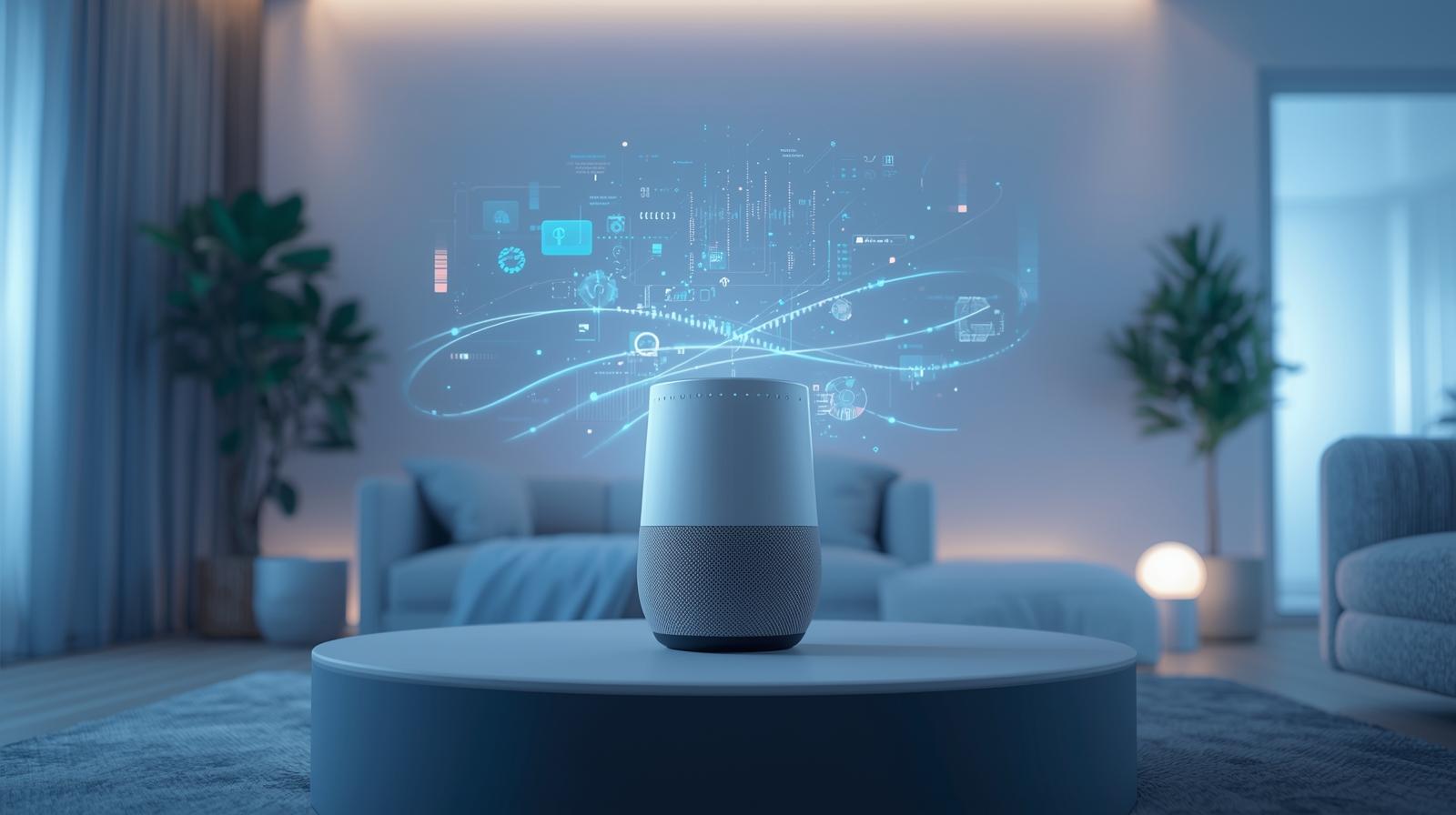
Have you ever been cooking with your hands full and wished you could set a timer or change the music without touching your phone? That simple convenience is exactly what smart speakers are designed to provide. These devices act as voice-controlled assistants that help with everyday tasks when using your hands is inconvenient.
Smart speakers have quickly evolved from simple gadgets that play music into multifunctional devices capable of managing parts of your daily routine. As technology advances, these devices are becoming smarter, more responsive, and better integrated with other systems in the home.
The future of smart speaker technology is moving toward assistants that not only respond to commands but also understand habits, anticipate needs, and seamlessly connect with other smart devices.
What Smart Speakers Can Do Today
At their core, smart speakers combine a wireless speaker with a built-in voice assistant. This allows users to control the device using voice commands instead of physical buttons or smartphone apps.
Some of the most widely used devices include the Amazon Echo and the Google Nest. These devices rely on voice assistants such as Amazon Alexa and Google Assistant to interpret and respond to spoken requests.
For many households, smart speakers serve as helpful tools for simple daily tasks. Common uses include:
Setting timers and alarms
Playing music or podcasts
Checking weather updates
Getting quick answers to questions
For example, while cooking, you can simply say “Hey Google, set a timer for ten minutes” without needing to wash your hands or unlock your phone.
These simple features make smart speakers convenient additions to kitchens, living rooms, and home offices.
Understanding Smart Speaker Privacy
Because smart speakers respond to voice commands, some people worry that these devices may constantly listen to private conversations. In reality, smart speakers operate differently.
Most devices remain in a standby state that listens only for a specific wake word. For example, devices connected to Amazon Alexa activate when they hear the word “Alexa,” while speakers using Google Assistant respond to phrases like “Hey Google.”
Until the wake word is detected, the device is not actively recording commands. Once the wake word is spoken, the device records a short segment of audio that contains the user’s request. This audio is then sent securely to cloud servers where the command is processed.
After the request is completed, the device stops recording again.
For additional privacy, most smart speakers include a physical microphone mute button. When this button is activated, the microphones are completely disabled. Indicator lights on the device usually confirm when the microphones are turned off.
These privacy controls allow users to manage when their devices can listen for commands.
Trend One: Proactive Assistance
Current smart speakers mainly operate by responding to direct requests. However, the next generation of smart assistants is expected to become more proactive.
Instead of waiting for a command, future devices may provide helpful reminders based on personal routines and schedules. For instance, if a user has a calendar appointment and traffic conditions are heavy, the speaker may suggest leaving earlier than planned.
These features rely on improved artificial intelligence and machine learning systems that can analyze patterns in user behavior.
By recognizing habits and preferences, smart speakers may gradually evolve into assistants that support planning, organization, and daily decision-making.
Trend Two: Greater Device Compatibility with Matter
One of the biggest challenges in smart home technology has been compatibility between devices from different brands. A smart light purchased from one manufacturer might not work with a voice assistant developed by another company.
A new industry standard called Matter aims to solve this issue.
Matter is supported by many major technology companies, including Apple, Amazon, and Google.
The purpose of Matter is to create a shared communication standard that allows smart devices from different brands to work together seamlessly.
With Matter, consumers will not need to worry as much about compatibility when purchasing new smart home products. Devices labeled with the Matter certification should work with multiple ecosystems, making smart homes easier to set up and expand.
Trend Three: Improved Sound Quality
Early smart speakers were often criticized for sacrificing sound quality in favor of voice assistant features. While they performed well for simple commands, their audio performance was sometimes limited.
Newer generations of smart speakers are addressing this issue by integrating higher-quality audio systems. Companies are investing in better speaker drivers, improved acoustic design, and software that adapts sound to room conditions.
These improvements allow smart speakers to function both as voice assistants and as capable home audio systems.
One notable feature that has gained popularity is multi-room audio. This allows multiple speakers placed in different rooms to play the same music simultaneously.
Users can begin playing a playlist in one room and continue listening seamlessly while moving throughout the home. The synchronized audio experience enhances both convenience and entertainment.
The Expanding Role of Smart Speakers in the Home
As voice recognition technology improves, smart speakers are becoming more deeply integrated into daily life. In addition to controlling music and answering questions, they can now manage lighting systems, adjust thermostats, and control connected appliances.
This integration is part of the broader development of smart homes, where multiple devices communicate and work together automatically.
Smart speakers often act as the central hub of this ecosystem. Through voice commands or automated routines, users can control multiple systems simultaneously.
For example, a single command could dim the lights, adjust the temperature, and start music for an evening routine.
As artificial intelligence systems become more advanced, these capabilities are expected to expand even further.
Should You Consider a Smart Speaker
Smart speakers are designed to simplify everyday tasks and reduce the need to interact directly with phones or other devices.
For many users, the most valuable benefit is convenience. Voice commands allow people to control technology quickly while performing other activities such as cooking, cleaning, or working.
When deciding whether a smart speaker fits your lifestyle, it may help to consider how often you reach for your phone to perform small tasks like setting timers or checking information.
If those moments occur frequently, a voice assistant device may offer meaningful convenience.
Whether choosing between devices like the Amazon Echo or the Google Nest, the most effective technology is the one that integrates smoothly into daily routines.
As smart speaker technology continues to evolve, these devices are likely to become even more helpful companions in modern homes.


