

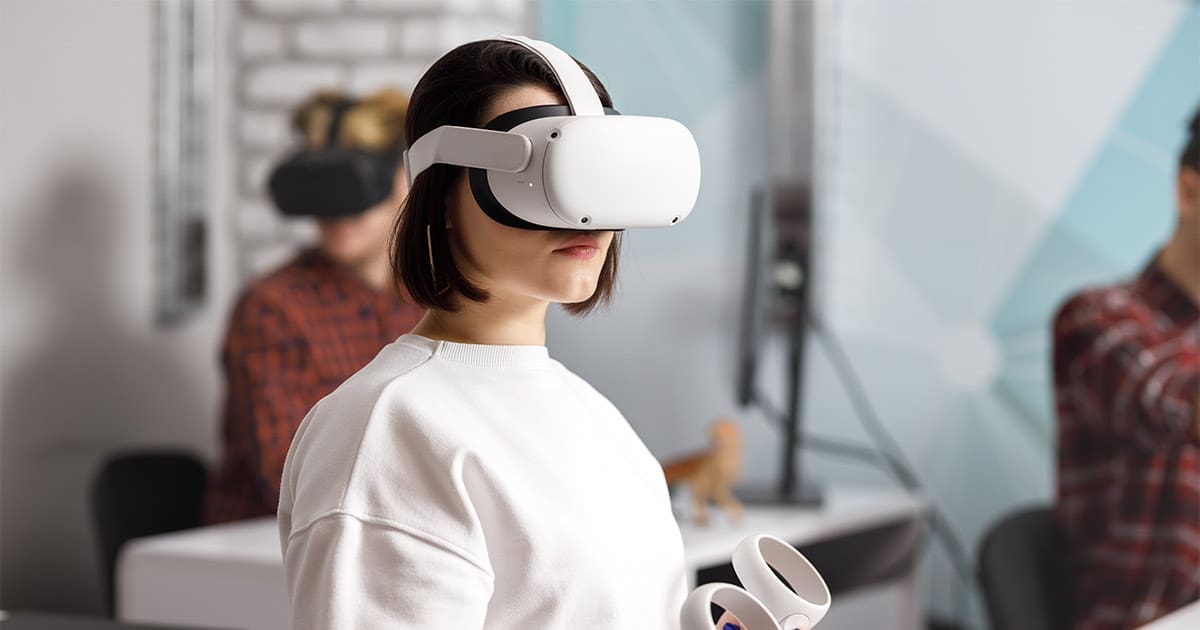
Virtual reality (VR) has emerged as a transformative tool in employee training programs across industries. By creating immersive, interactive environments, VR enables employees to learn complex tasks, practice scenarios safely, and retain knowledge more effectively. Unlike traditional training methods, VR combines experiential learning with real-time feedback, making it a compelling choice for modern workforce development.
This article explores the applications, benefits, challenges, and best practices of integrating VR into employee training programs.
Why VR Is Revolutionizing Employee Training
Traditional training methods—such as classroom sessions, manuals, or video tutorials—often fail to engage employees fully or replicate real-life scenarios. VR solves these challenges by:
- Providing realistic, immersive simulations of work environments
- Allowing hands-on practice without physical risks
- Reducing training time while improving retention
- Enabling remote or distributed workforce training
- Offering personalized feedback based on performance
These advantages make VR particularly valuable in industries where safety, precision, and procedural adherence are critical.
Key VR Applications in Employee Training Programs
1. Safety and Compliance Training
VR allows employees to experience potentially hazardous scenarios without danger. Industries like manufacturing, construction, and healthcare use VR to teach:
- Proper handling of equipment
- Emergency response protocols
- Hazard recognition and prevention
Simulation-based training helps employees internalize safety practices more effectively than lectures or videos.
2. Customer Service and Soft Skills
VR environments can simulate customer interactions, enabling employees to practice communication, conflict resolution, and sales techniques. Employees can:
- Engage in realistic role-playing scenarios
- Receive instant feedback on body language and tone
- Develop confidence in high-pressure situations
This is particularly useful for retail, hospitality, and call center staff.
3. Technical Skills and Equipment Handling
Industries that require specialized machinery or complex technical procedures benefit from VR training. Employees can:
- Practice operating equipment without risking damage
- Learn step-by-step maintenance or assembly tasks
- Master intricate workflows at their own pace
VR reduces training costs by limiting the need for physical resources or downtime.
4. Leadership and Management Training
VR simulations can recreate real-world managerial challenges, such as team conflict, project management, or crisis resolution. Employees in leadership programs can:
- Experience difficult scenarios safely
- Practice decision-making under pressure
- Receive feedback on leadership style and effectiveness
This prepares managers for real challenges while minimizing organizational risk.
5. Remote and Onboarding Training
VR enables new employees to experience a company’s environment without being physically present. Benefits include:
- Interactive office or facility tours
- Immersive onboarding simulations
- Standardized training across locations
This is particularly valuable for global organizations with remote teams.
Benefits of VR in Employee Training
The advantages of VR extend beyond engagement:
| Benefit | Description |
|---|---|
| Safety | Practice high-risk tasks without danger |
| Cost Efficiency | Reduce resource use and training downtime |
| Knowledge Retention | Immersive learning improves memory and understanding |
| Standardization | Ensure consistent training across locations |
| Performance Tracking | Real-time data allows targeted feedback |
Organizations can tailor VR modules to meet specific objectives while measuring employee performance accurately.
Challenges and Considerations
While VR is highly effective, organizations may encounter challenges when integrating it into training programs:
- High Initial Investment: Hardware, software development, and content creation can be costly.
- Technical Limitations: VR systems require technical expertise and infrastructure.
- User Comfort: Some employees may experience motion sickness or discomfort.
- Content Development: Creating realistic, scenario-based content can be resource-intensive.
Addressing these challenges early ensures successful implementation.
Additionally, organizations implementing AI-driven VR training tools should be aware of challenges in natural language processing development, particularly for interactive voice-based simulations and feedback systems.
Best Practices for VR Employee Training
- Start Small: Pilot programs with select teams before scaling.
- Integrate with Traditional Methods: Blend VR with classroom or e-learning modules.
- Customize Scenarios: Ensure simulations reflect real workplace situations.
- Monitor Progress: Use data analytics to assess effectiveness and adjust content.
- Provide Support: Offer guidance for employees new to VR technology.
Following these practices maximizes engagement and learning outcomes.
Frequently Asked Questions
Is VR training suitable for all industries?
Yes, though industries with complex tasks, safety risks, or customer interactions benefit most.
How long does it take to see results from VR training?
Organizations often notice improved engagement and knowledge retention within weeks of implementation.
Do employees need prior technical skills to use VR?
No, VR modules are generally user-friendly and designed for employees without technical backgrounds.
Can VR completely replace traditional training?
VR is most effective when combined with other training methods rather than replacing them entirely.
How do companies measure the effectiveness of VR training?
Employee performance metrics, scenario completion rates, and post-training assessments are common measurement tools.
Conclusion
Virtual reality applications in employee training programs offer a revolutionary approach to workforce development. By providing immersive, hands-on learning experiences, VR enhances knowledge retention, improves safety, and builds critical skills efficiently. While challenges such as cost, content creation, and technical expertise exist, careful planning and best practices can ensure successful integration.
With the right VR strategy, organizations can train employees more effectively, improve performance, and foster a culture of continuous learning in a safe and engaging environment.


