

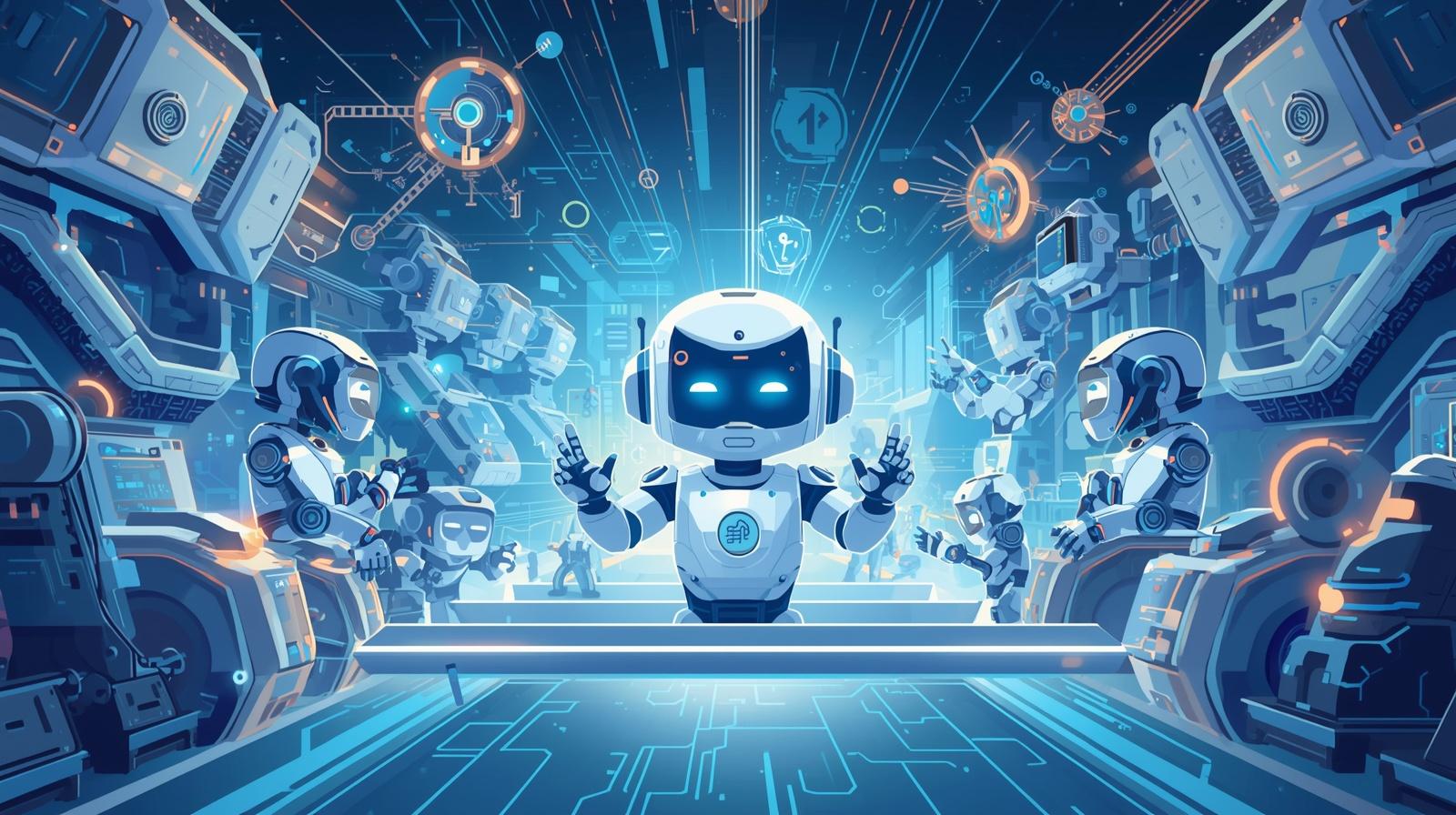
When many people hear the word robot, they imagine a humanoid machine from a science fiction film. In reality, the most influential robots today often look nothing like humans. They may resemble robotic vacuum cleaners, warehouse carts, or space rovers exploring distant planets. What connects all of these machines is a simple but powerful framework.
Every robot follows a basic cycle: Sense, Think, Act. First, it senses its environment through sensors. Next, it processes that information using onboard computing systems. Finally, it acts by moving or performing a task. This model explains how robots function, how artificial intelligence enhances them, and why they are transforming industries around the world.
Understanding the “Sense, Think, Act” Model
At its core, a robot is more than just a machine that performs repetitive actions. A dishwasher, for example, follows a preset timer and program. It does not adjust its behavior based on new information. A robot, on the other hand, interacts with its environment.
The sensing stage relies on devices such as cameras, microphones, temperature sensors, pressure sensors, and lidar systems. These components gather information about the robot’s surroundings. A camera may detect an obstacle, while a proximity sensor can measure distance. Sensors convert real-world conditions into data that the robot’s computer can interpret.
The thinking stage involves processing that data. The robot’s internal software analyzes input and determines the next action. This may involve following a programmed rule or applying artificial intelligence to interpret complex situations.
The acting stage is powered by actuators. Actuators function like muscles. They include motors, hydraulic systems, and robotic arms that convert digital commands into physical movement. Together, sensing, thinking, and acting define a true robotic system.
The Role of Artificial Intelligence in Robotics
Traditional industrial robots have been used for decades in manufacturing. These machines excel at repeating a single task with extreme precision. However, they struggle when something unexpected occurs, such as a misplaced object.
Artificial intelligence changes this limitation. AI allows robots to interpret data, adapt to new scenarios, and improve performance over time. Through machine learning, robots analyze large amounts of data to refine their decisions. For example, a robotic arm can learn to grasp objects of different shapes by studying thousands of examples.
This capability transforms robots from rigid automation tools into flexible systems. AI-powered robots can navigate unpredictable environments, identify damaged goods in warehouses, or assist in medical procedures with enhanced accuracy. The integration of AI is one of the most significant trends shaping the future of robotics.
Robots in Warehouses and Logistics
One of the most visible applications of robotics today is in logistics and e-commerce fulfillment centers. Large warehouses rely on Autonomous Mobile Robots, often called AMRs, to transport goods efficiently.
Unlike older automated systems that followed fixed tracks or painted lines, AMRs create real-time maps of their surroundings. Using sensors and onboard software, they detect obstacles and adjust routes dynamically. This flexibility allows them to operate safely alongside human workers.
Rather than replacing employees entirely, many warehouse robots handle repetitive or physically demanding tasks. Workers can then focus on decision-making, quality control, and customer service. This collaboration improves productivity and reduces workplace injuries.
Robotics in Healthcare
Robotics is also transforming healthcare, particularly in surgery. Surgical robotic systems are not autonomous doctors. Instead, they enhance a surgeon’s capabilities.
During robotic-assisted surgery, the surgeon controls robotic instruments from a console. The system translates the surgeon’s hand movements into precise, scaled-down motions. Natural hand tremors are filtered out, allowing for extremely steady and accurate movements.
These systems enable minimally invasive procedures, which often result in smaller incisions, reduced pain, and shorter recovery times for patients. Robotics in healthcare demonstrates how machines can augment human expertise rather than replace it.
The Challenge of Humanoid Robots
Humanoid robots attract significant attention because they resemble people. However, building machines that walk, balance, and manipulate objects like humans is extraordinarily complex.
Human movement requires constant balance adjustments and rapid coordination between sensors and motors. Replicating this in a machine demands advanced engineering and significant computational power. As a result, humanoid robots remain relatively rare and expensive.
Their potential applications include disaster response, hazardous environment maintenance, and tasks in environments designed for human use. Because buildings, tools, and infrastructure are built for people, humanoid robots could theoretically operate within existing spaces without requiring redesign.
Despite progress, widespread use of humanoid robots is still limited. Specialized robots designed for specific tasks often remain more practical and cost-effective.
Ethical and Social Considerations
As robotics technology advances, ethical questions become more pressing. Autonomous systems in transportation, such as self-driving vehicles, raise complex questions about decision-making during emergencies. Determining how these systems should respond in critical situations involves both technical and moral considerations.
Workforce impact is another concern. While robotics can improve efficiency and safety, automation may also shift job roles and require new skills. Preparing workers through education and retraining will be essential as industries evolve.
The future of robotics will depend not only on engineering breakthroughs but also on thoughtful regulation and responsible development.
Looking Ahead
Robotics is no longer confined to science fiction. From smart home devices to industrial automation and medical systems, robots are already integrated into daily life. The “Sense, Think, Act” model provides a simple way to understand how these systems operate.
Artificial intelligence continues to expand robotic capabilities, allowing machines to adapt, learn, and collaborate more effectively with humans. While humanoid robots capture attention, the most significant impact may come from specialized systems designed to solve specific challenges.
The future of robotics will likely involve deeper integration into industries, homes, and public infrastructure. As these technologies advance, understanding their foundations enables us to engage thoughtfully with the changes ahead.


