

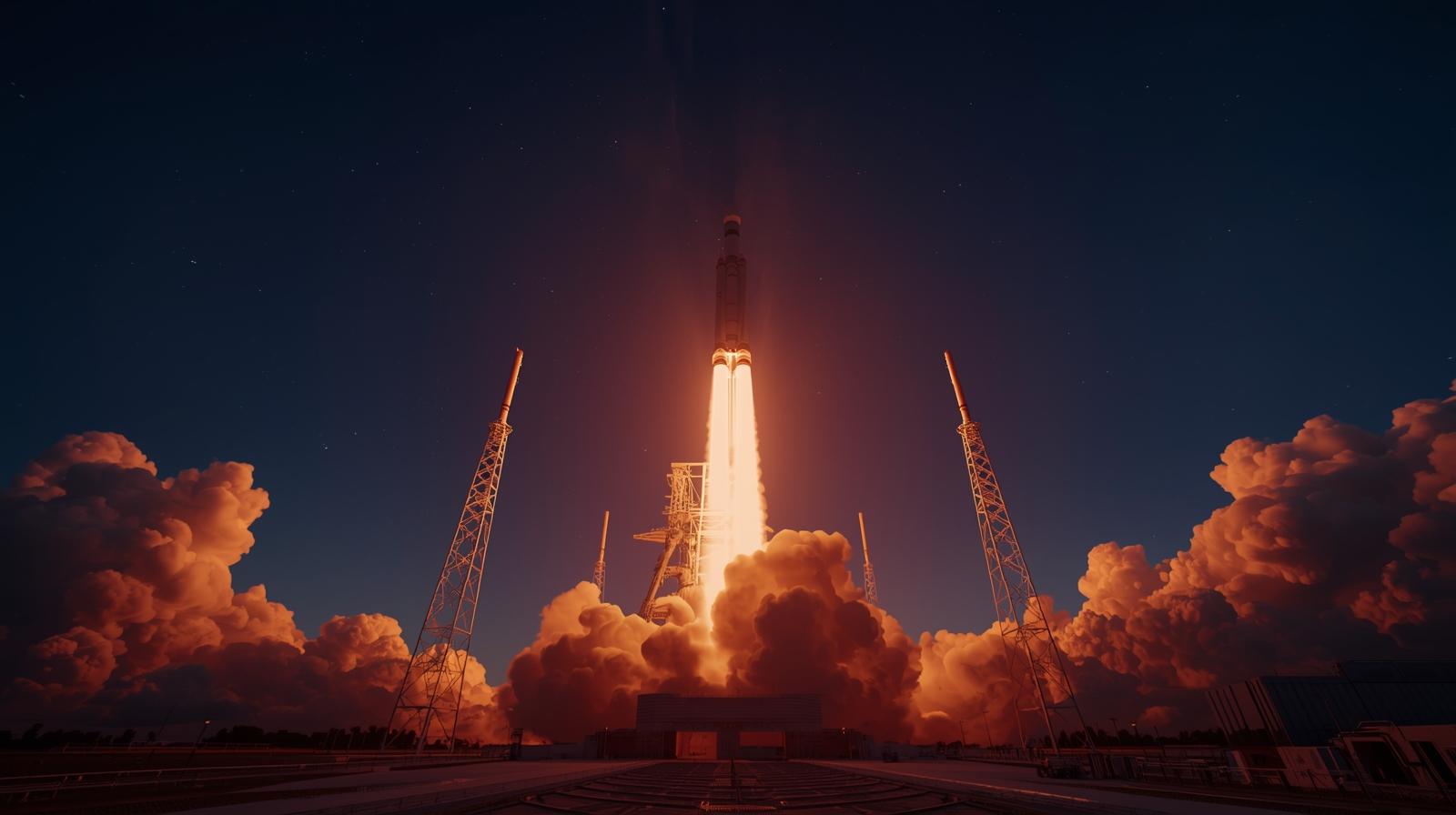
Imagine a sound so powerful it feels like a vibration in your chest rather than something you simply hear. That is what a launch by SpaceX feels like as a 23 story rocket rises on a column of fire. While liftoff is breathtaking, the true breakthrough often happens after the rocket leaves the launchpad.
Once it delivers its cargo toward space, the massive first stage booster flips around and begins its return to Earth. Instead of falling into the ocean as debris, it guides itself back and lands upright, either on solid ground or on a small autonomous droneship in the ocean. This innovation in reusability has transformed the economics of space travel and reshaped the industry.
Each mission has a specific objective. Some flights carry astronauts for NASA to the International Space Station. Others deploy communications satellites into orbit. Understanding these missions reveals why each launch matters and how these innovations are changing access to space.
What Is a Rocket Really Delivering
A rocket functions as a delivery vehicle. Its primary purpose is to carry a payload into a precise orbit or destination. The payload may consist of satellites, scientific equipment, or human passengers inside a crew capsule.
Many launches carry batches of satellites for the Starlink network, designed to provide broadband internet coverage across the globe. Other missions transport astronauts under NASA’s Commercial Crew Program, sending them safely to the International Space Station.
Each payload requires careful protection. Rockets must withstand extreme vibrations, intense heat, and enormous forces during ascent. Without a payload, a launch would simply be a test. The mission itself defines the importance of every flight.
The Climb to Orbit
Reaching orbit requires immense energy. Rockets cannot afford unnecessary weight, so they use a method called staging. The first stage provides the majority of the thrust needed to escape the densest part of Earth’s atmosphere. Once its fuel is exhausted, it separates from the upper portion of the rocket.
The protective nose cone, known as the fairing, shields the payload during the climb through the atmosphere. When the rocket reaches thinner air, the fairing separates and falls away. This reduces weight and allows the upper stage to accelerate more efficiently.
Freed from the heavy booster and fairing, the upper stage fires its engine to push the payload into its designated orbit. For decades, the detached first stage was discarded into the ocean. That changed with the development of reusable rockets.
The Breakthrough of Reusability
The reusable first stage is central to SpaceX’s impact on spaceflight. Traditional rockets were single use systems. After launch, their components were lost. This made space travel extremely expensive.
The Falcon 9 changed that model. After separation, the booster flips around and performs a controlled descent. It reignites its engines to slow down and steer toward a landing zone. Grid fins guide the rocket during its atmospheric return.
In many missions, the booster lands on an autonomous droneship stationed in the ocean. In other cases, it returns to a landing site near the launch area. The landing sequence includes a final engine burn that slows the rocket dramatically before touchdown.
When the booster reenters the atmosphere at high speed, it may produce a sonic boom. That thunderous sound occurs as it breaks the sound barrier during descent. For spectators near the landing site, this boom signals the rocket’s return.
By refurbishing and reusing boosters multiple times, SpaceX significantly reduces launch costs. This efficiency allows for more frequent missions and accelerates innovation.
Falcon 9 and Starship
SpaceX operates different vehicles for different goals. The Falcon 9 is the company’s workhorse. It has launched satellites, cargo missions, and astronauts. Its reliability and reusability established a new industry standard.
Beyond Falcon 9 is Starship, a next generation system designed for far more ambitious missions. Starship is intended to carry over 100 metric tons of cargo and potentially dozens of passengers. Its long term objective includes missions to the Moon and Mars.
While Falcon 9 frequently launches from Cape Canaveral Space Force Station and Kennedy Space Center in Florida, Starship development primarily takes place at Starbase in Texas. This facility functions as both a manufacturing hub and a launch site, enabling rapid testing and iteration.
Starship represents a broader vision. Instead of focusing solely on orbital missions, it aims to support deep space exploration and potentially long term human presence beyond Earth.
Watching a Launch Live
Watching a launch in real time offers a unique perspective on modern engineering. The most reliable source for live broadcasts is SpaceX’s official website and social media channels. NASA also streams missions involving its astronauts. Video platforms host official coverage with commentary explaining each stage of flight.
Occasionally, a countdown may stop before liftoff. This is known as a scrub. Scrubs are routine in spaceflight and usually occur due to weather conditions or technical checks. A scrub indicates caution, not failure. The team simply resets and attempts launch again when conditions are ideal.
Each live broadcast provides insight into the complexity of space operations, from final fueling to booster landing confirmation.
Why These Innovations Matter
SpaceX’s primary innovation is not just launching rockets. It is making spaceflight more affordable and sustainable through reusability. Recovering and reusing hardware reduces manufacturing demands and lowers mission costs.
Lower costs open opportunities for scientific research, commercial satellite deployment, and future human exploration. Missions that once seemed financially unrealistic become achievable.
The combination of reusable boosters, streamlined production, and ambitious vehicle design brings long term goals such as lunar missions and interplanetary travel closer to reality. Conversations about private spaceflight and commercial missions are becoming more tangible as launch frequency increases.
Each launch is now a two part event. There is the ascent into space and the controlled return of hardware. That return is a visible symbol of progress.
When you watch a rocket lift off, you are not just witnessing a powerful spectacle. You are observing a shift in how humanity approaches space travel. Reusability, rapid development, and bold engineering are reshaping the industry. With every successful mission, the path to deeper exploration becomes more practical and more achievable.


