

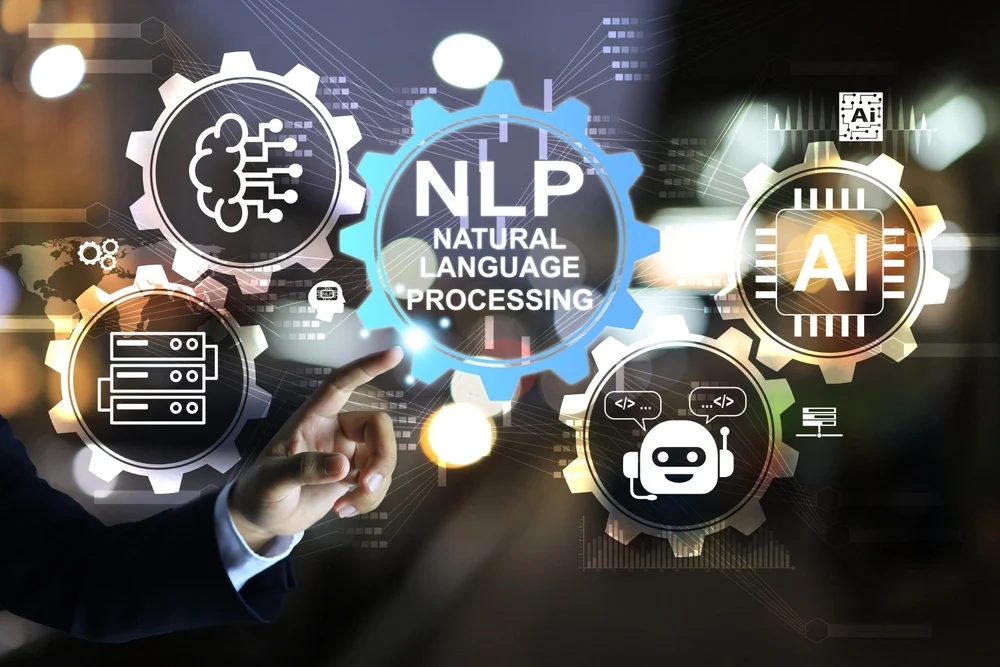
Natural Language Processing (NLP) has revolutionized the way search engines understand and interpret human language. By analyzing context, intent, and semantics, NLP allows search engines to deliver more accurate, relevant, and personalized results. As a result, users can find what they need faster, while businesses benefit from better visibility and targeted traffic.
This guide explores the role of NLP in search engines, its benefits, key techniques, and practical examples of how it enhances search functionality.
What is Natural Language Processing?
Natural Language Processing is a branch of artificial intelligence that enables computers to understand, interpret, and respond to human language in a meaningful way. NLP combines linguistics, machine learning, and computer science to process text and speech.
Key aspects of NLP include:
- Syntax Analysis: Understanding grammar and sentence structure
- Semantic Analysis: Determining meaning from words and context
- Sentiment Analysis: Detecting emotions or opinions in text
- Entity Recognition: Identifying names, places, dates, and organizations
- Intent Detection: Understanding what a user wants to achieve
In search engines, NLP bridges the gap between human queries and the vast amount of data available online.
How NLP Enhances Search Engine Performance
| NLP Technique | How It Improves Search | Example in Search Engines |
|---|---|---|
| Tokenization | Breaks text into words or phrases | Search engine identifies keywords in “best Italian restaurants near me” |
| Lemmatization & Stemming | Reduces words to base form for accurate matching | “Running” becomes “run,” improving result relevance |
| Semantic Analysis | Understands context and meaning | Recognizes that “Apple” in “Apple store” refers to the brand, not the fruit |
| Query Expansion | Adds related terms to improve search results | Searching “car repair” also retrieves “auto maintenance” articles |
| Rank Optimization | Uses NLP to interpret relevance and rank pages | Pages with contextually similar content rank higher |
| Voice Search Understanding | Processes spoken language naturally | Handles queries like “What’s the weather in New York tomorrow?” |
| Entity Recognition | Identifies proper nouns and key elements | Finds news about “NASA Mars mission” even if phrased differently |
Benefits of NLP in Search Engines
- Improved Accuracy: NLP allows search engines to understand intent, not just keywords.
- Context Awareness: Recognizes nuances in language, slang, and idioms.
- Personalization: Adapts results based on user behavior, preferences, and previous searches.
- Enhanced Voice Search: Optimizes spoken queries for mobile and smart devices.
- Better Handling of Complex Queries: Understands multi-part questions and long-tail search queries.
Real-World Applications
- Google BERT Update: Uses NLP to understand search context and deliver more relevant results.
- Voice Assistants: Siri, Alexa, and Google Assistant rely on NLP to process spoken commands.
- E-commerce Search: NLP helps online stores understand user intent, improving product recommendations.
- Content Recommendations: News platforms and streaming services use NLP to match users with relevant articles and videos.
Challenges in Implementing NLP for Search
- Ambiguity in Language: Words with multiple meanings can confuse algorithms.
- Multilingual Queries: Understanding context in different languages remains complex.
- Data Privacy: Search engines must balance NLP capabilities with privacy concerns, especially considering regulations like Data Privacy Regulations and Their Impact on Tech Companies.
- Computational Resources: NLP models require significant processing power and memory.
- Continuous Learning: Language evolves, requiring models to update constantly.
Tips for Optimizing Search with NLP
- Use Natural Language in Content: Write content in a conversational, human-like tone.
- Focus on Context and Semantics: Include synonyms and related terms to improve search relevance.
- Structure Data Clearly: Use headings, lists, and metadata for easier interpretation by search engines.
- Incorporate FAQs: Answer common questions directly to improve chances of being featured in search snippets.
- Leverage Voice-Friendly Keywords: Optimize content for queries people might speak, not just type.
Frequently Asked Questions (FAQs)
What is the difference between NLP and traditional keyword search?
Traditional search relies on exact keyword matches, while NLP understands context, intent, and semantics, producing more relevant results.
How does NLP handle voice search?
NLP converts spoken language into text, interprets intent, and delivers results based on context rather than exact words.
Can NLP improve SEO performance?
Yes, optimizing content for natural language queries, FAQs, and semantically related terms helps search engines better match content with user intent.
Is NLP limited to text-based searches?
No, NLP is also used in voice search, chatbots, content recommendation systems, and sentiment analysis.
How do search engines balance NLP with privacy concerns?
Search engines anonymize data, limit tracking, and comply with regulations like GDPR to ensure NLP algorithms do not compromise user privacy.
Final Thoughts
Natural Language Processing is transforming how search engines understand human language, making searches smarter, faster, and more relevant. By interpreting intent, context, and meaning, NLP improves both user experience and content discoverability.
Tech companies leveraging NLP must also remain mindful of privacy, as compliance with laws such as Data Privacy Regulations and Their Impact on Tech Companies ensures responsible handling of personal data while advancing intelligent search capabilities.


