

Introduction
Facial recognition technology has rapidly evolved over the past decade, becoming a critical tool in security, authentication, and user experience applications. At the heart of this technology lies computer vision, a field of artificial intelligence (AI) that enables machines to interpret and process visual data.
Computer vision allows facial recognition systems to detect, analyze, and compare human faces with high accuracy, powering applications in smartphones, law enforcement, retail, and access control systems. Understanding how computer vision works in facial recognition reveals the complex interplay between AI algorithms, data processing, and real-time analysis.
The Role of Computer Vision in Facial Recognition
Computer vision enables machines to “see” and understand images and videos. In facial recognition, computer vision performs several critical functions:
- Face Detection
The system first identifies the presence of a face in an image or video frame. This involves distinguishing faces from other objects and handling variations in lighting, angle, and expression. Algorithms like Haar Cascades and deep learning-based detectors are commonly used. - Feature Extraction
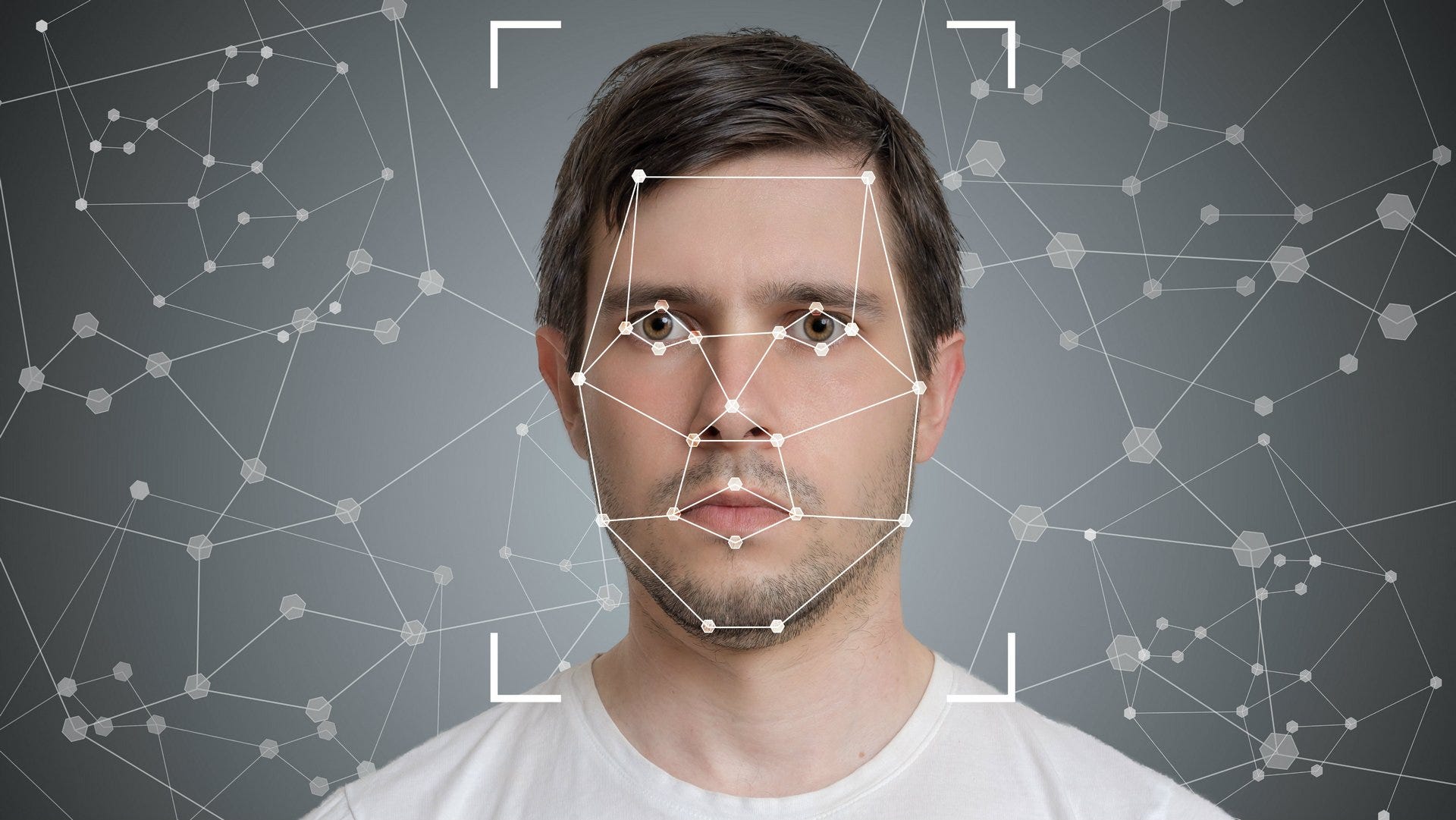
Once a face is detected, the system extracts unique facial features such as the distance between the eyes, nose shape, jawline, and contour of the lips. These features are converted into a numerical representation, often called a “face embedding.” - Face Matching
The extracted features are compared against a database of known faces. Computer vision models calculate similarity scores to determine identity. This step involves techniques like Euclidean distance measurement or neural network similarity scoring. - Recognition and Verification
The final step involves either identifying the person (recognition) or confirming a claimed identity (verification). High-accuracy models are essential, particularly in security-sensitive applications like border control or financial transactions.
Key Computer Vision Techniques Used in Facial Recognition
Several computer vision techniques enable the accuracy and efficiency of facial recognition systems:
- Convolutional Neural Networks (CNNs): CNNs are deep learning models that automatically learn facial features from raw images, improving recognition accuracy.
- Histogram of Oriented Gradients (HOG): HOG captures edge and gradient structures to detect faces in images.
- Principal Component Analysis (PCA): PCA reduces dimensionality and identifies the most significant facial patterns for faster computation.
- Face Alignment Algorithms: Aligning faces to a standard orientation improves recognition under varying poses and angles.
- 3D Face Modeling: 3D models improve accuracy by capturing depth and contour, making recognition robust against changes in lighting or expression.
Applications of Facial Recognition Powered by Computer Vision
Facial recognition systems are deployed across multiple industries:
- Security and Surveillance
Law enforcement uses facial recognition to identify suspects or missing persons in public spaces, airports, and border checkpoints. - Authentication and Access Control
Smartphones, laptops, and secure facilities use facial recognition for secure login and access, replacing passwords or keycards. - Retail and Marketing
Retailers analyze customer demographics and preferences using facial recognition to provide personalized recommendations and improve shopping experiences. - Healthcare
Hospitals use facial recognition to verify patient identity, streamline record management, and detect symptoms of certain medical conditions. - Financial Services
Banks and fintech companies implement facial recognition to prevent fraud and verify transactions securely.
Table: Computer Vision Techniques in Facial Recognition
| Technique | Purpose | Benefits | Limitations |
|---|---|---|---|
| Convolutional Neural Networks (CNNs) | Feature extraction and recognition | High accuracy, learns features automatically | Requires large datasets, computationally intensive |
| Histogram of Oriented Gradients (HOG) | Face detection | Efficient for real-time detection | Less accurate for occluded or rotated faces |
| Principal Component Analysis (PCA) | Dimensionality reduction | Faster computation, reduces noise | May lose subtle facial details |
| Face Alignment Algorithms | Standardizes face orientation | Improves recognition accuracy | Additional processing step |
| 3D Face Modeling | Captures depth and contour | Robust to lighting and pose variations | More complex and expensive to implement |
Challenges in Facial Recognition Using Computer Vision
While powerful, facial recognition technology faces several challenges:
- Data Privacy Concerns: Unauthorized collection and use of facial data raise ethical and legal questions.
- Bias and Fairness: Models may perform differently across demographics, leading to discrimination or misidentification.
- Occlusion and Pose Variability: Glasses, masks, or extreme angles can reduce accuracy.
- Lighting Conditions: Low light or harsh shadows can impact detection and recognition performance.
- Scalability Issues: Large databases of faces require significant computational power, storage, and optimized algorithms.
Addressing these challenges is essential to building robust and trustworthy systems. Startups working on facial recognition often face technology challenges in scaling SaaS startups, especially when handling large user bases, ensuring security, and maintaining low-latency performance for real-time recognition.
Best Practices for Implementing Facial Recognition
- Use Diverse and High-Quality Data
Collect datasets representing various ages, genders, ethnicities, and lighting conditions to improve fairness and accuracy. - Incorporate Edge Computing
Processing facial data on local devices reduces latency, protects privacy, and lowers cloud processing costs. - Combine 2D and 3D Models
Using both 2D images and 3D modeling enhances recognition under different poses and lighting. - Regularly Update and Audit Models
Continuous training and auditing prevent drift in model accuracy and ensure compliance with ethical standards. - Prioritize Security and Privacy
Encrypt facial data, implement strict access controls, and comply with regulations like GDPR to protect users.
Frequently Asked Questions (FAQs)
How does computer vision detect a face in an image?
Computer vision algorithms analyze pixel patterns, edges, and gradients to identify facial structures before extracting key features.
Can facial recognition work with masked faces?
Yes, but accuracy may decrease. Advanced systems use partial feature matching or 3D modeling to improve recognition under occlusion.
Is facial recognition accurate across different demographics?
Accuracy varies depending on the training data. Diverse datasets and bias mitigation techniques are necessary for fair performance.
How is facial recognition used in smartphones?
Smartphones use computer vision to detect facial features for unlocking devices and authenticating payments.
Can startups implement facial recognition as a SaaS product?
Yes, but scaling requires addressing infrastructure, security, and real-time processing challenges, similar to technology challenges in scaling SaaS startups.
Conclusion
Computer vision is the backbone of modern facial recognition systems, enabling accurate detection, feature extraction, and identity verification. From security and healthcare to retail and finance, this technology transforms how businesses interact with users while improving efficiency and safety.
Despite its potential, facial recognition must overcome challenges like bias, privacy concerns, and technical limitations. By implementing best practices, leveraging advanced computer vision techniques, and considering scalability, organizations can deploy reliable, ethical, and efficient facial recognition solutions.
As the technology continues to evolve, computer vision will remain central to creating smarter, safer, and more intuitive systems that reshape how we interact with digital and physical environments.


