

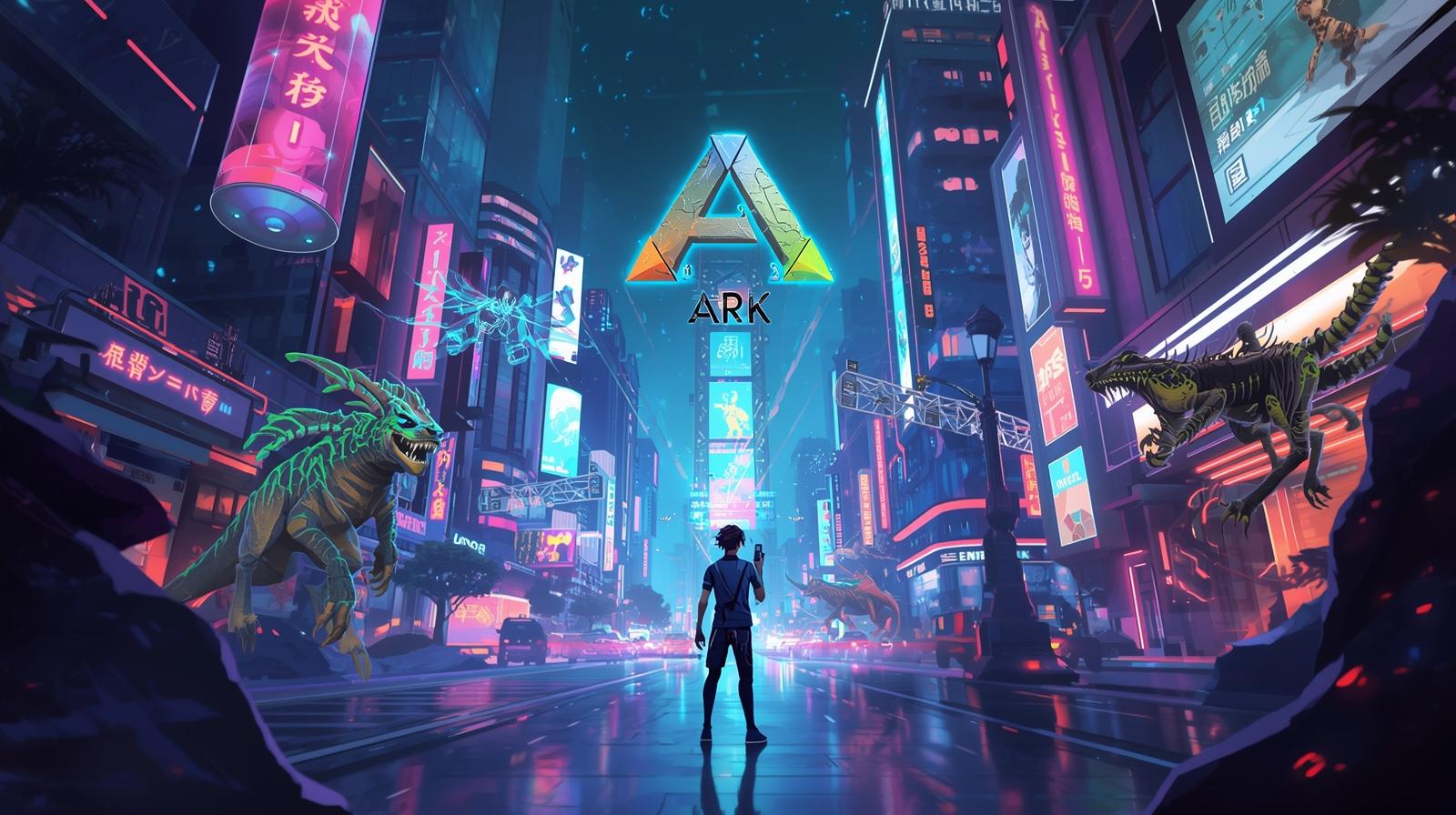
Have you ever chased a character through your backyard in Pokémon GO or tried on virtual sunglasses using an Instagram filter? If so, you have already experienced augmented reality in action. Augmented reality, or AR, is the technology that overlays digital elements onto your real-world view through a smartphone or tablet screen.
The difference between augmented reality and virtual reality is straightforward. Virtual reality, often experienced through headsets such as Meta Quest, replaces your physical surroundings with a fully digital environment. Augmented reality does not replace your world. Instead, it enhances it by adding interactive digital content on top of what you already see.
Behind every smooth AR experience is a powerful software framework often referred to as an ARK, or Augmented Reality Kit. These toolkits are what allow developers to create immersive gaming experiences that blend the digital and physical worlds seamlessly.
What Is an ARK?
An ARK is essentially a development toolkit that helps software creators build augmented reality applications efficiently. Rather than programming complex spatial calculations from scratch, developers use these kits to access ready-made tools for detecting surfaces, tracking motion, and analyzing lighting conditions.
You do not download an ARK directly. It operates behind the scenes as the invisible engine powering AR-enabled apps. Its purpose is to give applications the ability to interpret the real world in three dimensions using your device’s camera and sensors.
Without an ARK, a digital character placed on your living room floor would simply float around on the screen. With it, that character appears anchored to the ground, responding realistically as you move around the room.
How Your Phone Understands Space
For augmented reality gaming to feel convincing, your device must interpret its surroundings accurately. ARKs provide three core capabilities that make this possible.
Surface detection allows the system to identify flat areas such as floors, tables, and walls. This enables virtual objects to rest naturally on physical surfaces.
Motion tracking monitors the position and orientation of your device. As you walk around, the AR system adjusts the perspective of digital objects so they remain fixed in their virtual location.
Light estimation analyzes ambient lighting conditions. This helps digital objects match the brightness and shadows of the room, making them appear more realistic.
Together, these capabilities allow games to place digital creatures, characters, or objects into your real environment in a way that feels stable and believable.
Transforming Gaming Through Real-World Interaction
Augmented reality has changed the way games are experienced. Traditional video games confine action to a screen. AR games extend gameplay into physical space.
In Pokémon GO, players explore their neighborhoods to capture virtual creatures that appear superimposed on streets, parks, and homes. The game uses GPS data combined with AR technology to connect physical movement with digital rewards.
Another example is Minecraft Earth, which allowed players to build and explore digital structures within real-world spaces. Although it was discontinued, it demonstrated how AR gaming can blend creativity with physical interaction.
These experiences would not be possible without ARKs handling spatial awareness and device tracking in real time.
Beyond Gaming: Expanding Applications
While gaming has been one of the most visible uses of AR, the technology extends far beyond entertainment.
Retail applications now allow users to place full-scale 3D furniture models in their homes before purchasing. Educational platforms enable students to examine interactive 3D models of historical artifacts or biological systems. Navigation tools such as Google Maps use AR overlays to provide real-world directional arrows through a feature known as Live View.
Each of these applications relies on the same foundational AR toolkit capabilities that power mobile games.
The Major AR Toolkits Powering Smartphones
Two major technology companies provide the dominant AR development kits used globally.
Apple offers ARKit, its proprietary augmented reality framework for iPhones and iPads. ARKit integrates tightly with Apple’s hardware and operating system, enabling advanced motion tracking and environmental understanding.
Google provides ARCore, its equivalent platform for Android devices. ARCore enables AR functionality across a wide range of compatible smartphones from manufacturers such as Samsung and Pixel.
By providing standardized AR frameworks, these companies have made it easier for developers worldwide to create sophisticated AR gaming experiences without building foundational systems themselves.
The Role of LiDAR and Future Hardware
One limitation of early mobile AR systems was instability in object placement. Standard cameras sometimes struggled to interpret depth accurately, especially in low-light conditions.
Devices equipped with LiDAR sensors, such as certain iPad Pro and iPhone models, have improved this significantly. LiDAR measures distances using light pulses, generating detailed 3D maps of physical environments. This allows virtual objects to anchor more precisely and interact more realistically with real-world surfaces.
Looking ahead, wearable devices such as smart glasses aim to bring AR experiences directly into a user’s field of vision without requiring a phone screen. Companies across the technology sector are investing heavily in this direction, envisioning a future where digital overlays become seamlessly integrated into everyday life.
The Bigger Picture
ARK-based augmented reality is not just a novelty feature. It represents a major shift in how digital content interacts with the physical world. In gaming, it turns parks into battlefields, living rooms into adventure zones, and city streets into interactive maps.
As AR hardware continues to evolve and processing power increases, gaming experiences will likely become even more immersive and responsive. What once felt experimental is quickly becoming mainstream.
The next time a digital character appears on your kitchen table or a virtual object fits perfectly into your space, you will understand the sophisticated toolkit working behind the scenes. ARKs are quietly transforming not only gaming but the broader relationship between technology and reality itself.


