

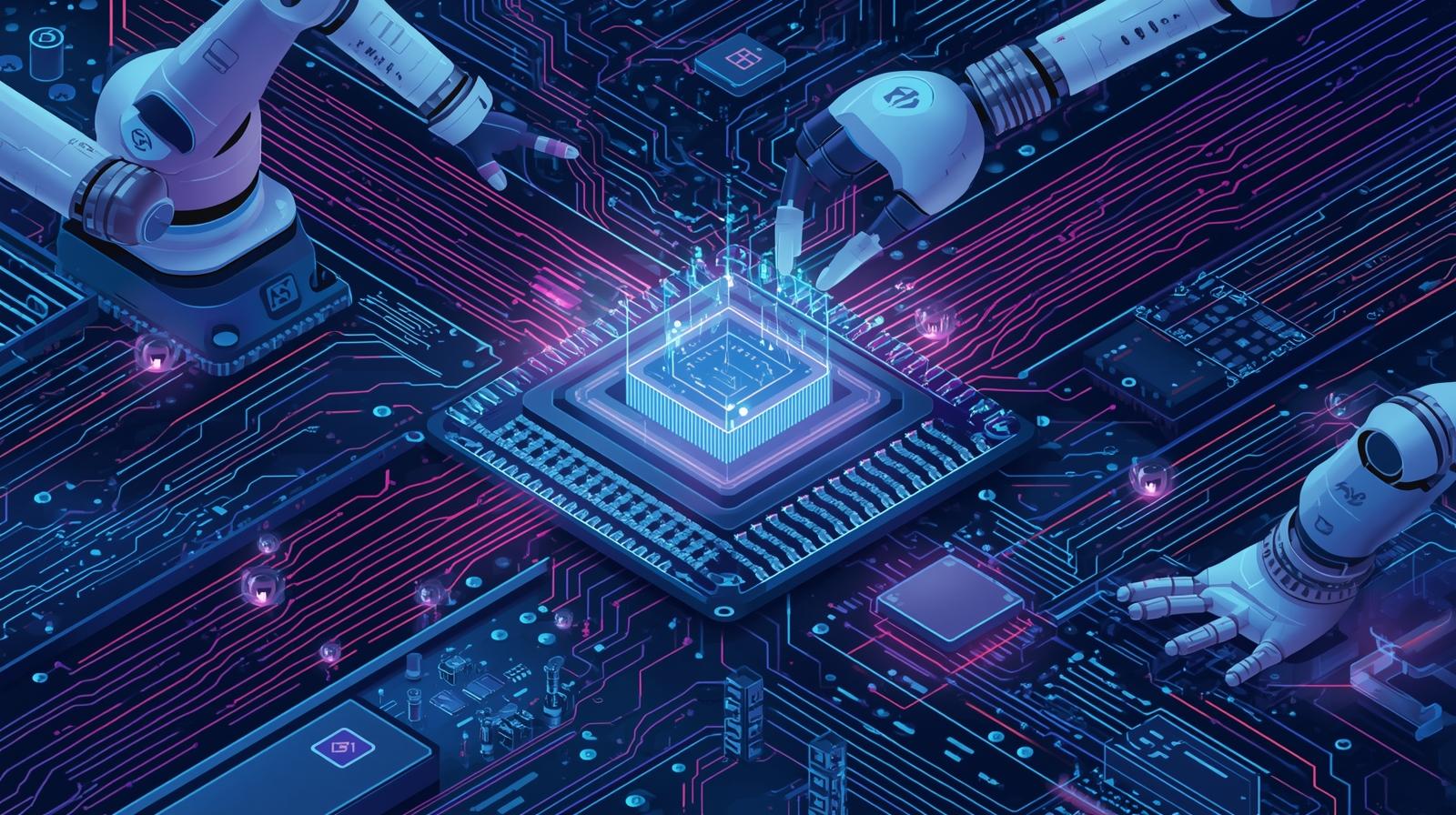
The semiconductor industry is at a pivotal moment, driven by the rapid advancements in artificial intelligence (AI). As electronic components become more complex and the demand for efficient chip manufacturing increases, AI emerges as a transformative force. This article explores the role of AI in semiconductor development, highlighting its impact on the industry and its potential to revolutionize chip design and production.
Artificial intelligence is not just a buzzword; it is reshaping industries, and the semiconductor sector is no exception. AI technologies are being integrated into various stages of semiconductor development, from design and simulation to manufacturing and testing. This integration is driving innovation and efficiency, enabling companies to stay competitive in a rapidly evolving market.
One of the primary applications of AI in semiconductor development is in the design and simulation phase. Traditionally, chip design has been a labor-intensive process, requiring significant human expertise and time. However, AI-powered design tools are changing the game by automating complex design tasks and optimizing chip architectures.
AI algorithms can analyze vast amounts of data to identify optimal design patterns, reducing the need for manual intervention. This leads to faster design cycles, improved performance, and reduced costs. Additionally, AI-driven simulation tools can predict the behavior of chips under various conditions, allowing engineers to fine-tune designs before production.
The manufacturing process in the semiconductor industry is highly intricate, involving numerous steps and precision engineering. AI technologies are playing a crucial role in enhancing manufacturing efficiency and quality control. Machine learning algorithms are used to monitor production processes, identify defects, and optimize resource allocation.
For instance, AI can predict equipment failures and schedule maintenance proactively, minimizing downtime and maximizing productivity. Moreover, AI-driven analytics can provide insights into process variations, enabling manufacturers to adjust parameters for consistent quality output. These advancements result in higher yields, reduced waste, and ultimately, lower production costs.
While AI offers significant benefits, its integration into the semiconductor industry is not without challenges. Companies must navigate issues such as data security, algorithm transparency, and the need for skilled personnel to develop and manage AI systems. Additionally, the complexity of AI models requires substantial computational resources, posing a barrier for smaller players in the industry.
The use of AI in semiconductor development necessitates the handling of vast amounts of sensitive data. Ensuring data security and privacy is paramount, as breaches could have severe consequences. Companies must implement robust cybersecurity measures to protect intellectual property and maintain customer trust.
As AI systems become more autonomous, ensuring transparency and ethical use is crucial. Semiconductor companies must ensure that AI algorithms are interpretable and adhere to ethical guidelines. This includes addressing biases in AI models and ensuring that decisions made by AI systems are fair and accountable.
The future of AI in semiconductor development is promising, with the potential to drive innovation and reshape the industry landscape. As AI technologies continue to evolve, they will unlock new possibilities for chip design, manufacturing, and beyond.
AI has the potential to enable greater customization and personalization of semiconductor products. By leveraging AI analytics, companies can tailor chip designs to specific customer needs and market demands. This flexibility allows for the creation of specialized chips for diverse applications, from consumer electronics to industrial automation.
AI is also paving the way for new business models in the semiconductor industry. Companies can leverage AI-driven insights to offer value-added services, such as predictive maintenance and performance optimization. These services create additional revenue streams and strengthen customer relationships, fostering long-term business growth.
AI is undeniably a game-changer for the semiconductor industry, offering unprecedented opportunities to enhance efficiency, innovation, and competitiveness. By embracing AI technologies, companies can overcome traditional challenges and position themselves at the forefront of technological advancement.
As a Chief Technology Officer, Business Strategist, or Innovation Manager, understanding the role of AI in semiconductor development is crucial. It empowers you to make informed decisions, align technological advancements with business goals, and drive innovation within your organization. The future is bright for those who harness the power of AI to shape the next generation of semiconductor technologies.


