

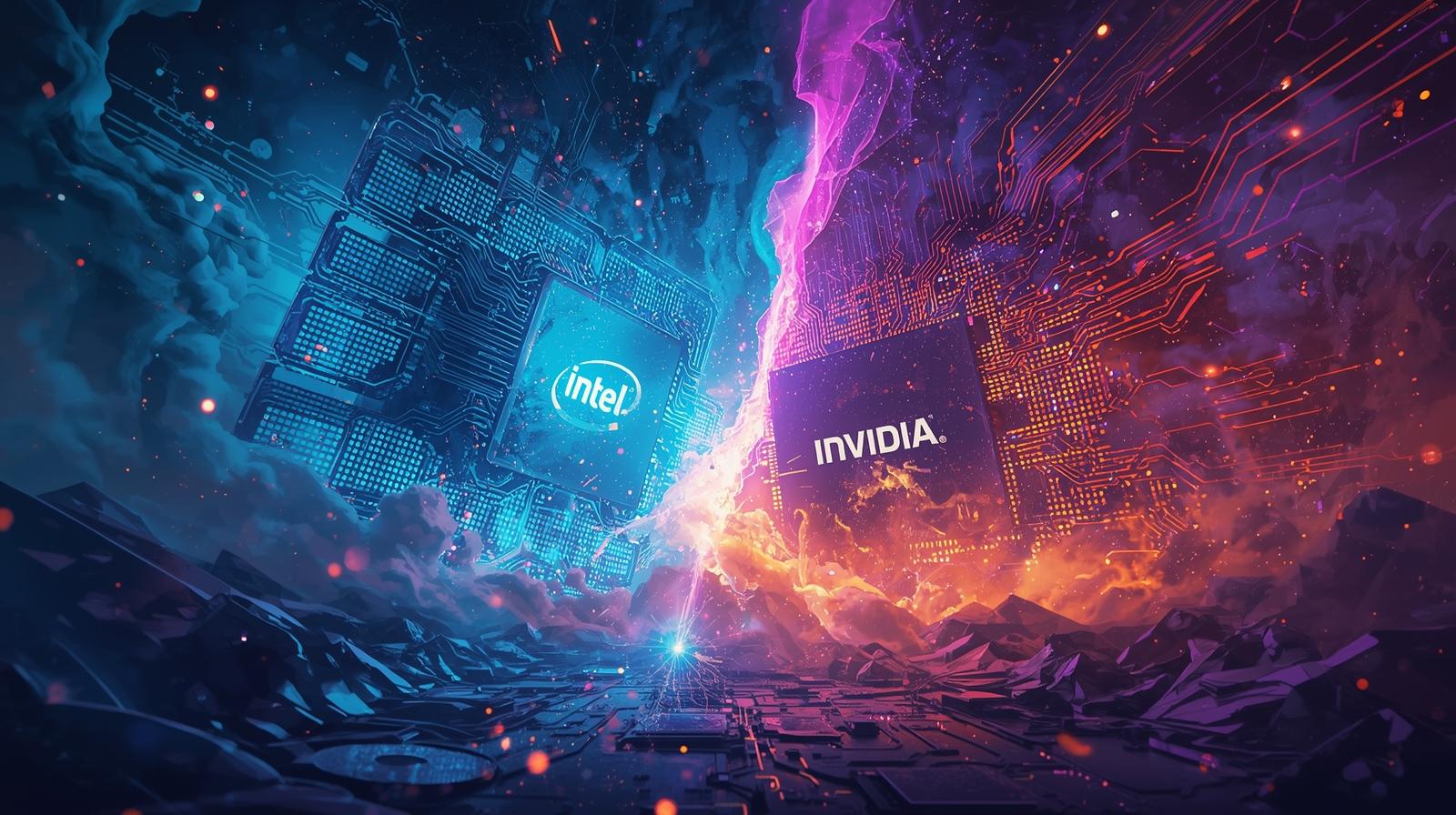
In today’s rapidly evolving technological landscape, the race to dominate the AI chip market has reached a fever pitch. Intel and Nvidia, two giants in the semiconductor industry, are at the forefront of this competition. As they vie for market share, their innovations and strategic maneuvers are reshaping the future of artificial intelligence. This article delves into the intricacies of this competition, exploring how these tech behemoths are positioning themselves and what it means for the industry.
The AI chip market is a dynamic and rapidly growing sector. AI chips are specialized processors designed to handle artificial intelligence tasks more efficiently than traditional CPUs. They are crucial for applications ranging from data centers to autonomous vehicles and advanced robotics. The demand for AI chips is skyrocketing as businesses across industries strive to incorporate AI into their operations, making this a pivotal battleground for semiconductor companies.
Nvidia has long been a leader in the graphics processing unit (GPU) market. Their GPUs are renowned for their performance in AI and machine learning applications. With the introduction of the Nvidia A100 Tensor Core GPU, Nvidia has solidified its dominance in the AI chip sector. This powerful processor is designed to accelerate AI workloads, offering unparalleled performance for data centers and edge computing applications.
Nvidia’s success in the AI chip market is largely attributed to its strategic focus on innovation and partnerships. By collaborating with major cloud providers like Amazon Web Services and Microsoft Azure, Nvidia has ensured that its GPUs are integral to the infrastructure of AI-driven services. Additionally, Nvidia’s acquisition of ARM Holdings is a strategic move aimed at further expanding its influence in the AI chip industry.
Intel, a stalwart in the semiconductor industry, is not sitting idle. The company is aggressively pursuing advancements in AI chip technology to rival Nvidia’s offerings. Intel’s Xeon processors have been a staple in data centers, but the company is now focusing on enhancing its AI capabilities with the development of its Habana Labs AI chips. These chips are designed to optimize deep learning workloads, providing Intel with a competitive edge.
Intel’s strategy revolves around leveraging its existing strengths in manufacturing and R&D. By investing in the development of AI-specific hardware and software, Intel aims to provide a comprehensive solution that meets the needs of diverse AI applications. The company’s focus on open-source AI frameworks is also a strategic move to foster innovation and collaboration within the AI community.
The competition between Intel and Nvidia is reshaping the AI chip market. While Nvidia currently holds a significant share due to its GPU dominance, Intel’s strategic investments and innovations are positioning it as a formidable contender. The ongoing battle for market share is not just about technological superiority but also about strategic partnerships, ecosystem development, and the ability to anticipate industry trends.
While Intel and Nvidia are the primary players, AMD is also making strides in the AI chip market. AMD’s GPUs are gaining traction, particularly in the gaming and data center sectors. The company’s focus on delivering high-performance and cost-effective solutions adds another layer of complexity to the competitive landscape.
For Chief Technology Officers, Business Strategists, and Innovation Managers, the AI chip wars present both challenges and opportunities. Staying ahead of technological trends is crucial for maintaining a competitive edge. Understanding the capabilities and limitations of different AI chips can inform strategic decisions and drive innovation.
- Stay Informed: Continuously monitor developments in the AI chip market to identify emerging trends and technologies.
- Evaluate Partnerships: Consider partnerships with leading AI chip manufacturers to leverage their expertise and technology.
- Invest in R&D: Allocate resources to research and development to explore new AI applications and solutions.
- Align Technology with Business Goals: Ensure that AI initiatives are aligned with broader business objectives to maximize impact and ROI.
The battle between Intel and Nvidia in the AI chip market is a testament to the transformative potential of artificial intelligence. As these companies continue to innovate and compete, the industry will witness significant advancements in AI capabilities. For industry leaders, staying informed and strategic is key to navigating this rapidly changing landscape and harnessing the power of AI to drive growth and innovation.


