

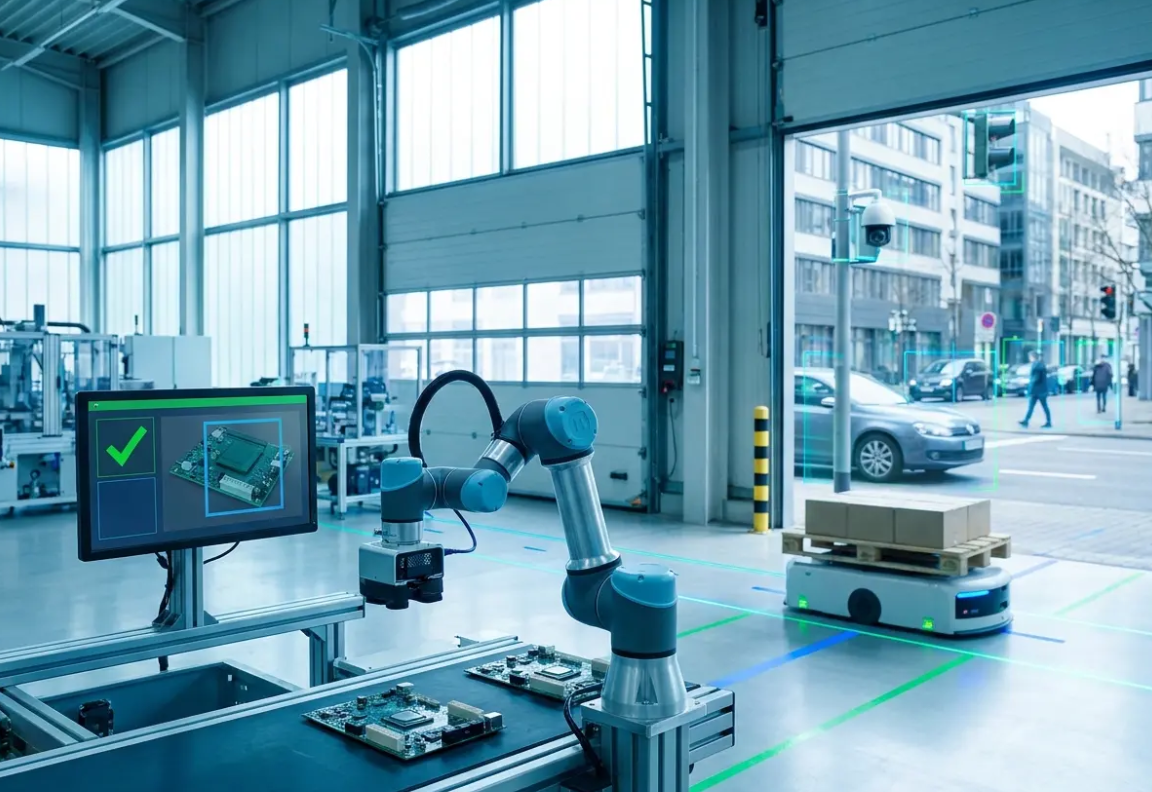
Modern computer vision allows machines to finally see, read, and interpret the complex visual environment that surrounds them every single day. For several decades, teaching computers to understand basic images felt like an impossible scientific hurdle for researchers. Today, image recognition algorithms process billions of digital photos and high-definition videos daily with truly stunning accuracy.
You interact with this artificial intelligence technology every time you unlock your modern smartphone using your physical facial features. It powers autonomous vehicles, speeds up complex medical diagnoses, and tracks global factory inventory in real-time. We will break down exactly how this visual AI technology works and why it matters for your business.
Early computer scientists thought they could solve machine sight entirely during a single brief summer research project. They vastly underestimated the difficulty of translating two-dimensional pixel arrays into comprehensive three-dimensional spatial understanding and context. Modern deep learning breakthroughs finally made this ambitious technological goal a practical reality for everyday commercial business operations.
Computer vision represents a specialized field of machine learning that trains computers to extract meaning from visual inputs. Humans look at a printed photograph and immediately recognize distinct objects, familiar faces, and complex spatial relationships. A computer simply sees a massive digital grid of individual numbers representing completely distinct and separate color values.
Visual AI algorithms translate those raw numerical values into recognizable visual patterns and concrete physical real-world concepts. This analytical process allows enterprise software to take specific automated actions based entirely on what it observes directly. The technology effectively bridges the historical gap between digital data processing and physical reality for modern computers.
Many business professionals confuse basic image processing tools with actual machine vision capabilities and advanced artificial intelligence. Image processing simply alters a digital photograph by applying mathematical filters or manually adjusting the overall visual contrast. True image recognition actually understands the deep semantic meaning of the image content it actively processes.
Image Recognition: How Computer Vision Systems Process Digital Images
Digital photographs consist of hundreds of thousands or even millions of tiny individual colored squares called digital pixels. The computer system carefully analyzes the specific color and brightness values of each individual pixel across the screen. It looks for sharp mathematical changes in color contrast that might indicate the physical edge of an object.
As the software system processes more visual data, it continuously learns to identify increasingly complex geometric shapes automatically. It analyzes physical textures, ambient shadows, and hard boundaries to build a comprehensive digital map of the scene. Eventually, the trained object detection algorithm can reliably distinguish a walking pedestrian from a stationary street sign.
Key Takeaways
- Computer vision translates raw digital pixels into recognizable physical objects and actionable business insights.
- Artificial neural networks mimic the human brain to identify complex visual patterns automatically.
- True visual AI understands the semantic meaning of an image rather than just applying digital filters.
Deep Learning and Neural Networks: Core Technologies Powering Computer Vision
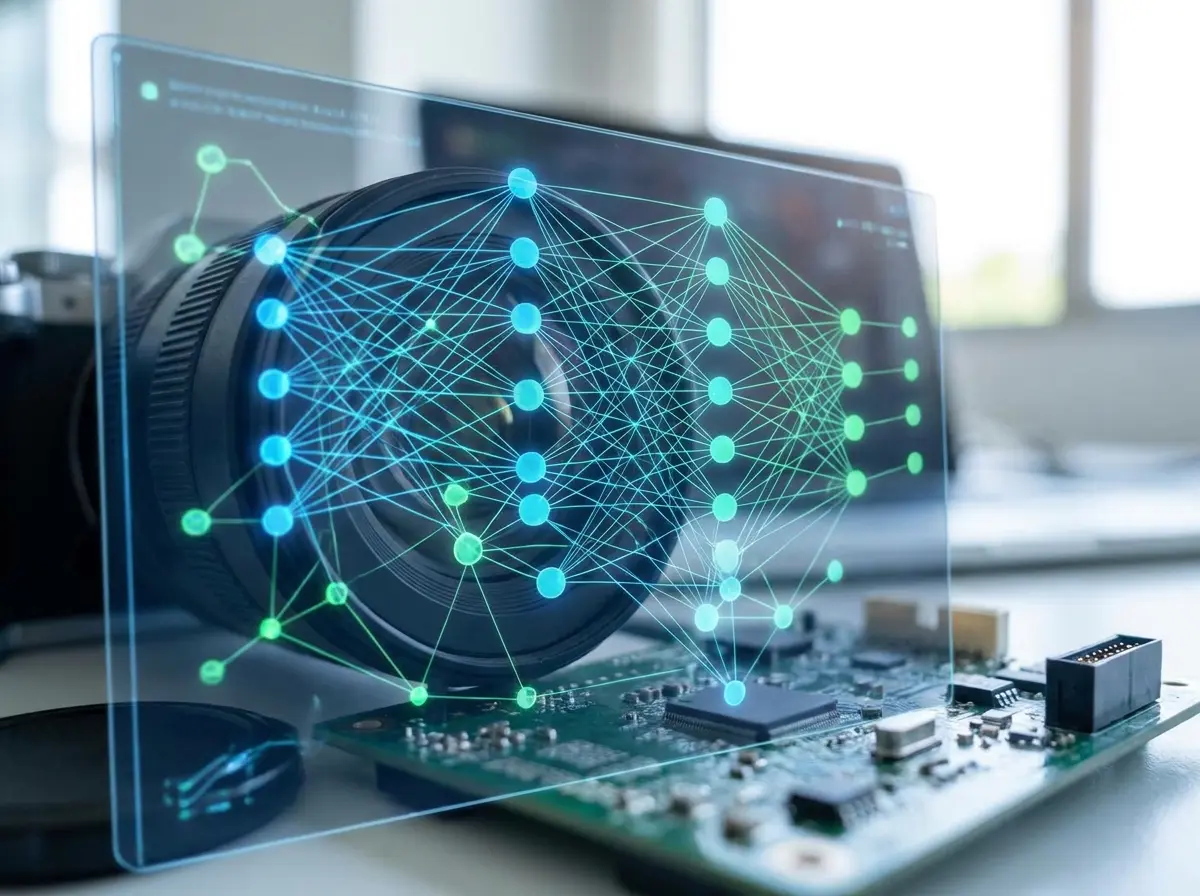
Modern image recognition systems rely heavily on advanced deep learning algorithms rather than traditional manual software programming techniques. Traditional programming required human engineers to manually define every possible mathematical rule for identifying a specific physical object. That rigid approach failed completely because real-world lighting, camera angles, and background environments vary dramatically and unpredictably.
Machine learning allows the computer system to build its own recognition rules through continuous observation and data analysis. The computer figures out the necessary identifying characteristics by systematically analyzing millions of carefully labeled training images. It automatically recognizes subtle visual patterns that human programmers might never think to manually code into the software.
This computational heavy lifting requires highly specialized Graphics processing units to run efficiently within a reasonable business time frame. These chips handle multiple mathematical calculations simultaneously to significantly speed up the initial algorithmic training phase. Without these incredibly powerful silicon chips, training a single visual AI model could take several consecutive calendar years.
Convolutional Neural Networks (CNNs) and Object Detection in Visual AI
Convolutional neural networks represent the fundamental architectural backbone of most visual recognition software operating in the market today. These complex digital networks use multiple layers of artificial processing nodes to evaluate image data hierarchically and systematically. The first few processing layers might only detect simple geometric lines or very basic solid color blobs.
Deeper processing layers combine those simple visual features to reliably recognize complex objects like individual human faces. According to researchers at MIT, these advanced neural networks loosely mimic how the biological human visual cortex actually operates. Digital information flows through the artificial algorithmic synapses until the computer system reaches a highly confident mathematical conclusion.
Software engineers can easily fine-tune these neural networks to specialize completely in very specific and narrow visual tasks. Some specialized networks excel exclusively at object detection, tracking fast-moving physical objects in low-resolution commercial security camera video. Other specialized networks focus entirely on reading printed text paragraphs from poorly scanned historical paper business documents.
Pro Tip
Data quality matters far more than algorithm complexity when building visual models. Always clean your training data to remove blurry or improperly labeled images before you start the processing phase.
Real-World Computer Vision Applications and Use Cases Across Industries
Businesses across the United States use visual AI to actively solve difficult operational problems and bottlenecks daily. The underlying technology moves far beyond simple consumer facial recognition tools found on popular mainstream social media platforms. Enterprise companies leverage this visual data to automate tedious physical tasks and significantly reduce costly human operational errors.
You can easily find these automated systems operating quietly in the background of many major domestic commercial industries. They provide massive operational efficiency gains that directly and positively impact a modern company’s overall financial bottom line. The substantial long-term return on investment often easily justifies the relatively high initial software development and implementation costs.
Healthcare: Medical Imaging Recognition and Computer Vision Diagnostics
Modern hospitals use specialized computer vision algorithms to analyze patient X-rays, MRIs, and CT scans incredibly fast. The medical software spots microscopic physical anomalies that might indicate early-stage malignant tumors or extremely subtle hairline fractures. The FDA has approved dozens of these advanced AI-assisted medical devices for regular clinical use.
Medical doctors use these sophisticated analytical tools as a highly reliable second pair of eyes to verify diagnoses. The artificial intelligence algorithm acts as a tireless medical assistant that never suffers from physical fatigue or distraction. This powerful collaboration actively reduces dangerous misdiagnosis rates and significantly improves long-term patient health outcomes across the board.
Autonomous Vehicles: Real-Time Object Detection and Machine Sight
Autonomous vehicles depend almost entirely on constant visual data to navigate busy urban city streets completely safely. Multiple exterior cameras feed high-definition digital video directly into the moving vehicle’s central onboard computer processing unit. The driving software must correctly identify traffic lights, erratic human pedestrians, and other fast-moving vehicles almost instantly.
It actively calculates the precise distance and physical trajectory of moving objects to prevent catastrophic high-speed traffic collisions. Even a tiny split-second delay in processing this critical visual information could directly cause a fatal highway accident. These machine sight systems must therefore operate absolutely flawlessly in heavy pouring rain, dense fog, and sunlight.
Retail and Manufacturing: Optimizing Operations with Machine Vision
Large commercial retailers use automated overhead cameras to track physical inventory levels on retail store shelves completely automatically. The visual AI system alerts store employees immediately whenever a specific popular consumer product needs restocking quickly. Automated visual checkout systems also let busy customers grab desired items and walk out without manually scanning barcodes.
Industrial manufacturing plants deploy high-speed cameras to inspect physical parts moving quickly down a mechanized factory assembly line. The machine vision software flags microscopic structural defects that tired human quality inspectors would likely miss entirely. This automated quality control process actively prevents dangerous defective consumer products from ever reaching the open retail market.
How to Implement Computer Vision in Your Business
Define Your Objective
Identify the specific operational problem you want to solve before buying any commercial software. Focus strictly on repetitive processes that currently require tedious manual visual inspection by your staff.
Tip: Create a clear performance baseline using your current manual metrics to measure future success.
Gather Training Data
Collect thousands of high-quality digital images highly relevant to your specific industrial use case. You must include examples of both perfectly normal conditions and extremely rare operational edge cases.
Tip: Hire dedicated data labelers to maintain strict quality control over your raw image dataset.
Train and Evaluate
Feed the collected data into the algorithmic model and evaluate its accuracy thoroughly during testing. Adjust the mathematical parameters until the computer system comfortably meets your minimum performance requirements.
Current Challenges and Limitations in Computer Vision Development
Despite massive recent technological advancements, image recognition software still faces significant developmental hurdles and practical implementation barriers. The advanced systems require enormous amounts of electrical computing power to effectively process high-resolution live video camera feeds. Training a completely new visual AI model from scratch often costs hundreds of thousands of dollars.
Small independent businesses often struggle to afford the specialized computer hardware necessary to run these advanced algorithms locally. Software developers must continually optimize their written code to run efficiently on standard commercial equipment and mobile devices. The massive energy consumption of these centralized artificial intelligence server farms also raises serious global environmental concerns.
Digital security remains a constant daily battle for software developers creating modern computer vision applications for enterprise clients. Malicious bad actors can deliberately trick algorithms by subtly altering physical objects or wearing highly specific geometric patterns. Security engineers must actively build robust digital defenses to prevent remote hackers from completely compromising the visual system.
Data Bias: Ethical Concerns in Image Recognition and Visual AI
Algorithmic systems only perform as well as the underlying digital data used to train them initially during development. If careless developers train a visual AI model on a strictly homogenous dataset, it will inevitably struggle. Commercial facial recognition systems have historically demonstrated significantly higher failure and error rates for minority people of color.
The National Institute of Standards and Technology documented these alarming demographic differentials extensively in recent federal research studies. Technology companies must actively build highly diverse photographic datasets to prevent discriminatory operational outcomes in their public applications. Ignoring this critical ethical responsibility creates massive legal corporate liabilities and completely destroys hard-earned public consumer trust.
Digital privacy advocates also raise entirely valid societal concerns about constant corporate data collection and pervasive government surveillance. Security cameras equipped with advanced facial recognition technology can theoretically track a private citizen’s movements across an entire city. Federal government regulators are currently drafting strict new privacy laws to restrict how organizations collect and store visual data.
Key Takeaways
- Advanced visual AI systems currently demand massive amounts of computing power and expensive server hardware.
- Algorithmic bias remains a serious ethical concern that requires highly diverse photographic training datasets.
- Hackers can trick poorly secured visual models by manipulating physical objects with specific geometric patterns.


