

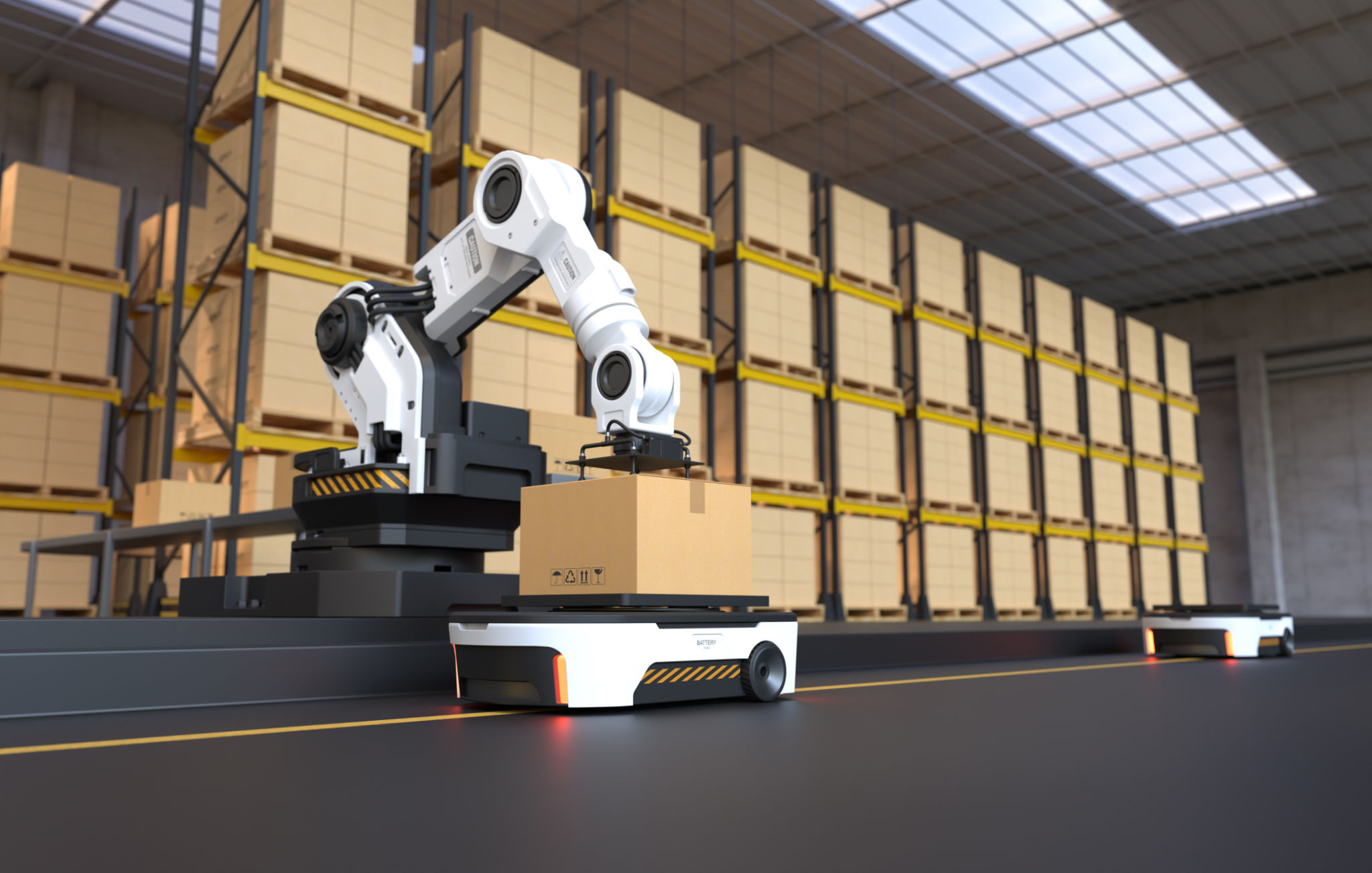
The rapid growth of e-commerce and global supply chains has transformed the logistics industry. Companies now require faster order processing, greater accuracy, and reduced operational costs. As a result, robotics has become a central component of modern warehouse automation systems. From picking and packing to inventory management and shipping, robots are reshaping how warehouses operate.
This article explores the role of robotics in warehouse automation systems, key technologies involved, benefits, challenges, and future trends.
What Is Warehouse Automation?
Warehouse automation refers to the use of technology, software, and robotics to streamline and optimize warehouse operations. It includes:
- Automated storage and retrieval systems (AS/RS)
- Robotic picking and packing
- Conveyor and sorting systems
- Inventory tracking using AI and sensors
- Autonomous mobile robots (AMRs)
Robotics plays a critical role in executing these automated tasks with speed and precision.
Key Roles of Robotics in Warehouse Operations
1. Automated Picking and Packing
Robotic arms equipped with sensors and machine vision systems can identify, pick, and pack items with high accuracy.
Benefits:
- Reduces human error
- Increases picking speed
- Minimizes labor costs
- Improves order accuracy
Modern robotic systems can handle delicate items, irregular shapes, and even mixed orders with minimal supervision.
2. Autonomous Mobile Robots (AMRs)
AMRs navigate warehouse floors independently using sensors and mapping technologies. They transport goods between storage areas, packing stations, and shipping docks.
Benefits:
- Flexible navigation without fixed tracks
- Scalable systems
- Reduced manual material handling
- Improved workplace safety
Unlike traditional automated guided vehicles (AGVs), AMRs can adapt to dynamic environments.
3. Inventory Management and Tracking
Robots equipped with scanners and AI-powered software can monitor inventory in real time.
Key Functions:
- Automated stock counting
- Detecting misplaced items
- Updating warehouse management systems (WMS)
- Reducing stock discrepancies
Accurate inventory data improves forecasting and prevents overstocking or stockouts.
4. Sorting and Distribution
High-speed robotic sorting systems can categorize packages by size, destination, or priority.
Advantages:
- Faster order fulfillment
- Reduced manual sorting errors
- Improved customer satisfaction
- Enhanced scalability during peak seasons
This is especially critical for large distribution centers handling thousands of daily shipments.
Benefits of Robotics in Warehouse Automation
Increased Efficiency
Robots operate 24/7 without fatigue, significantly increasing throughput and reducing order processing times.
Cost Reduction
Although initial investments can be high, robotics reduces long-term labor costs and operational inefficiencies.
Improved Accuracy
Robotic systems minimize errors in picking, packing, and inventory tracking.
Enhanced Workplace Safety
Robots handle repetitive, heavy, or hazardous tasks, lowering the risk of workplace injuries.
Scalability
Automation systems can be expanded as business demands grow.
Challenges of Implementing Robotics
Despite its advantages, warehouse robotics also presents challenges:
- High upfront investment costs
- Integration complexity with existing systems
- Need for skilled technical staff
- Maintenance and software updates
- Cybersecurity concerns
Reliable network infrastructure is crucial, as connectivity issues can disrupt automated systems. In fact, ensuring stable connectivity is just as important in industrial environments as learning How to Fix WiFi Connection Keeps Dropping Issue in a home or office setting.
Comparison Table: Manual vs Robotic Warehouse Systems
| Feature | Manual Warehouse | Robotic Warehouse |
|---|---|---|
| Labor Requirement | High | Reduced |
| Accuracy | Moderate | High |
| Speed | Slower | Faster |
| Operational Hours | Limited | 24/7 |
| Scalability | Limited | Highly scalable |
| Safety Risk | Higher | Lower |
Emerging Trends in Warehouse Robotics
1. AI Integration
Artificial intelligence enhances robots’ ability to recognize objects, predict demand, and optimize routes.
2. Collaborative Robots (Cobots)
Cobots work alongside human employees, assisting rather than replacing them.
3. Predictive Maintenance
IoT sensors and analytics help predict equipment failures before they occur, reducing downtime.
4. Cloud-Based Warehouse Management
Cloud integration enables real-time monitoring and centralized control across multiple locations.
5. Swarm Robotics
Multiple robots coordinate tasks dynamically to maximize efficiency during high-demand periods.
Frequently Asked Questions (FAQs)
Q: Are robots replacing human workers in warehouses?
Not entirely. Robots often handle repetitive or heavy tasks, while humans focus on supervision, quality control, and complex problem-solving.
Q: Is warehouse robotics suitable for small businesses?
Yes, scalable and modular robotic systems allow small and medium-sized businesses to automate gradually.
Q: How much does warehouse automation cost?
Costs vary widely depending on system complexity, warehouse size, and robotics type. Initial investments can be significant but often lead to long-term savings.
Q: What industries benefit most from warehouse robotics?
E-commerce, retail, pharmaceuticals, manufacturing, and food distribution industries benefit significantly from robotic automation.
Q: What skills are required to manage robotic systems?
Technical skills in robotics, software management, data analytics, and IT infrastructure are increasingly important.
Final Thoughts
The role of robotics in warehouse automation systems continues to expand as businesses seek faster, more efficient, and more accurate supply chain solutions. Robotics enhances productivity, improves safety, and reduces operational costs, making it a transformative force in modern logistics.
As technology advances, warehouse automation will become even more intelligent, adaptive, and scalable—reshaping the future of global supply chains. Companies that strategically adopt robotics today are positioning themselves for long-term competitive advantage in an increasingly automated world.


