

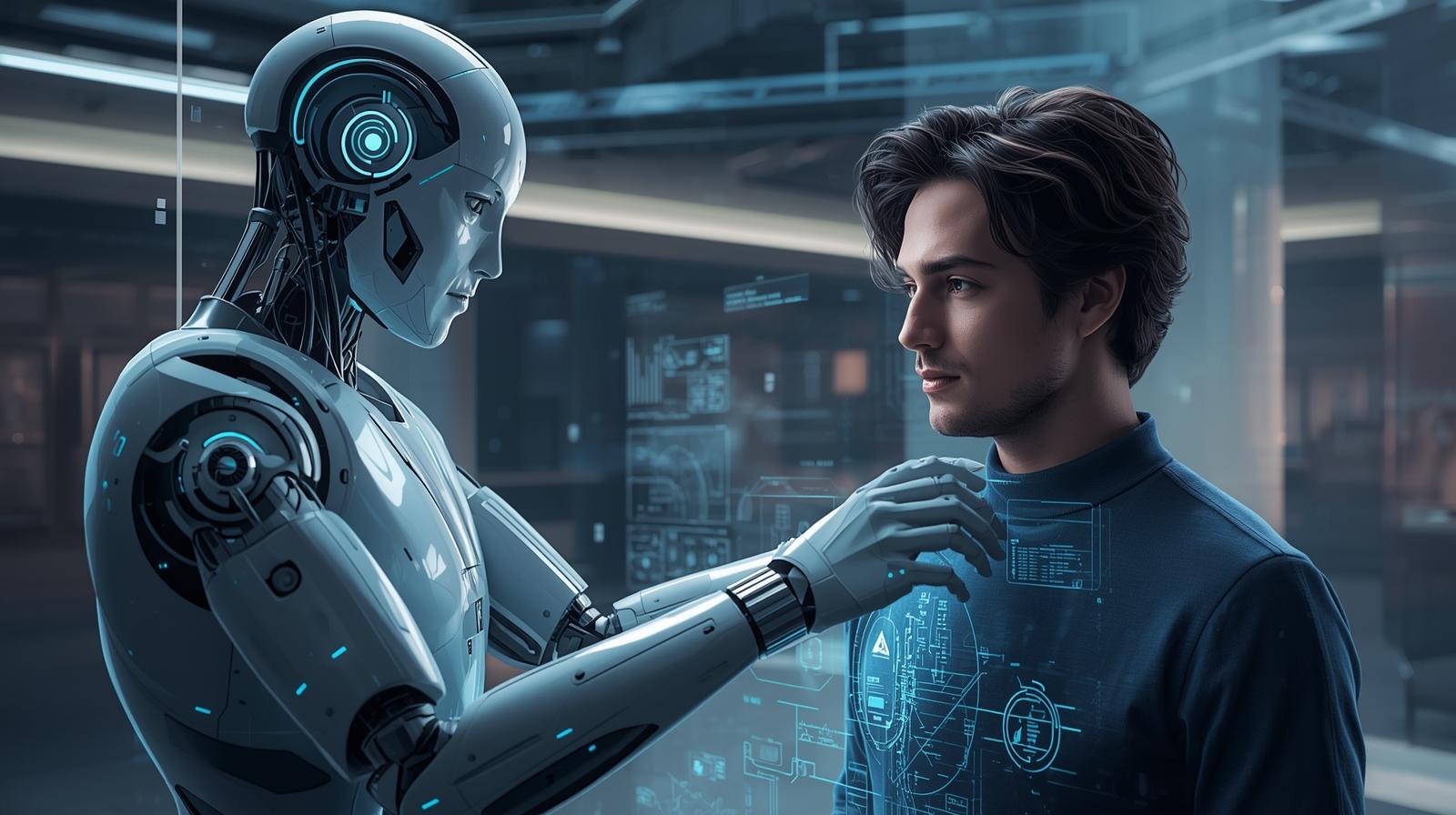
When most people think of robots, their minds jump to movie characters like C-3PO. In reality, the most influential robot in your daily life probably looks far less dramatic and far more familiar, like an autonomous vacuum cleaner. Despite the difference in appearance, both follow the same foundational principle that defines all robotics.
Every robot operates on a simple loop: sense, think, act. This framework explains how autonomous machines interact with the world, no matter how basic or advanced they are. Understanding this loop reveals that robotics is not mysterious at all. It is practical engineering built on consistent rules.
Consider how a robotic vacuum moves through your home. As it approaches a chair, a physical bumper detects contact. That bumper is a sensor, giving the robot a form of touch. The signal is sent to a processor, the robot’s brain, which runs a basic instruction such as “obstacle detected, change direction.” The final step happens immediately after. Motors activate, wheels turn, and the robot moves away.
This continuous loop of sensing the environment, processing information, and acting on it is the foundation of all robotic automation. The same logic that guides a household vacuum also drives advanced systems used in space exploration, medicine, and manufacturing.
Are All Robots the Same? From Factory Arms to Hospital Assistants
Once you understand the sense, think, act cycle, it becomes easier to compare different types of robots. One of the most familiar examples is the industrial robot arm used in automotive factories. These machines sense when a car body is in position, execute a pre-written instruction such as welding, and repeat the process with extreme precision.
These robots excel because they operate in controlled environments where conditions never change. Their intelligence is limited, but their consistency is unmatched. They do one task perfectly, thousands of times a day.
Now compare that to a mobile robot navigating a hospital hallway. This environment is unpredictable. People move suddenly, equipment appears in unexpected places, and paths change constantly. When this robot senses an obstacle, it must decide how to slow down, reroute, or stop entirely. That decision-making process is more complex and flexible than anything required on a factory floor.
This contrast shows that robotic intelligence exists on a spectrum. Some robots are rigid specialists, while others are adaptive problem-solvers. A robot’s physical design often reflects its purpose. Heavy, stationary arms handle strength and repetition. Smaller, mobile machines prioritize awareness and navigation in human environments.
Still, many of these adaptive behaviors rely on rules written by humans. The next leap forward happens when robots are no longer told exactly what to do, but instead learn how to do it themselves.
How Learning Robots Adapt to the Unknown
Some of the most impressive robots today can walk, climb, and balance in ways that seem almost natural. Writing a rule for every possible situation they might encounter is impossible. Instead, these robots are given a goal and allowed to learn how to achieve it.
This approach is powered by machine learning. Rather than following fixed instructions, learning robots experiment through massive trial and error in simulated environments. A robot like Boston Dynamics’ four-legged Spot can practice walking across uneven terrain millions of times in virtual space. Each failure teaches it something new about balance, force, and movement.
Over time, the robot develops an internal model of how to move effectively, even in situations it has never encountered before. This learning ability allows robots to leave structured environments and operate in the unpredictable real world. It is a major shift from traditional automation and one of the most important advancements in modern robotics.
As robots become better at learning and adapting, a natural concern emerges about their role alongside humans.
Robots at Work: Replacement or Collaboration?
Fears about robots replacing human jobs often focus on large, powerful machines taking over entire workflows. While automation has replaced some tasks, a different trend is gaining momentum. Many modern robots are designed not to replace people, but to work with them.
These machines are known as collaborative robots, or cobots. Unlike traditional industrial robots that must be isolated behind safety barriers, cobots are lightweight, sensor-rich, and designed to operate safely next to humans. If they encounter resistance or unexpected contact, they stop immediately.
Cobots excel at handling repetitive, heavy, or hazardous tasks. For example, a cobot might hold a heavy component steady while a technician performs detailed assembly work. The robot provides strength and precision, while the human contributes judgment and problem-solving.
This partnership changes the nature of work. Instead of eliminating human roles, cobots elevate them. Workers spend less time on physically demanding tasks and more time on activities that require creativity, adaptability, and expertise. Automation, in this context, enhances human capability rather than replacing it.
Robots as Partners in Exploration, Medicine, and Beyond
Robots are no longer confined to factories or science fiction. They extend human reach into places we cannot safely or physically go ourselves. In space exploration, robotic rovers act as our eyes and hands on distant planets, gathering data and performing experiments millions of miles away.
In medicine, robotic systems assist surgeons with extraordinary precision, enabling procedures that would be impossible with human hands alone. These machines do not make decisions independently. They amplify human skill and reduce the margin for error.
As robotics and artificial intelligence continue to advance, ethical questions naturally arise. Long before modern AI existed, thinkers like Isaac Asimov explored these concerns through ideas such as the Three Laws of Robotics. His work reminds us that technology reflects the values of the people who design and use it.
Robots are not replacements for humanity. They are tools built to extend human ability, reduce limitations, and open new frontiers. When designed responsibly, they become partners that help us explore, heal, build, and understand the world more deeply.


