

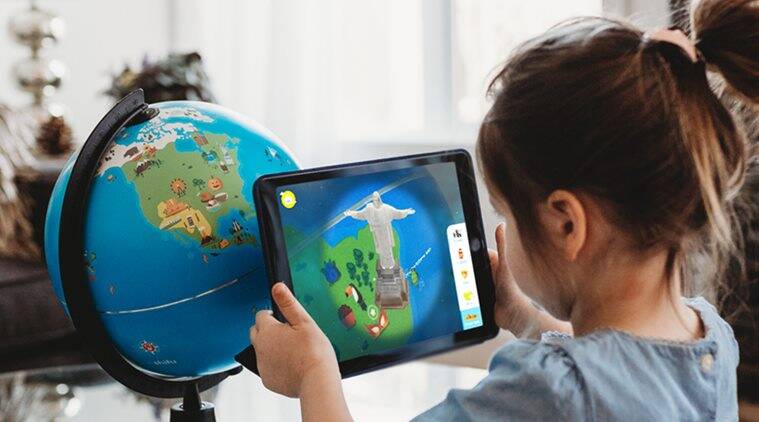
Augmented reality (AR) is revolutionizing education by bridging the gap between digital information and real-world experiences. By overlaying interactive digital content onto physical environments, AR enables students to explore concepts in ways that were previously impossible. From immersive simulations to interactive textbooks, the benefits of augmented reality in education extend across all learning levels and disciplines.
This guide explores the key advantages of AR in education, how it enhances engagement, and strategies for integrating AR into classrooms effectively.
What is Augmented Reality in Education?
Augmented reality refers to the technology that superimposes digital elements—such as images, videos, or 3D models—onto the real-world environment. In education, AR can transform traditional learning tools into interactive experiences that enhance comprehension and retention.
Examples include:
- AR textbooks with interactive diagrams
- Virtual lab experiments
- 3D historical reconstructions
- Language learning apps with visual prompts
Key Benefits of Augmented Reality in Education
1. Increased Engagement and Motivation
AR makes learning more interactive and visually stimulating. Students are more likely to participate actively in lessons, as AR content provides:
- Interactive 3D visualizations
- Gamified learning experiences
- Real-time feedback and challenges
This level of engagement encourages deeper understanding and long-term retention.
2. Enhanced Comprehension of Complex Concepts
AR can simplify abstract or complex topics. For example:
- Visualizing molecular structures in chemistry
- Exploring anatomy through 3D body models
- Understanding physics phenomena with interactive simulations
By allowing students to see and manipulate content in real time, AR helps make challenging subjects more approachable.
3. Personalized and Adaptive Learning
AR can tailor content to individual learners:
- Adjustable difficulty levels
- Interactive tutorials based on progress
- Immediate feedback and hints
Personalized learning ensures that students can progress at their own pace, addressing gaps in understanding before moving forward.
4. Real-World Application and Practical Skills
Augmented reality bridges classroom learning with practical application:
- Simulating real-world lab experiments safely
- Offering virtual field trips to historical or scientific sites
- Practicing technical skills in a risk-free environment
This approach enhances skill acquisition and prepares students for real-life scenarios.
5. Collaboration and Social Learning
AR promotes teamwork and collaboration among students:
- Group projects with shared AR simulations
- Collaborative problem-solving in interactive environments
- Remote AR experiences for distance learning
This fosters communication skills and peer-to-peer learning while keeping students engaged.
AR in Various Educational Settings
| Subject Area | AR Application | Benefit |
|---|---|---|
| Science | 3D molecular models, virtual labs | Understand complex phenomena |
| History | AR historical site reconstructions | Visualize past events and cultures |
| Geography | Interactive maps and terrain overlays | Learn about geography and ecosystems |
| Language Learning | AR flashcards and conversation simulations | Improve retention and speaking skills |
| Art & Design | Virtual galleries and 3D modeling | Inspire creativity and interactive exploration |
AR is versatile and can enhance virtually any subject by combining visual, tactile, and cognitive learning.
Devices and Tools for AR in Education
To maximize AR’s benefits, appropriate hardware is essential. Options include:
- Tablets and smartphones with AR apps
- AR-enabled smart glasses
- AR projectors for classroom-wide interaction
Even in fields like graphic design, the integration of AR can be enhanced with the right tools. Students can benefit from devices such as Best Laptops for Graphic Design Under $1500 to create AR content, design interactive simulations, and develop immersive educational projects.
Implementation Tips for Educators
- Start with simple AR applications before scaling up
- Ensure alignment with curriculum objectives
- Train educators to effectively use AR tools
- Encourage student creativity and exploration
- Monitor engagement and adapt content as needed
Thoughtful implementation ensures AR becomes a meaningful supplement to traditional teaching rather than a distraction.
FAQs: Benefits of Augmented Reality in Education
Does AR replace traditional teaching methods?
No. AR is a supplement that enhances engagement, comprehension, and interaction but should complement traditional instruction.
Is AR suitable for all age groups?
Yes. AR can be adapted for young children, high school students, and higher education learners.
What subjects benefit most from AR?
STEM, history, geography, language learning, and art/design are particularly effective with AR, but it can be applied across disciplines.
Are AR tools expensive for schools?
Costs vary. Many AR apps work on existing smartphones or tablets, while specialized AR glasses may require higher investment.
Does AR improve learning outcomes?
Studies show that interactive and immersive AR content can enhance comprehension, retention, and student motivation.
Final Thoughts
The benefits of augmented reality in education are transformative. AR engages students, simplifies complex concepts, encourages collaboration, and bridges classroom learning with real-world application. When integrated thoughtfully, AR can empower both educators and learners to achieve greater understanding, creativity, and retention. With accessible devices, software, and creativity, augmented reality is poised to redefine the future of education.


