

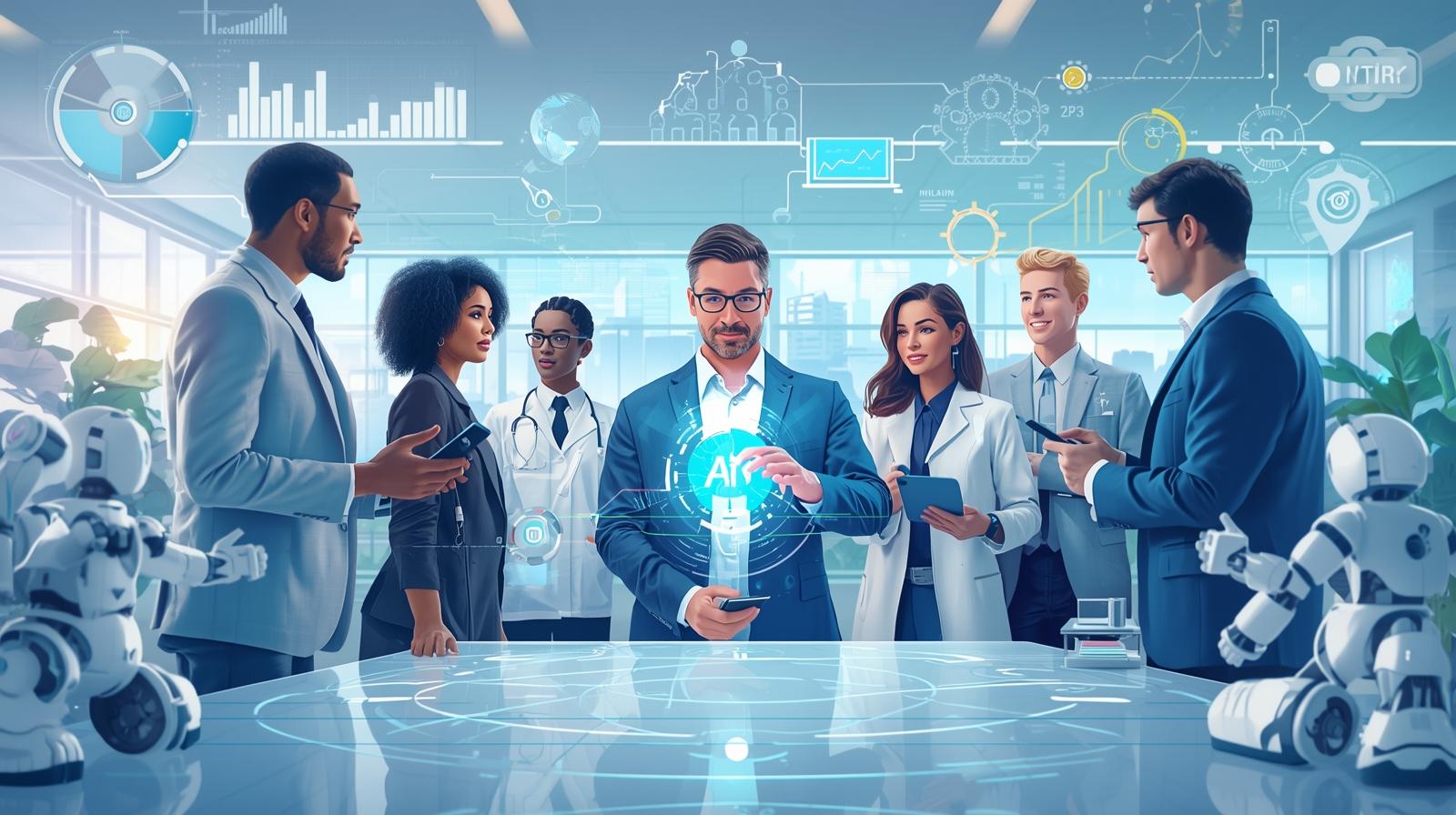
Artificial Intelligence (AI) is no longer a futuristic concept; it is a present-day reality reshaping industries across the globe. As a thought leader in technological innovations, I aim to provide insights into how AI applications are transforming business landscapes, from healthcare to finance, manufacturing, and beyond. This article will explore real-world applications of AI tools, AI software, and the profound impact these technologies are having on various sectors.
AI applications in healthcare have been revolutionary. From diagnosing diseases to personalizing treatment plans, AI tools are enhancing patient care and operational efficiency. For instance, AI-powered diagnostic systems can analyze medical images with remarkable accuracy, often surpassing human capabilities. These systems help detect diseases like cancer at earlier stages, increasing the chances of successful treatment.
Moreover, AI-driven predictive analytics are helping healthcare providers anticipate patient needs and streamline operations. By analyzing historical patient data, AI software can predict patient admissions, optimizing resource allocation and reducing waiting times. This not only improves patient satisfaction but also lowers operational costs.
In drug discovery, AI is accelerating the identification of potential compounds for new medications. Traditional drug discovery processes can take years and cost billions. However, AI applications are dramatically reducing the time and expense involved by quickly analyzing vast datasets to identify promising candidates for drug development.
The financial industry is another sector experiencing a seismic shift due to AI. AI tools are revolutionizing how financial services are delivered, enhancing both security and customer experience.
AI software is crucial in fraud detection and risk management. Machine learning algorithms analyze transaction patterns to identify unusual activities indicative of fraud. These systems learn from each new data point, constantly improving their accuracy and reducing false positives, which saves financial institutions millions of dollars annually.
AI applications are also enhancing customer service through personalized banking experiences. Chatbots powered by AI are providing 24/7 customer support, handling routine inquiries, and freeing up human agents for more complex issues. Additionally, AI-driven analytics offer personalized financial advice and product recommendations, helping customers make informed decisions.
In manufacturing, AI is driving automation and efficiency. AI tools are optimizing supply chains, predicting maintenance needs, and improving quality control.
Predictive maintenance powered by AI software is preventing costly equipment failures. By analyzing data from sensors embedded in machinery, AI can predict when a machine is likely to fail, allowing for timely maintenance. This reduces downtime and extends the lifespan of equipment, leading to significant cost savings.
AI applications are also enhancing quality control processes. Machine vision systems equipped with AI can inspect products at high speeds with remarkable precision, identifying defects that human inspectors might miss. This ensures that only products meeting the highest standards reach consumers, improving brand reputation and customer satisfaction.
The retail industry is being transformed by AI tools that personalize shopping experiences and optimize operations.
AI software analyzes customer data to offer personalized product recommendations and targeted marketing campaigns. This personalization increases sales and enhances customer loyalty by ensuring that shoppers find the products they need and discover new ones they will likely enjoy.
AI applications in inventory management are optimizing stock levels and reducing waste. By forecasting demand with high accuracy, AI tools ensure that retailers maintain optimal inventory levels, minimizing overstock and stockouts.
The transportation sector is witnessing significant transformations due to AI applications. From autonomous vehicles to smart logistics, AI is enhancing efficiency and safety.
AI software is at the heart of autonomous vehicle technology. These vehicles rely on machine learning algorithms to navigate roads, interpret traffic signals, and avoid obstacles. While fully autonomous vehicles are not yet widespread, AI is already improving driver assistance systems, making roads safer for everyone.
AI tools are optimizing logistics operations by predicting demand and optimizing delivery routes. This reduces fuel consumption and improves delivery times, benefiting both businesses and consumers.
As AI continues to evolve, its applications will expand, offering new opportunities and challenges for businesses. Integrating AI tools and software into business operations requires a strategic approach, aligning technological advancements with business goals to drive growth and innovation.
For Chief Technology Officers, Business Strategists, and Innovation Managers, the key to successful AI implementation lies in understanding both the capabilities and limitations of these technologies. A strategic roadmap that considers the specific needs and goals of the organization is essential.
As businesses adopt AI, ethical considerations must be addressed. Ensuring data privacy and addressing algorithmic biases are critical to maintaining trust and fairness in AI applications.
AI applications are revolutionizing industries by enhancing efficiency, improving customer experiences, and driving innovation. As we look to the future, the potential of AI tools and software is boundless. By strategically integrating AI into business operations, organizations can unlock new opportunities, maintain a competitive edge, and navigate the complexities of the digital age.
AI is not just a tool but a transformative force reshaping the business landscape. Embracing this change thoughtfully and strategically will position companies at the forefront of their industries, ready to thrive in an increasingly AI-driven world.


